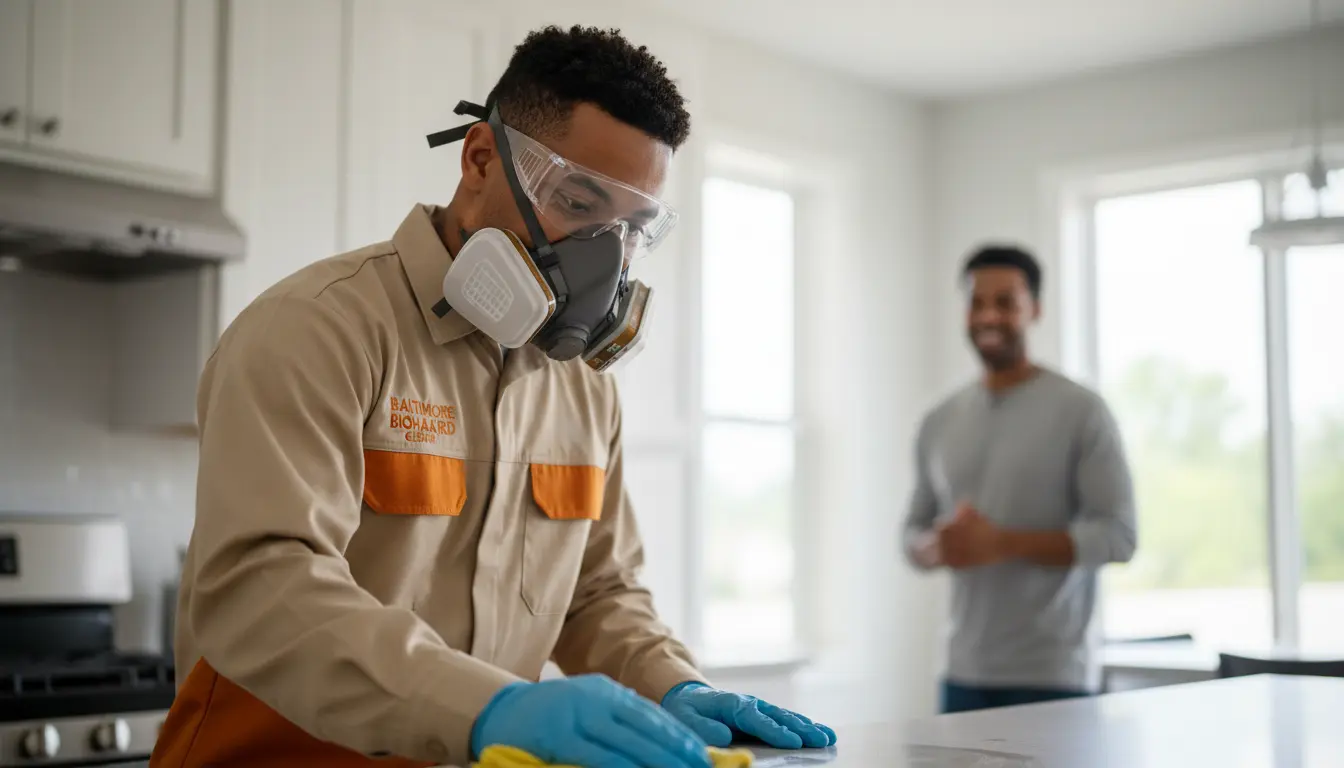
You walk into a room and the smell hits you first — a sweet, metallic odor you recognize instantly. Your first instinct is to grab bleach and a mop. That single decision could cost you thousands in property damage and expose your family to bloodborne pathogens. In Baltimore’s humid climate, biological materials decompose faster, seeping into porous floorboards and shared walls of historic rowhomes. Without immediate professional intervention, the contamination becomes structural, requiring demolition rather than cleaning. This is why knowing what to do immediately after discovering a biohazard situation is not just a safety precaution — it is a financial and legal necessity.
Baltimore Biohazard Cleanup brings over a decade of IICRC-certified experience to properties across Baltimore City and County. Our teams respond within hours, using hospital-grade protocols to contain, remove, and decontaminate the affected area. Whether the scene involves blood, bodily fluids, or chemical hazards, the first 24 hours are critical for preventing cross-contamination and irreversible damage. We combine technical expertise with compassionate discretion, ensuring families and property managers receive the support they need without added stress.
Immediate Steps Following a Biohazard Discovery
The moment you recognize a biohazard, your priority must be isolation. Do not allow anyone — including pets — to enter the room. Open windows only if the area is well-ventilated and you are certain airborne contaminants are not present. Call a certified biohazard remediation service immediately. For Baltimore residents, that means contacting emergency biohazard cleanup 24/7 help for Baltimore residents to dispatch a trained crew with proper personal protective equipment (PPE).
A common mistake is attempting to clean the scene with household products. Bleach, for example, can react with organic matter to release toxic chloramine gas. More importantly, it does not fully inactivate bloodborne pathogens such as hepatitis B or HIV. Professional remediation uses EPA-registered hospital-grade disinfectants with proven contact times. The initial response also includes setting up negative air pressure to prevent airborne particles from migrating to other parts of the building. In Baltimore’s dense urban neighborhoods, where rowhomes share ventilation through common walls, this containment is crucial.
Professional Remediation Workflow
Our certified technicians follow a rigorous step-by-step process aligned with the IICRC S540 standard. The first phase is a comprehensive risk assessment. We identify the type of biohazard, the extent of contamination, and any structural vulnerabilities. For example, in a Baltimore property with original hardwood floors, blood or other fluids can seep between boards into the subfloor, requiring removal of affected planks. We then establish a containment zone using polyethylene sheeting and negative air machines that filter HEPA-grade air.
The next stage involves physical removal of all biohazardous materials. This includes saturated carpets, upholstery, drywall, and insulation. All waste is double-bagged in red biohazard bags and transported to an authorized medical waste incinerator. Surface cleaning follows, using enzymatic cleaners that break down organic matter at a molecular level. After cleaning, we perform adenosine triphosphate (ATP) fluorescence testing — a swab test that measures residual biological material. ATP readings below 10 relative light units (RLU) confirm the surface meets healthcare cleanliness standards. Finally, we apply a structural encapsulation sealant on porous surfaces that cannot be removed, such as brick or concrete, to lock in any remaining contaminants.
Baltimore’s seasonal humidity plays a direct role in remediation timelines. During summer months, high moisture accelerates microbial growth, often requiring the use of industrial desiccant dehumidifiers to dry out affected areas before sealing. Conversely, winter’s dry air can cause biological materials to become airborne more easily, demanding extra vigilance in negative pressure setup. Our teams adjust protocols based on real-time weather data to ensure complete decontamination.
Professional Remediation vs. Standard Cleaning
The table below highlights the critical differences between professional biohazard remediation and typical janitorial cleaning. These distinctions underscore why professional services are non-negotiable for safety and compliance.
| Feature/Metric | Professional Biohazard Remediation | Standard Residential Cleaning |
|---|---|---|
| Regulatory Compliance | Follows OSHA Bloodborne Pathogens Standard (29 CFR 1910.1030), EPA waste disposal regulations, and IICRC S540. | No regulatory oversight; may violate local health codes. |
| Pathogen Elimination | Uses EPA-registered hospital-grade disinfectants with verified kill times for HIV, HBV, and other pathogens. ATP testing verifies results. | Household cleaners (bleach, ammonia) ineffective against many pathogens; no verification. |
| Structural Assessment | Includes inspection for hidden seepage, porous material damage, and HVAC contamination. Professional drying and encapsulation. | Limited to visible surface cleaning; ignores subfloor or wall cavities. |
| Waste Disposal | Proper segregation, packaging, and transport to licensed medical waste facilities. | Often discarded in regular trash, violating Maryland state regulations. |
| Insurance Handling | Provides detailed documentation and reports for property and liability claims. | No documentation; may jeopardize insurance coverage. |
Expert Diagnostic Insights
Detecting Hidden Biological Seepage
Biological fluids can migrate through cracks in concrete or gaps in flooring, traveling several feet from the original source. Our technicians use moisture meters and thermal imaging to identify areas of elevated moisture that often indicate hidden contamination. In Baltimore’s older structures, where foundations may have settled, this seepage can extend into adjacent units in multi-family buildings, creating liability for property owners. We also use canine olfaction units trained to detect decomposition odors, which can pinpoint sources invisible to the naked eye.
Why Porous Materials Require Replacement
Many property owners believe that steam cleaning or sanding can restore porous materials like drywall or unsealed wood. In reality, blood and other biohazards penetrate the pores and cannot be fully removed. Even after multiple cleaning attempts, pathogens may remain viable. The IICRC standard mandates removal and replacement of any porous material that has been contaminated. Cutting corners here leads to long-term health risks and recurring odor issues. In Baltimore’s humid climate, mold often compounds the problem, requiring step-by-step biohazard cleanup after trauma incidents to ensure complete removal.
Negative Pressure and Cross-Contamination Prevention
Establishing negative air pressure within the containment zone is critical. Without it, airborne particles can escape into hallways, HVAC ducts, and neighboring rooms. We use industrial-grade negative air machines with HEPA filtration to maintain a constant pressure differential. This prevents cross-contamination and protects both the cleanup crew and the rest of the building’s occupants. In Baltimore’s tight rowhome layouts, where shared ventilation is common, this step is especially vital to avoid exposing neighbors to biohazards.
Common Mistakes Property Owners Make
One of the most frequent errors is using household bleach on biological matter. As mentioned, bleach can create toxic fumes and does not fully disinfect. Another mistake is waiting for the odor to dissipate naturally. Odors from decomposition contain volatile organic compounds that indicate ongoing microbial activity. Ignoring them allows pathogens to proliferate and structural damage to deepen. Finally, allowing untrained personnel — such as family members or general contractors — into the site before professional remediation exposes them to serious health risks, including hepatitis and bacterial infections. These mistakes can lead to thousands of dollars in additional remediation costs and potential legal liability. For a deeper look at these dangers, see our article on top risks of DIY biohazard cleanup and how to avoid them.
Pricing for Biohazard Remediation
Our pricing is transparent and based on the specific challenges of each scene. Typical cost factors include:
- Site Mobilization Fee: A flat fee for dispatching a certified crew and equipment to the property. This covers travel within Baltimore City and County, typically ranging from $200 to $500 depending on distance and urgency.
- Hourly Remediation Rates: For labor-intensive tasks such as manual removal of contaminated materials, cleaning, and ATP testing. Rates average $125 to $200 per hour per technician. Most residential scenes require two to four technicians over four to eight hours.
- Specialized Disposal Costs: Biohazard waste must be incinerated at licensed facilities. Disposal fees are calculated per pound and can range from $1.50 to $3.00 per pound. A typical unattended death scene may generate 100 to 300 pounds of waste.
Three primary factors influence the final cost:
- Extent of Structural Material Replacement: If drywall, flooring, or cabinetry must be removed and replaced, costs increase significantly. Our assessment includes a detailed estimate of materials needed.
- Total Volume of Biohazardous Waste: Larger scenes require more disposal and more labor. We provide a free estimate after the initial risk assessment.
- Necessity for Specialized HVAC Decontamination: If the HVAC system has been compromised, duct cleaning and antimicrobial treatment may be required, adding $500 to $2,000 to the total.
Safety and Standards
Our company adheres to the highest industry standards, including the OSHA Bloodborne Pathogens Standard (29 CFR 1910.1030) and the IICRC S540 Standard for Trauma and Crime Scene Cleanup. All technicians complete rigorous training in the use of PPE, proper waste disposal, and emergency response protocols. We use only EPA-registered disinfectants and follow strict chain-of-custody procedures for biohazard waste. For Maryland businesses, compliance with state and local regulations is mandatory; our understanding biohazard regulations for MD businesses resource outlines the key requirements. By choosing a certified professional, property owners protect themselves from legal penalties and ensure the safety of future occupants.
Frequently Asked Questions
What qualifies as a biohazard?
A biohazard is any biological substance that poses a threat to human health. This includes blood, bodily fluids, tissues, human or animal waste, mold, and chemicals such as methamphetamine residues. In a residential setting, common biohazards arise from unattended deaths, crime scenes, hoarding situations, and industrial accidents. The EPA and OSHA classify these materials as regulated waste, meaning they require specialized handling and disposal. If you encounter any of these materials, do not attempt to clean them yourself — call a professional.
Can I clean a biohazard scene myself to save money?
Technically, you can attempt to clean a scene, but doing so poses serious health risks and legal consequences. Household cleaners are not effective against bloodborne pathogens, and improper disposal can result in fines under Maryland environmental laws. Additionally, insurance policies often require professional remediation to honor claims. The upfront cost of hiring experts is far lower than the potential medical bills, property damage, and legal costs that can arise from DIY cleanup. For a detailed comparison, refer to our why choose professional biohazard services in Baltimore page.
How long does the remediation process take?
The duration depends on the size and complexity of the scene. A small contamination area, such as a single room, can be completed in one to two days. Larger scenes, especially those involving multiple rooms or extensive structural damage, may take three to five days. Factors such as the need for HVAC decontamination, drying time for porous materials, and the volume of waste can extend the timeline. Our team provides a realistic schedule after the initial assessment and works efficiently to minimize disruption.
Will homeowners insurance cover biohazard cleanup?
Many homeowners and property insurance policies cover biohazard remediation, but coverage varies. Typically, policies include “sudden and accidental” events, such as a death or crime scene. Pre-existing conditions like hoarding may not be covered. It is essential to contact your insurance provider immediately and request a certified remediation company to document the scene. Our team provides detailed reports and photographs that support insurance claims. We also work directly with adjusters to streamline the process.
Professional Biohazard Remediation in Baltimore
Discovering a biohazard is a traumatic experience, but taking the right steps immediately can protect your health, your property, and your peace of mind. Baltimore Biohazard Cleanup combines technical precision with compassionate service, ensuring every scene is restored to a safe, clean state. Our IICRC-certified technicians are available 24/7 and respond quickly throughout Baltimore City and County, including areas like Annapolis, Severna Park, and Glen Burnie. We handle everything from initial containment to final ATP testing, leaving no trace of contamination behind.
When you need reliable, discreet, and professional biohazard remediation, trust the experts who understand Baltimore’s unique challenges. Contact us today for an immediate assessment and let us help you move forward safely.