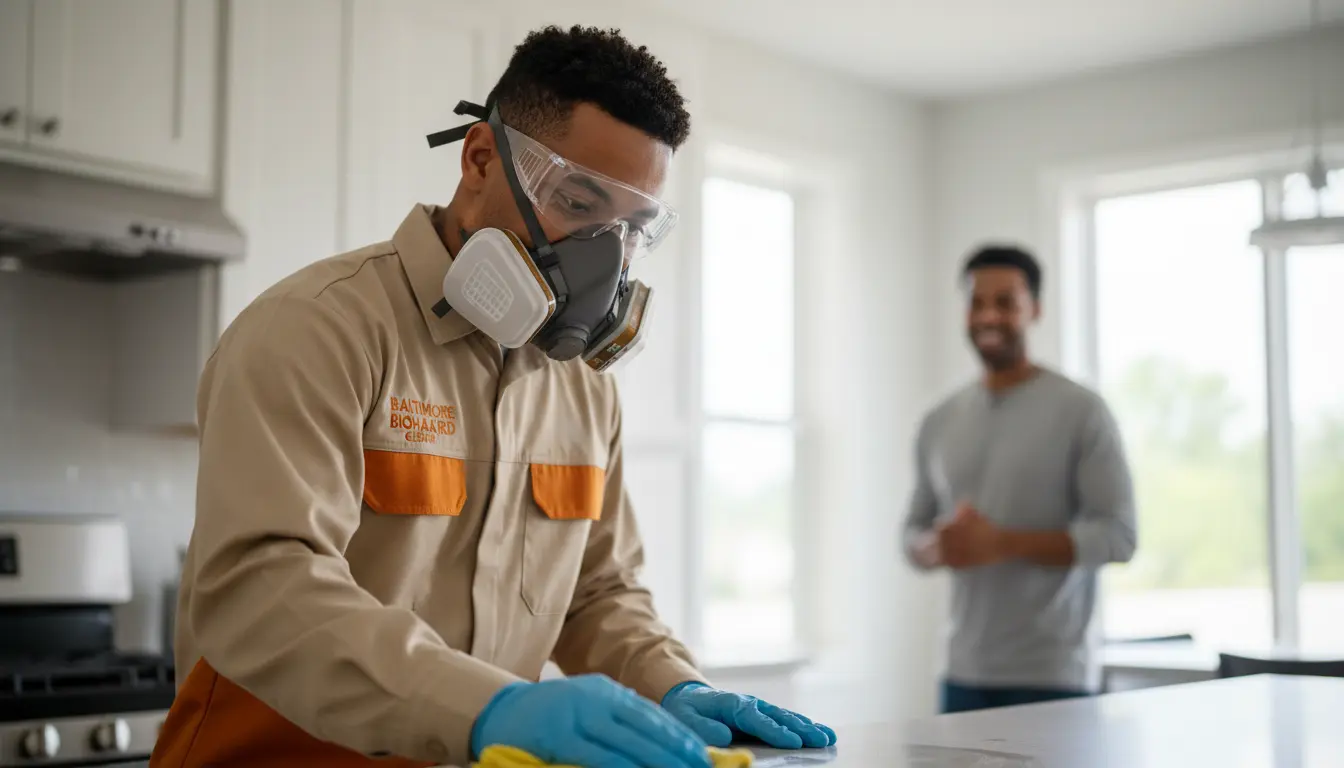
Thinking you can scrub away a crime scene, a suicide, or a severe hoarding situation with bleach and a mop is a mistake that could cost you your health, your home, and potentially tens of thousands of dollars in fines. Many Baltimore property owners, in a moment of shock or financial concern, take a DIY approach to what they assume is a deep-cleaning job. The reality is far more dangerous. Biological hazards—blood, bodily fluids, decomposition matter, and pathogens—penetrate porous surfaces, seep into subflooring, and aerosolize during even gentle cleaning, creating a toxic environment that standard household products cannot neutralize. This is precisely the type of scenario that answers the question, what situations require professional biohazard cleanup in Baltimore homes?
In Baltimore, the need for professional biohazard remediation extends beyond obvious trauma scenes. The city’s historic housing stock, with its shared walls, aging plumbing, and often poor ventilation, can turn a small biological spill into a community-wide health hazard. Without proper containment and EPA-registered disinfectants, you risk exposing your family, neighbors, and yourself to bloodborne pathogens like hepatitis B, hepatitis C, and HIV. Professional remediation isn’t just about cleaning; it’s about structural decontamination, legal compliance, and restoring a property to a safe, habitable condition. When the stakes are this high, understanding the precise situations that demand expert intervention is your first line of defense.
Unattended Death and Decomposition Cleanup
An unattended death, often discovered days or even weeks after the event, presents one of the most complex and dangerous biohazard scenarios. The process of human decomposition releases a potent mixture of fluids, gases, and microorganisms that can saturate flooring, drywall, and insulation. In Baltimore’s humid Mid-Atlantic climate, these biological materials accelerate the breakdown of structural materials and create an overwhelming odor that can permeate adjacent units in a rowhome. Professional biohazard remediation technicians use industrial-grade negative air machines to contain airborne contaminants and specialized enzyme treatments to break down organic matter at a molecular level.
This is not a situation for bleach and fans. The porous nature of materials like hardwood and drywall means that simply wiping a surface will not remove the embedded biological material. Technicians must perform a thorough structural assessment, often involving moisture meters and thermal imaging, to determine the extent of microbial remediation needed. Failure to address this properly can lead to long-term health risks for occupants and a permanent decrease in property value. For Baltimore homes, where multi-unit structures are common, the consequences of incomplete cleanup can also lead to legal liabilities from neighboring tenants.
Why You Cannot Handle It Alone
Beyond the physical danger, there is a significant psychological and regulatory burden. Handling human remains or decomposition fluids without proper training and protective equipment can cause severe emotional distress and expose you to pathogens. Additionally, Maryland state regulations and the IICRC S540 standard require specific disposal procedures for biohazardous waste, including proper labeling and incineration. A professional team from Baltimore Biohazard Cleanup brings the expertise to manage the entire process discreetly and safely, from initial containment to final clearance testing using adenosine triphosphate (ATP) fluorescence testing to verify that no biological residue remains.
Crime Scene and Trauma Incident Cleanup
Crime scenes, whether from violent assaults, homicides, or accidental traumas, leave behind blood and other bodily fluids that are considered regulated medical waste. The volume of blood can be significant, seeping into carpets, hardwood floors, and even the subfloor beneath. A professional response is critical not just for safety but for forensic restoration—returning the property to a livable condition while preserving any evidence local authorities may need. Technicians follow a strict step-by-step protocol that includes PPE protocol initiation, physical removal of contaminated materials, and application of hospital-grade disinfectants that meet OSHA bloodborne pathogens standard 29 CFR 1910.1030.
In Baltimore, the logistics of a crime scene cleanup are complicated by the city’s dense urban environment. Traffic, narrow streets in historic neighborhoods, and the need for discreet arrival can delay access. A professional service like Emergency Biohazard Cleanup 24/7 Help for Baltimore Residents is equipped to navigate these challenges, arriving with a fully stocked mobile unit that includes all necessary tools and waste containment systems. They also handle communication with law enforcement and insurance companies, reducing the burden on the property owner during an already traumatic time.
Hoarding Cleanup and Severe Biohazard Accumulation
Hoarding situations often involve the accumulation of garbage, human and animal waste, and decomposing organic matter that creates a severe biohazard environment. The risks include airborne pathogens, rodent infestations, and structural weakening due to moisture and biological waste. In Baltimore, many hoarding cases occur in older homes with limited ventilation, which can lead to mold growth and respiratory issues for anyone entering the property. Professional remediation is essential to safely remove these hazards without causing cross-contamination to other parts of the home or the surrounding neighborhood.
The process for hoarding cleanup is methodical. Technicians first perform a risk assessment to identify the types and locations of biohazards. They then set up containment zones using negative pressure to prevent airborne particles from spreading. Removal of materials is done in stages, with biohazardous waste segregated for proper disposal. This is not a job for standard junk removal, as the biological component requires specialized training and equipment. For a detailed guide on safe practices, refer to the article on How to Handle Hoarding Cleanup Safely in Baltimore. The goal is not just to clean but to restore a safe, healthy living environment.
Medical Waste and Sharps Disposal in Residential Settings
Homes where individuals are receiving in-home medical care—such as insulin injections, dialysis, or chemotherapy—can accumulate medical waste that requires professional disposal. Used syringes, contaminated bandages, and expired medications are all considered biohazards. Improper disposal, such as throwing sharps in the regular trash, can lead to needle-stick injuries for sanitation workers or family members. In Maryland, there are specific regulations governing the disposal of medical waste, and failure to comply can result in fines.
Professional biohazard cleanup services can provide routine or one-time removal of medical waste from a home. They supply appropriate containers, handle transportation, and ensure incineration or other approved disposal methods. This service is especially important for families transitioning a loved one to hospice care or after a death when medical supplies must be removed before the home can be sold or rented. The article on Essential Tips for Medical Waste Disposal in Maryland offers further insight into compliance and safety.
Data Comparison: Professional Remediation vs. Standard Cleaning
The table below illustrates the critical differences between professional biohazard remediation and a standard residential cleaning approach.
| Feature/Metric | Professional Biohazard Remediation | Standard Residential Cleaning |
|---|---|---|
| Regulatory Compliance | Follows OSHA 29 CFR 1910.1030, EPA guidelines, and IICRC S540 standards; ensures legal disposal of waste. | No knowledge of or adherence to biohazard regulations; improper disposal can lead to fines and health risks. |
| Pathogen Elimination | Uses EPA-registered hospital-grade disinfectants and ATP testing to verify a 99.99% reduction in pathogens. | Household bleach or cleaners are ineffective against many bloodborne pathogens and may only spread contamination. |
| Structural Assessment | Technicians use moisture meters, thermal imaging, and visual inspections to identify hidden biological seepage and damage. | No assessment; superficial cleaning may leave biohazards trapped in porous materials, causing ongoing odor and health issues. |
| Equipment Used | Industrial negative air machines, HEPA vacuums, and specialized enzyme treatments for organic matter breakdown. | Standard mops, buckets, and household vacuums that can aerosolize pathogens and spread contamination. |
| Psychological Support | Provides discreet, compassionate service, often coordinating with victim assistance programs and insurance adjusters. | No support; property owners are left to handle the emotional and logistical burden alone. |
Expert Insights: Diagnostic Tips and Common Mistakes
Professionals rely on several advanced diagnostic methods that go beyond visual inspection. One key technique is the use of adenosine triphosphate (ATP) fluorescence testing. ATP is present in all organic matter, and a swab test can measure residual biological material on a surface even after it appears clean. If ATP levels exceed a threshold, the area must be re-cleaned and re-tested. This scientific approach ensures biological contamination is fully eliminated. Another diagnostic tool is thermal imaging, which can detect moisture trapped behind walls or under flooring—a common issue in Baltimore’s older homes where leaks or decomposition fluids have seeped into hidden cavities.
A third critical diagnostic step is odor profiling. Professionals use electronic noses or trained olfactory detection to map the extent of contamination, as odor molecules can penetrate wall cavities and be absorbed by insulation. This helps determine the exact areas requiring structural decontamination or replacement. Without these advanced methods, property owners risk leaving behind pockets of biological material that will continue to decompose and pose health risks.
Common mistakes property owners make include using household bleach on biological matter. Bleach is not a registered disinfectant for bloodborne pathogens and can actually fix proteins to surfaces, making them harder to remove. Another frequent error is waiting for odors to dissipate naturally. Odor from decomposition is caused by volatile organic compounds (VOCs) that indicate ongoing biological activity. Allowing this to persist can lead to insect infestations and structural degradation. Finally, allowing untrained personnel—such as friends or family—into the site without proper PPE can expose them to hepatitis or other pathogens, leading to serious health consequences and potential legal liability for the property owner.
Pricing Considerations for Professional Biohazard Cleanup
- Standard site mobilization fees typically range from $250 to $500, covering the cost of dispatching a certified team with a fully equipped mobile unit to your Baltimore location. This fee is non-refundable and covers travel time and initial setup.
- Hourly remediation rates for trauma and biohazard cleanup generally fall between $150 and $300 per technician. Most projects require a minimum of two to three technicians, and the total hours depend on the square footage and severity of contamination. A typical single-room cleanup might require 8 to 16 hours.
- Itemized costs for specialized disposal of biohazardous waste can add $100 to $500 or more. This includes the cost of incineration or treatment at an authorized facility. The volume of waste—measured in pounds or cubic yards—directly impacts this cost.
Three primary factors influence the final price. First, the extent of structural material replacement needed. If drywall, flooring, or insulation must be removed and replaced, this increases both labor and material costs. Second, the total volume of biohazardous waste. A large trauma scene or hoarding situation generates significant waste that requires careful handling and disposal. Third, the necessity for specialized HVAC decontamination. If biological particles have entered the ductwork, the entire system may need to be cleaned and sanitized, adding several hundred to a few thousand dollars to the project. For a detailed breakdown, you can contact us for a confidential estimate.
Safety and Standards: Why Certification Matters
Professional biohazard remediation is governed by a strict set of standards designed to protect workers, occupants, and the environment. The IICRC S540 standard for trauma and crime scene cleanup is the industry benchmark, outlining protocols for assessment, containment, cleaning, and verification. Technicians must also comply with the OSHA Bloodborne Pathogens Standard (29 CFR 1910.1030), which mandates the use of PPE, proper disposal of sharps, and an exposure control plan. In Maryland, additional state regulations govern the transport and disposal of medical waste, requiring permits and tracking documents.
These standards are not bureaucratic red tape; they are life-saving measures. For example, the requirement for negative air pressure during cleanup prevents airborne pathogens from traveling to other parts of the home or building. In a Baltimore rowhome, where ventilation systems are often shared, this is critical. Similarly, the use of EPA-registered disinfectants with specific dwell times ensures that viruses and bacteria are inactivated. A professional service like Why Choose Professional Biohazard Services In Baltimore invests in ongoing training and certification to stay current with these evolving standards, providing you with confidence that your property is restored safely and legally.
Frequently Asked Questions
What exactly is considered a biohazard in a residential setting?
A biohazard refers to any biological material that poses a threat to the health of living organisms. In homes, this includes blood, bodily fluids, human or animal waste, decomposed tissue, used needles (sharps), and contaminated medical supplies. Even items like soiled bedding or clothing from a person with a communicable disease can be classified as biohazards. The key characteristic is the potential for transmitting pathogens such as hepatitis, HIV, or drug-resistant bacteria. Professional assessment is recommended anytime you suspect biological contamination, as some hazards are not visible to the naked eye.
How soon after a trauma or death should cleanup begin?
Immediate response is critical. The IICRC S540 standard recommends that biohazard cleanup begin within 24 to 48 hours of discovery to minimize health risks and prevent further structural damage. In Baltimore’s humid climate, decomposition accelerates rapidly, leading to faster odor migration and material degradation. Delaying cleanup allows biological fluids to seep deeper into porous surfaces, increasing the cost and complexity of remediation. Professional services offer 24/7 emergency response to address these situations without delay, ensuring that the property is stabilized as quickly as possible.
Can biohazard contamination affect the resale value of a Baltimore home?
Yes, absolutely. Undisclosed or improperly remediated biohazard contamination can significantly reduce a property’s market value and create legal liabilities for the seller. Buyers are increasingly aware of health risks, and any suspicion of past trauma, hoarding, or mold can lead to failed inspections or demands for price reductions. Professional remediation includes documentation of the cleaning process, ATP test results, and certificates of disposal, which provide verifiable proof that the property is safe. This documentation can be crucial for real estate transactions, especially in competitive Baltimore neighborhoods.
Is it safe to stay in the home during biohazard cleanup?
In most cases, it is not safe for occupants to remain in the home during active remediation. The use of negative air machines, chemical disinfectants, and the physical removal of contaminated materials can create airborne particles and strong fumes that are hazardous to breathe. Additionally, the emotional toll of witnessing the cleanup process can be traumatic. Professional teams typically recommend that residents vacate the property until clearance testing is complete and the area is declared safe. In some situations, a partial occupancy may be possible if the work is contained to a separate area, but this is assessed on a case-by-case basis.
Professional Biohazard Remediation in Baltimore
The decision to call a professional for biohazard cleanup is never easy, but it is a necessary step to protect your health, your family, and your property. From unattended deaths and crime scenes to hoarding and medical waste, the situations that require expert intervention are varied and often complex. What remains constant is the need for a trained, certified team that understands the technical and emotional dimensions of the work. Baltimore Biohazard Cleanup provides that expertise, combining rigorous adherence to safety standards with compassionate, discreet service.
If you are facing a biohazard situation in your Baltimore home, do not risk a DIY approach or delay. The consequences of incomplete remediation can be severe, both for your health and your finances. Contact us today for a confidential assessment and let our certified professionals restore your home to a safe, clean condition. We serve the entire Baltimore area, including neighborhoods like Owings Mills and Timonium, and we are available 24/7 for emergencies. Your safety is our priority.