Hoarding can transform a once-comfortable home into a hazardous maze of clutter, posing serious risks to health and safety. In Baltimore, where dense urban living in neighborhoods like Charles Village and Mount Vernon amplifies these challenges, addressing hoarding requires careful planning and expertise. If you’re facing this overwhelming situation, you’re not alone—Baltimore Biohazard Cleanup is here to guide you through safe, effective cleanup. This post explores practical steps to handle hoarding cleanup securely, emphasizing biohazard awareness and local resources to restore your space without compromising well-being.
Whether it’s a family member’s home in Towson or your own property in Catonsville, hoarding cleanup demands sensitivity, strategy, and professional intervention. Let’s dive into how to approach it right.
Understanding Hoarding and Its Risks in Baltimore
Hoarding disorder affects thousands across the U.S., and Baltimore is no exception. The city’s mix of historic rowhouses and suburban homes in areas like Severna Park can make accumulation even more problematic, as limited space exacerbates fire hazards, pest infestations, and biohazard buildup.
What Constitutes a Hoarding Situation?
Hoarding goes beyond simple clutter—it’s a persistent difficulty discarding possessions, leading to excessive accumulation that impairs living areas. In Baltimore, local health departments report increased cases tied to the city’s aging population and economic pressures. Common items include newspapers, clothing, and even perishables that decompose, creating mold, bacteria, and sharp hazards.
Health and Safety Dangers
Beyond physical clutter, hoarding often involves biohazards like rodent droppings, mold from spoiled food, or medical waste. These can lead to respiratory issues, infections, or allergic reactions. In humid Baltimore summers, decomposition accelerates, turning homes into breeding grounds for pathogens. Fire risks skyrocket with flammable piles blocking exits—a critical concern in the city’s older buildings.
For severe cases involving unattended deaths or other biohazards, professional services like unattended death cleanup become essential to mitigate long-term contamination.
Preparing for Safe Hoarding Cleanup
Before touching a single item, preparation is key to avoiding injury or exposure. Baltimore Biohazard Cleanup recommends starting with a thorough assessment to gauge the scope.
Assess the Situation
Walk through the property with a checklist: Identify structural damage, electrical hazards, and biohazard indicators like odors or visible decay. In Baltimore’s variable weather, check for water damage from leaks, common in rowhomes. Document everything with photos for insurance or legal purposes, especially if eviction or family disputes are involved.
If the hoarding includes potential crime scene remnants, consult authorities immediately—Baltimore police can guide on protocols.
Gather Essential Supplies and Team
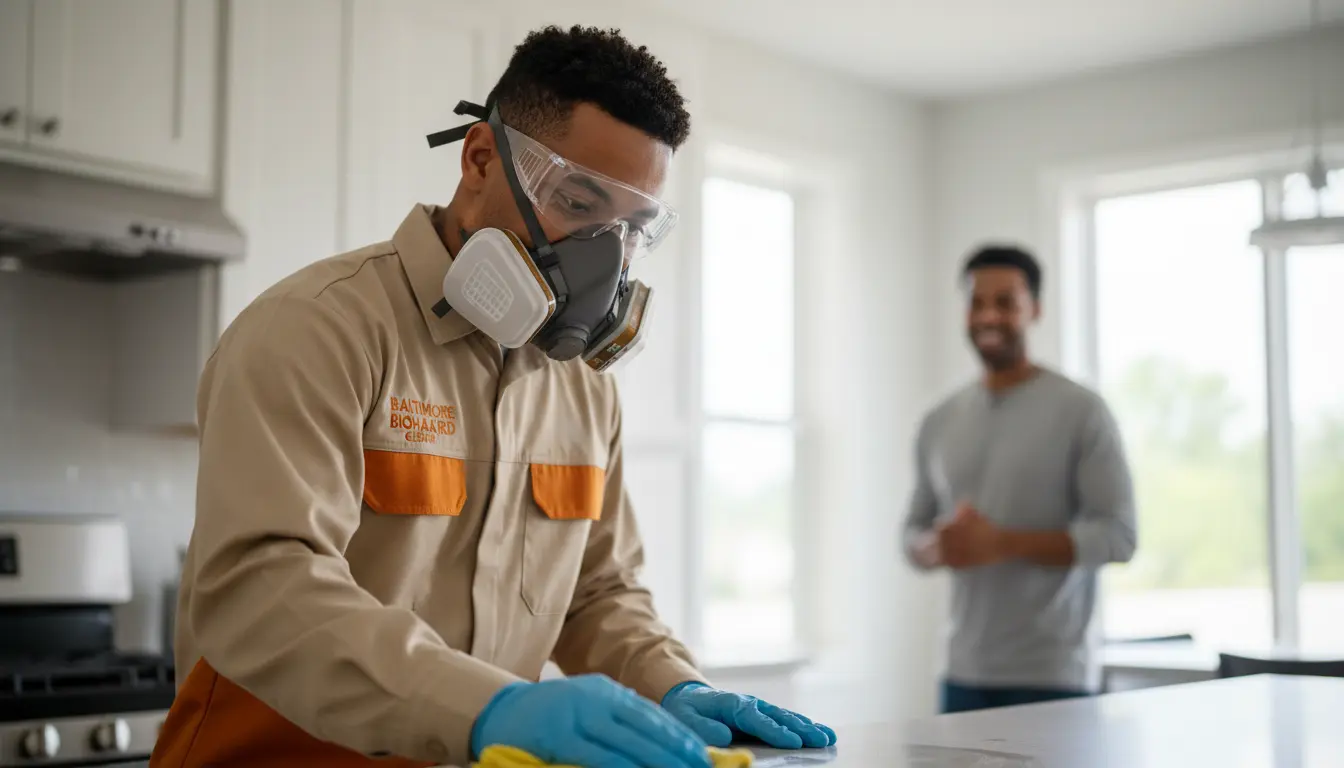
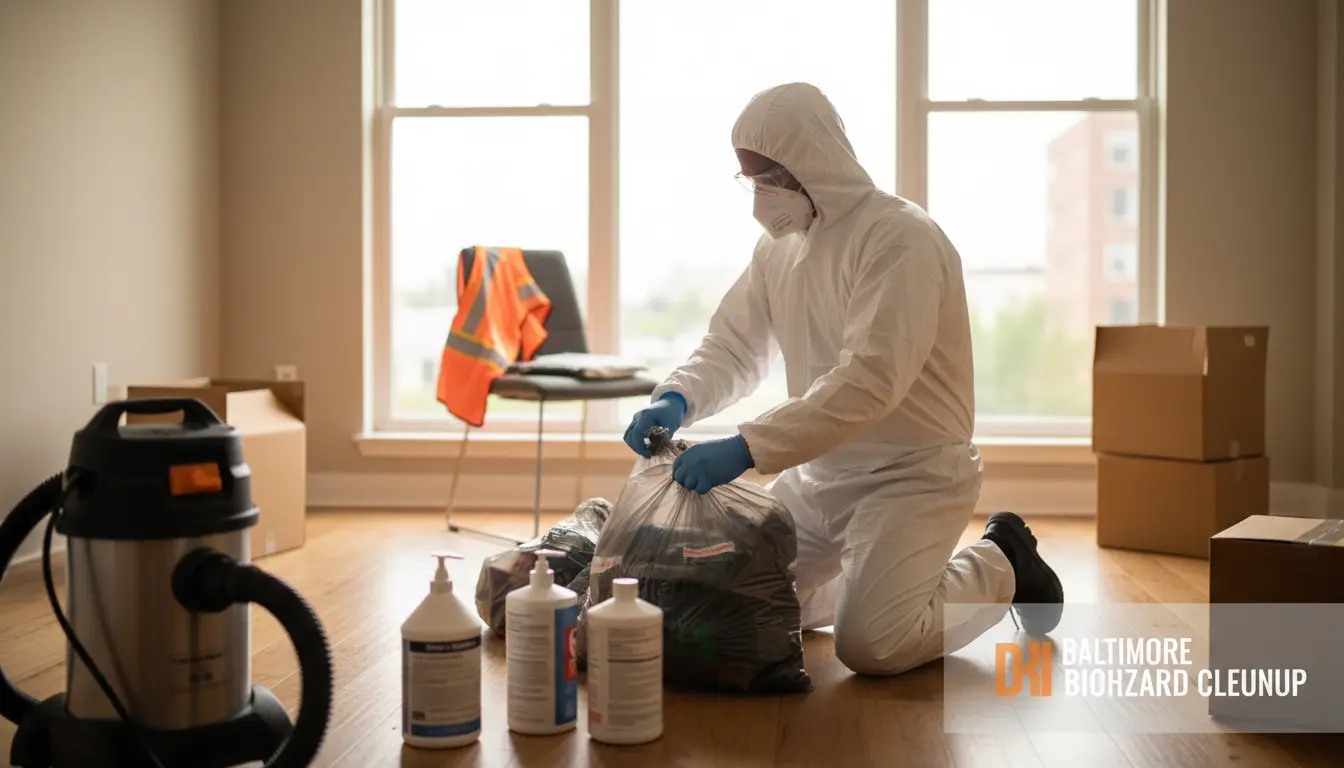
Don’t go it alone. Assemble a team including family, counselors, and professionals. Stock up on PPE: gloves, masks (N95 for dust and biohazards), goggles, and sturdy boots. For Baltimore-specific needs, source supplies from local stores like Home Depot in Towson.
Consider hiring experts early. Our odor elimination services can address pervasive smells from decomposing materials, a frequent issue in hoarded spaces.
Step-by-Step Guide to Hoarding Cleanup
Tackle cleanup methodically to prevent overwhelm and ensure safety. This process can take weeks or months, so pace yourself.
Step 1: Create a Plan with the Hoarder
Involve the person hoarding if possible—therapy referrals through Baltimore’s mental health resources, like the city’s Department of Health, can help. Categorize items: Keep, Donate, Discard. Start small, like one room in a Mount Vernon apartment, to build momentum.
Step 2: Sort and Remove Safely
Use the "one-touch" rule: Handle each item once. For heavy lifting, use dollies to avoid strains. In Baltimore’s tight spaces, rent a dumpster from local providers compliant with city waste regulations.
Bag items securely—double-bag biohazards to prevent leaks. For hazardous waste, rely on certified disposal; our biohazard waste transport ensures safe, legal removal from areas like Charles Village.
Handling Biohazards During Sorting
Wear full PPE when encountering fluids, sharps, or pests. Disinfect surfaces with EPA-approved cleaners. If homicide-related materials appear—rare but possible in urban settings—stop and call for homicide scene cleaning expertise.
Step 3: Deep Clean and Disinfect
Once cleared, vacuum with HEPA filters to capture fine particles. Steam clean carpets and wash walls. In Baltimore’s damp climate, use dehumidifiers to prevent mold regrowth. Address lingering odors with professional treatments to make the space livable again.
For properties in Catonsville, where basements often hoard water-damaged items, thorough drying is crucial to avoid structural issues.
Step 4: Dispose of Waste Properly
Baltimore has strict waste rules—recyclables to designated centers, bulk to landfills. Biohazards require special handling; never mix with regular trash. Partner with licensed haulers to comply with Maryland DEP guidelines.
Local Resources and Regulations in Baltimore
Navigating cleanup in Baltimore means knowing local laws. The city’s Housing Authority oversees habitability, and violations can lead to fines. For hoarding tied to mental health, connect with organizations like the Baltimore City Health Department for support groups.
In suburbs like Severna Park, Anne Arundel County rules apply for waste transport. Always check zoning for dumpster placements to avoid permits hassles.
If serving Towson residents, note Baltimore County’s emphasis on fire safety during cleanups—our team ensures compliance every step.
Practical Tips for Emotional and Physical Well-Being
Cleanup is as much emotional as physical. Set boundaries to prevent burnout; take breaks and seek counseling. Physically, stay hydrated in Baltimore’s humid heat and lift properly to dodge injuries.
Encourage the hoarder with positive reinforcement. Post-cleanup, organize with storage solutions to prevent relapse. For ongoing support, Baltimore Biohazard Cleanup offers compassionate guidance tailored to local needs.
FAQ: Common Questions About Hoarding Cleanup in Baltimore
1. How much does hoarding cleanup cost in Baltimore?
Costs vary by severity, from $500 for minor jobs to $10,000+ for extensive biohazards. Factors include labor, disposal, and disinfection. Contact Baltimore Biohazard Cleanup at (410) 709-0617 for a free estimate.
2. Do I need permits for hoarding cleanup in Baltimore?
For large waste volumes or structural changes, yes—check with the Department of Public Works. Biohazards always require professional certification to meet OSHA and EPA standards.
3. How long does a typical hoarding cleanup take?
It depends on size: A single room might take days, a full house weeks. Phased approaches help manage timelines, especially in dense areas like Mount Vernon.
4. Can I handle hoarding cleanup myself?
Minor cases yes, but biohazards demand pros to avoid health risks. In Baltimore, improper handling can lead to fines or contamination spread.
5. What if biohazards are involved in the hoarding?
Stop immediately and call experts. Our services cover everything from mold to medical waste, ensuring safe restoration.
Conclusion: Restore Safety with Professional Help
Handling hoarding cleanup safely in Baltimore requires expertise, patience, and the right resources. From assessing risks in Charles Village rowhouses to disposing of waste in Towson, Baltimore Biohazard Cleanup makes the process seamless and secure. Don’t risk your health—reach out today for compassionate, compliant service. Call (410) 709-0617 or visit our site to schedule a consultation and reclaim your space.