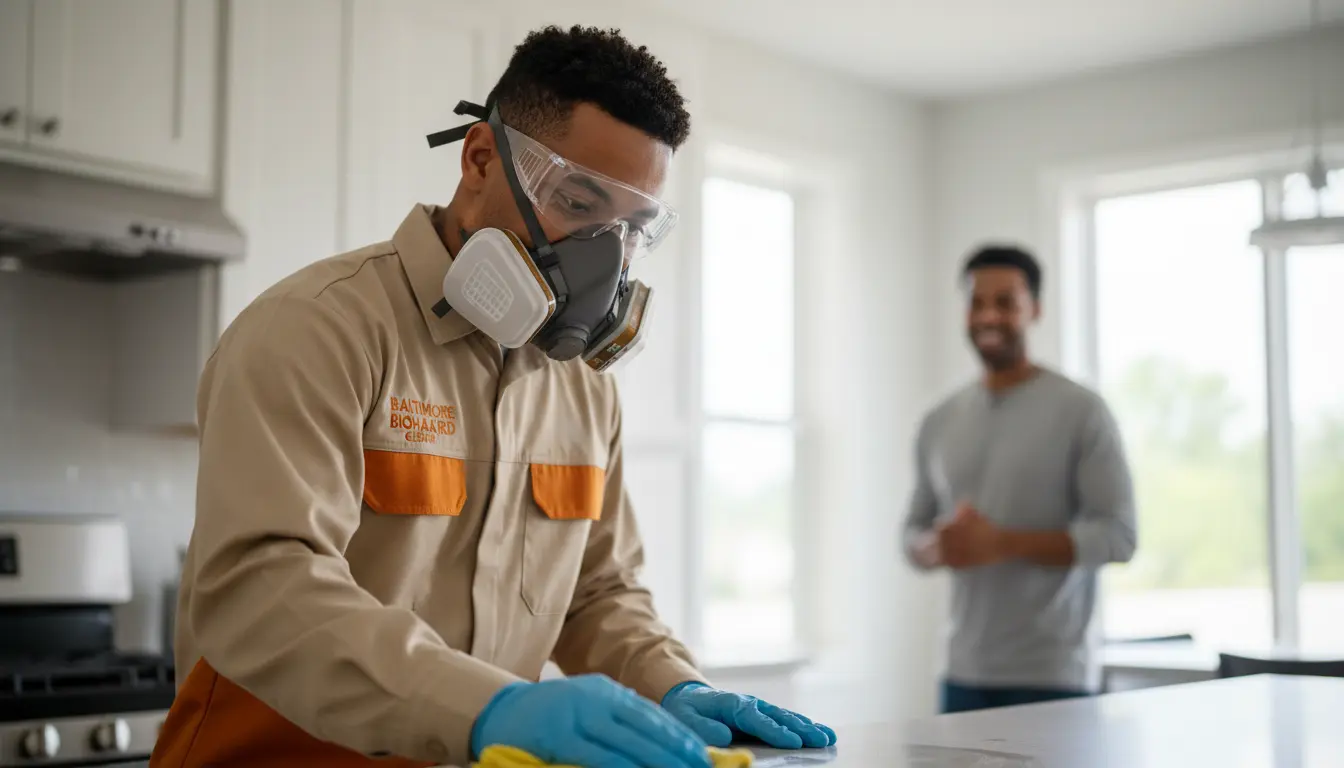
If you’re using household bleach to clean up a biohazard scene in Baltimore, you’re not only breaking the law but also putting everyone at risk. Many property owners assume that a strong chemical like bleach can handle blood, bodily fluids, or other contaminants. Yet bleach is not registered with the EPA as a disinfectant for biohazard waste, and it can actually cause toxic fumes when mixed with organic matter. Worse, it fails to eliminate bloodborne pathogens such as hepatitis B or HIV, leaving a dangerous environment for occupants and future visitors. This mistake often leads to costly fines from Maryland health regulators and long-term health liability claims that far exceed the price of professional remediation.
Baltimore’s unique urban landscape—dense rowhomes, aging infrastructure, and variable weather—makes biohazard cleanup especially complex. High humidity accelerates decomposition and odor penetration into porous building materials like brick and plaster. Shared walls in rowhomes can allow contaminants to seep into neighboring units, creating a public health crisis. Professional biohazard remediation isn’t just an expense; it’s a critical safeguard for property value, legal compliance, and community safety. Understanding what factors affect biohazard cleanup costs in Baltimore helps you make informed decisions when time is critical.
Baltimore Biohazard Cleanup provides certified, discreet, and thorough remediation services across the region. Our team follows IICRC S540 standards and adheres to OSHA and EPA regulations. In this guide, we break down every element that influences pricing and why professional intervention is essential for Baltimore properties.
Technical Process of Professional Biohazard Remediation
Professional biohazard cleanup involves a systematic approach that goes far beyond simple cleaning. Our technicians begin with a comprehensive risk assessment, documenting the affected area and identifying all materials that require removal or decontamination. This initial step is critical because it determines the scope of work and directly impacts cost.
Once the assessment is complete, we establish a containment zone using heavy-duty plastic sheeting and negative air machines. These machines create a pressure differential that prevents airborne contaminants from escaping to unaffected areas. In Baltimore’s older structures, where ductwork may be shared, this step is essential to avoid cross-contamination.
Physical removal of biohazardous materials follows. Technicians wear full PPE including Tyvek suits, N95 respirators, and double gloves. All solids and absorbed liquids are placed in regulated waste bags that meet OSHA and DOT shipping requirements. For porous materials like drywall, carpet, or wood that cannot be effectively decontaminated, we remove and replace them—a factor that can significantly increase costs if structural damage is extensive.
After removal, we apply EPA-registered disinfectants specifically formulated for bloodborne pathogens. These chemicals have a validated contact time, often 5-10 minutes, to ensure viral inactivation. In Baltimore’s humid climate, we use antimicrobial fogging to reach hidden crevices where biological residue may accumulate. Finally, we conduct ATP fluorescence testing to verify the absence of organic material. Only when readings fall below industry thresholds do we seal the area with an encapsulant to prevent future microbial growth.
Data Comparison: Professional Remediation vs. Standard Cleaning
The table below highlights key differences between professional biohazard remediation and typical residential cleaning services. These distinctions matter when considering both safety and long-term costs.
| Feature/Metric | Professional Biohazard Remediation | Standard Residential Cleaning |
|---|---|---|
| Regulatory Compliance | OSHA 29 CFR 1910.1030, EPA waste disposal | Not compliant |
| Pathogen Elimination | EPA-registered disinfectants, ATP testing | Bleach or ammonia (ineffective) |
| Structural Assessment | Identifies and replaces porous materials | Surface cleaning only |
| Containment | Negative air machines, sealed barrier | None |
| Waste Disposal | Regulated medical waste incineration | Regular trash (illegal) |
Expert Insights: Diagnostic Tips and Common Mistakes
Advanced Diagnostic Tip 1: Detecting Hidden Biological Seepage
In Baltimore rowhomes, biohazards can migrate through tiny cracks in shared walls or along plumbing chases. Technicians use moisture meters with bio-probes and thermal imaging to identify hidden saturation. If you only clean what’s visible, pathogens can survive and resurface months later, leading to mold and odor issues that multiply cleanup costs.
Advanced Diagnostic Tip 2: Porous Material Replacement vs. Cleaning
Many property owners insist on cleaning stained wood or carpet to save money. However, IICRC S540 states that porous materials contaminated with blood or body fluids cannot be fully decontaminated. Attempting to clean them risks pathogen survival and voiding insurance claims. Replacing such materials is non-negotiable for safe remediation.
Advanced Diagnostic Tip 3: Importance of Negative Pressure
Without negative air pressure, airborne particles can spread throughout a building. In multi-family dwellings common in Baltimore, this could affect neighbors. Professional units use HEPA filtration and exhaust systems that comply with ASHRAE standards, ensuring containment and protecting public health.
Common Mistake 1: Using Household Bleach
Bleach corrodes materials, produces toxic fumes, and is quickly inactivated by organic matter. Pathogens like hepatitis C can survive bleach exposure. This mistake forces remediation teams to deal with both biohazard and chemical hazards, increasing labor and material costs.
Common Mistake 2: Waiting for Odor to Disperse
Baltimore’s humidity slows natural odor breakdown. Decomposition gases penetrate walls and fabrics, causing persistent smells that attract pests. Waiting weeks before calling professionals can triple restoration expenses due to advanced microbial growth and structural damage.
Common Mistake 3: Allowing Untrained Personnel into the Site
Family members or unlicensed cleaners entering a biohazard scene risk exposure and cross-contamination. This can lead to lawsuits and mandatory quarantine of the property. Professional containment protocols are designed to protect everyone, and bypassing them invalidates insurance coverage.
Pricing Structure and Cost Factors
Biohazard cleanup costs in Baltimore vary based on several variables. The average project ranges from $2,500 for a small blood cleanup to $15,000 or more for extensive trauma or hoarding scenes. Understanding these factors helps you budget accurately.
- Site Mobilization Fees – Most companies charge a trip fee of $150 to $500 to cover travel, equipment setup, and initial assessment. This fee is typically waived for emergencies if service is booked within hours.
- Hourly Remediation Rates – Labor generally runs $75 to $200 per hour per technician. Baltimore’s high cost of living and unionized labor markets can push rates higher, but certified teams provide faster, safer work.
- Specialized Disposal Costs – Biohazard waste must be incinerated at approved facilities. Disposal fees are $0.50 to $2.00 per pound, depending on weight and waste type. A typical crime scene can generate 50-200 pounds of waste.
- Structural Material Replacement – If walls, floors, or ceilings are contaminated, replacement adds $500 to $5,000 for materials and labor. Historic Baltimore rowhomes may require special permits for restoration.
- HVAC Decontamination – If the HVAC system is compromised, cleaning or replacing ductwork can cost $1,000 to $3,000. This is common in older buildings with shared duct systems.
- 3 Key Factors That Influence Cost:
- Extent of biological contamination (surface vs. porous penetration)
- Total volume of biohazardous waste
- Access challenges in Baltimore’s dense neighborhoods (narrow stairs, no parking)
Safety and Standards Compliance
All professional biohazard remediation must comply with OSHA’s Bloodborne Pathogens Standard (29 CFR 1910.1030), which requires proper training, vaccination, and use of PPE for all workers. Additionally, the IICRC S540 standard sets procedures for trauma and crime scene cleanup, including documentation, waste management, and structural verification. In Maryland, generators of regulated medical waste must follow COMAR regulations for storage, transport, and disposal.
For Baltimore property owners, choosing a non-certified cleaner can result in OSHA fines of up to $70,000 per violation and legal liability if others are harmed. Our team is fully certified and insured, and we use only authorized medical waste carriers that comply with DOT guidelines. We also provide a detailed closure report that includes ATP test results, disposal manifests, and photographic evidence—essential for insurance claims and property records.
Frequently Asked Questions
How quickly should I call for biohazard cleanup services after an incident?
Immediately. Bloodborne pathogens can survive on surfaces for days or weeks. In Baltimore’s humid climate, decomposition begins within hours, and odors can become permanent. Early intervention reduces health risks and restoration costs. Our team offers 24/7 emergency response to mitigate secondary damage.
Will my homeowners insurance cover biohazard cleanup?
Most standard policies cover remediation if the incident is sudden and accidental, such as a crime scene or accident. However, gradual hoarding or unmaintained properties may be excluded. We recommend contacting your insurer promptly and asking about “biohazard remediation” coverage. Our team can provide itemized invoices and documentation to support your claim.
What happens if I don’t clean up a biohazard scene properly?
Health risks include hepatitis B, hepatitis C, HIV, and bacterial infections. Structurally, biological residues degrade materials and attract pests. Legally, you may be liable if a future occupant contracts an illness. In Baltimore, failure to properly remediate can result in health department orders, fines, and property condemnation.
Can biohazard cleanup cause damage to my property?
Professional remediation is designed to minimize damage. Technicians use non-abrasive methods and disinfectants that are safe for most surfaces. However, necessary removal of contaminated porous materials will alter the space. We coordinate with contractors to restore the property to a safe, habitable condition.
Professional Biohazard Remediation in Baltimore
Understanding what factors affect biohazard cleanup costs in Baltimore helps you avoid expensive mistakes and protect your property. From humidity-driven decomposition to the structural quirks of historic homes, every incident is unique. Professional remediation ensures compliance, safety, and peace of mind.
Baltimore Biohazard Cleanup brings years of hands-on experience, advanced equipment, and compassionate service to every job. We handle everything from blood cleanup to hoarding remediation, always adhering to the highest standards. Contact us today for a confidential assessment and a transparent quote.