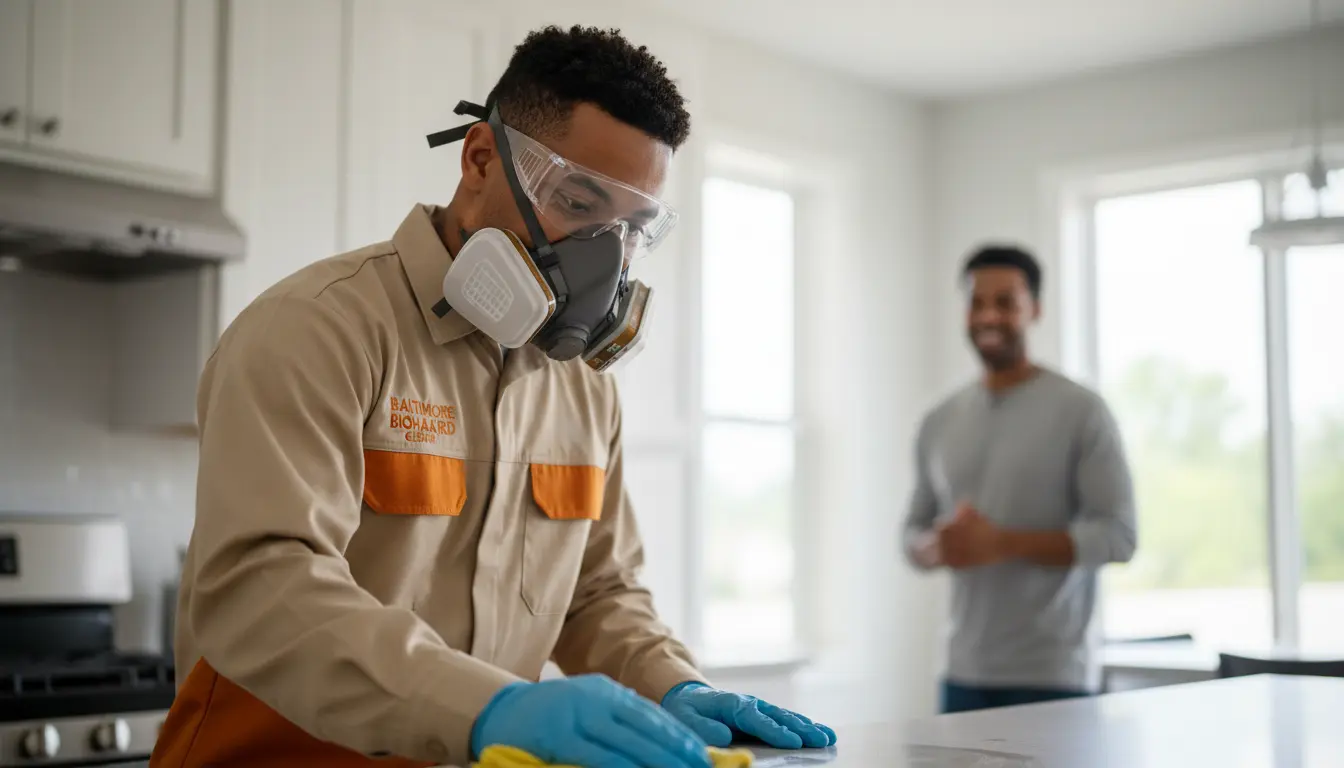
The lesson is clear: restoring a property after biohazard contamination is not a task for general cleaners or well-meaning family members. It requires a precise, scientifically validated process that addresses not only visible contamination but also microscopic pathogens and structural damage. In this step-by-step guide to restoring a property after biohazard contamination, we will walk through the exact workflow used by certified remediation specialists, explain why each phase matters, and highlight how Baltimore Biohazard Cleanup applies these standards to protect residents and property values across the region.
Initial Risk Assessment and Containment
The first phase of any biohazard restoration begins long before any cleaning solution is applied. A trained technician performs a thorough site evaluation to identify all hazards, including bloodborne pathogens, chemical residues, and potential structural instability. Using personal protective equipment (PPE) compliant with OSHA’s Bloodborne Pathogens Standard (29 CFR 1910.1030), the team establishes a containment zone to prevent cross-contamination to unaffected areas. In Baltimore’s dense urban neighborhoods, where rowhomes share walls and ventilation systems, this step is especially critical. Negative air pressure machines and HEPA-filtered air scrubbers are deployed to ensure that airborne contaminants do not migrate into adjacent units or common hallways.
Once containment is verified, the team documents the scene with photographs and notes for insurance and regulatory purposes. This documentation is not just administrative—it serves as a baseline for verifying that every contaminated surface has been addressed. The team also tests for hidden biological seepage using adenosine triphosphate (ATP) fluorescence testing, which reveals organic matter invisible to the naked eye. This initial assessment determines the scope of work, the type of disinfectants required, and whether any structural components—such as drywall, carpet, or subflooring—must be removed and replaced.
Physical Removal of Biohazardous Materials
After assessment, the physical removal of all contaminated materials begins. This step goes far beyond wiping down surfaces. All porous materials that have come into contact with blood, bodily fluids, or other biohazards are carefully cut out and double-bagged in biohazard waste containers. In Baltimore’s older housing stock, this often means removing sections of lath-and-plaster walls, hardwood flooring, and even insulation inside party walls. The team uses specialized forensic cleaning tools, such as enzyme treatments that break down organic matter at a molecular level, reducing odors and the risk of microbial growth.
Non-porous surfaces like glass, metal, and sealed concrete are cleaned with EPA-registered hospital-grade disinfectants that have a verified viral inactivation rate. The application method—whether fogging, wiping, or spraying—depends on the surface and the extent of contamination. For example, in cases involving meth lab decontamination, chemical residues require different neutralizers than those used for bloodborne pathogens. Baltimore Biohazard Cleanup’s technicians are trained to identify these differences and apply the correct protocol, ensuring that no hazardous residue remains. All waste is transported in authorized vehicles to licensed medical waste disposal facilities, complying with Maryland Department of the Environment regulations.
Data Comparison: Professional Remediation vs. Standard Cleaning
The following table highlights the critical differences between professional biohazard remediation and standard residential cleaning, based on the IICRC S540 standard for trauma and crime scene cleanup.
| Feature / Metric | Professional Biohazard Remediation | Standard Residential Cleaning |
|---|---|---|
| Regulatory Compliance | OSHA, EPA, IICRC S540, Maryland state regulations | None required |
| Pathogen Elimination | EPA-registered hospital-grade disinfectants; ATP verification | Household bleach or all-purpose cleaners |
| Structural Assessment | Full evaluation for porous material removal and hidden seepage | Visual inspection only |
| Cross-Contamination Prevention | Negative air pressure, HEPA filtration, sealed containment zones | No containment protocol |
| Waste Disposal | Licensed biohazard transport and incineration | Trash bags to curbside |
| Odor Elimination | Enzyme treatments, ozone or hydroxyl generators, structural encapsulation | Air fresheners or deodorizers |
Expert Insights on Advanced Diagnostic and Remediation Techniques
Even experienced property managers can overlook signs of hidden contamination. Three advanced diagnostic tips that professional remediation teams rely on include thermal imaging to detect moisture pockets that support microbial growth, olfactory mapping to pinpoint odor sources that may not align with visible stains, and pH testing to identify chemical residues that bleach cannot neutralize. For example, in a recent Baltimore project, thermal imaging revealed that decomposition fluid had wicked up into the wooden joists beneath a bathroom subfloor, an area that would have been missed by visual inspection alone.
Common mistakes that property owners make include using household bleach on biological matter. Bleach is rapidly deactivated by organic material and does not eliminate all pathogens. Another frequent error is waiting for odors to dissipate naturally. In Baltimore’s humid climate, odors from decomposition can embed deeply into porous surfaces, requiring specialized enzyme treatments and, in some cases, ozone or hydroxyl generators to fully neutralize them. Allowing untrained personnel—such as cleaning staff or family members—into the site before professional remediation is also dangerous. They risk exposure to bloodborne pathogens and can spread contamination through movement, shoes, and clothing. The consequences include long-term health risks like hepatitis B, HIV, or MRSA infections, as well as structural damage that reduces property value.
Pricing and Cost Factors
The cost of professional biohazard restoration varies based on several factors. Below are typical pricing structures and the elements that influence them.
- Site mobilization fee: A fixed charge to cover travel, equipment setup, and initial assessment. In Baltimore, this typically ranges from $250 to $500 depending on distance and urgency, especially for emergency response calls outside normal business hours.
- Hourly remediation rate: Most services charge between $150 and $300 per hour per technician. The number of technicians needed depends on the site size and contamination severity. A single unattended death in a standard bedroom may require two technicians over several hours, while a larger scene with extensive saturation could involve a four-person team.
- Specialized disposal fees: Biohazardous waste must be handled by licensed transporters and incinerated at approved facilities. Costs are calculated per pound or per container, typically adding $100 to $500 to the total bill.
Three major factors influence the final price. First, the extent of structural material replacement: if drywall, flooring, insulation, or cabinetry must be removed and reinstalled, the cost rises significantly. Second, the total volume of biohazardous waste: more waste means higher disposal fees and longer labor hours. Third, the necessity for specialized HVAC decontamination: if the property’s heating and cooling system has been contaminated, the ductwork must be cleaned and treated with antimicrobial agents, which adds several hundred to a few thousand dollars.
Safety and Compliance Standards
Professional biohazard remediation is governed by a strict framework of safety standards and certifications. The most important are the IICRC S540 standard for trauma and crime scene cleanup, which outlines the procedures for cleaning and restoring biohazard-contaminated environments, and OSHA’s Bloodborne Pathogens Standard, which mandates proper PPE use, vaccination programs for workers, and exposure control plans. In Maryland, additional state regulations apply to the transport and disposal of medical waste, as well as to the remediation of meth labs and other chemical hazards.
These standards are not bureaucratic hurdles—they are life-saving protocols. For property owners in Baltimore, hiring a certified team ensures that the site is restored to a habitable condition without risking the health of current or future occupants. For example, if bloodborne pathogens remain on a surface, they can survive for days or weeks and infect anyone who touches them. Professional ATP testing confirms that all biological material has been eliminated, providing a measurable proof of safety. Baltimore Biohazard Cleanup adheres to all these standards, and our technicians complete annual training to stay current with best practices in forensic restoration and microbial remediation.
Frequently Asked Questions
How long does the biohazard restoration process take?
The timeline depends on the size of the affected area, the type of contamination, and the extent of structural damage. A small, contained incident like a single-room trauma can be completed in one to two days. Larger scenes involving multiple rooms, saturated porous materials, or chemical residues may require three to five days. In Baltimore’s humid summer climate, decomposition accelerates, which can necessitate more intensive odor removal and extra time for proper drying before encapsulation. The team provides a clear timeline after the initial assessment and works efficiently to minimize disruption.
Is it safe to live in the property during remediation?
For most biohazard scenarios, the affected area must be isolated and vacated during active remediation. The use of negative air machines and containment barriers creates a pressure differential that prevents airborne contaminants from spreading to uninfected rooms. However, if the contamination involves airborne pathogens like mold or viral particles, or if the HVAC system is compromised, it is safer for all occupants to relocate temporarily. The remediation team will advise based on the specific conditions. In Baltimore rowhomes with shared ventilation, extra precautions are taken to protect neighbors.
What happens if I try to clean biohazards myself?
DIY biohazard cleaning is highly dangerous and often ineffective. Household cleaners cannot kill all pathogens, and improper handling of contaminated materials can lead to exposure to hepatitis, HIV, or bacterial infections. Furthermore, if the waste is not disposed of legally, the property owner can face fines from the Maryland Department of the Environment. Insurance policies also typically require professional remediation to cover claims. For a detailed explanation of these risks, see our article on the top risks of DIY biohazard cleanup and how to avoid them.
Does homeowners insurance cover biohazard restoration?
Coverage varies by policy, but many standard homeowners insurance plans include coverage for accidental contamination, especially if the incident is sudden and unexpected (e.g., a death in the home or a sewage backup). Some policies require a specific rider for biohazard cleanup. It is essential to contact your insurance provider immediately and to work with a remediation company that can provide detailed documentation and invoices. Baltimore Biohazard Cleanup works closely with insurance adjusters to streamline the process and ensure that all covered costs are reimbursed.
Professional Biohazard Remediation in Baltimore
Restoring a property after a biohazard contamination is not a simple cleaning task—it is a complex, regulated process that demands expertise, precision, and compassion. From the initial risk assessment to final ATP verification, every step is designed to eliminate health risks and return the property to a safe, livable condition. In Baltimore, where historic architecture, dense neighborhoods, and variable climate conditions add layers of complexity, working with a certified local team is the only way to ensure compliance and peace of mind.
Baltimore Biohazard Cleanup brings years of experience, full IICRC and OSHA certification, and a deep understanding of Baltimore’s unique challenges. Whether you are dealing with an unattended death, a crime scene, a meth lab, or an infectious disease outbreak, our technicians are available 24/7 to respond discreetly and professionally. Contact us today to schedule an assessment and take the first step toward restoring your property safely and completely. For more information on related services, explore our property biohazard restoration page or read about emergency biohazard cleanup 24/7 help for Baltimore residents.