Marie, a property manager in Canton, unlocked the door of a rowhome that had been sealed for weeks. The odor hit her before she crossed the threshold—a thick, sweet decay that signaled something far beyond a routine cleaning. She stepped back and called a biohazard remediation company, but within hours she realized she had no idea what qualifications mattered. That moment of uncertainty is exactly why every Baltimore property owner, landlord, or facility manager must arm themselves with the right questions to ask before hiring a biohazard cleanup company in Baltimore.
Biohazard remediation is not a standard cleaning service. It involves the removal of bloodborne pathogens, decomposition fluids, chemical spills, and other potentially infectious materials that require specialized training, equipment, and regulatory compliance. In Baltimore, where aging infrastructure and dense urban layouts complicate containment, choosing the wrong provider can lead to cross-contamination, legal liability, and long-term health risks for occupants. This guide walks you through the critical screening questions, technical standards, and local factors that separate a competent remediation team from a dangerous amateur.
Understanding the Technical Process of Professional Biohazard Remediation
The work begins with a comprehensive risk assessment. A certified technician evaluates the scene to identify all biohazardous materials, structural vulnerabilities, and potential airborne contaminants. In Baltimore’s humid Mid-Atlantic climate, biological decomposition accelerates rapidly—especially in unventilated rowhomes or basements—so the initial survey must account for moisture levels and hidden seepage. The team then establishes containment zones using negative air machines and heavy-duty plastic sheeting to prevent cross-contamination to unaffected areas.
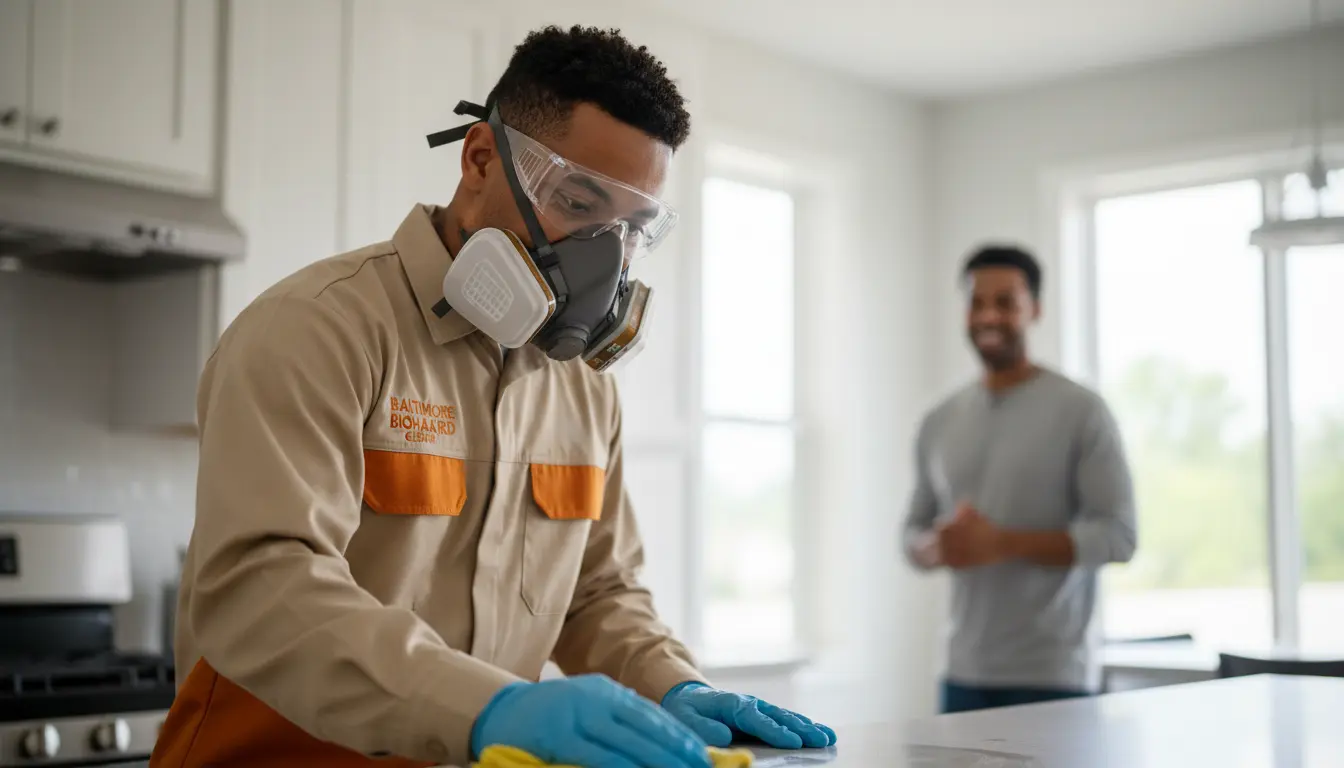
Once containment is secure, technicians don full personal protective equipment (PPE) following OSHA Bloodborne Pathogens Standard 29 CFR 1910.1030. They physically remove all biohazardous waste—including saturated carpet, drywall, and porous materials—and place it in red biohazard bags for incineration. Next comes the cleaning phase: EPA-registered hospital-grade disinfectants are applied to every hard surface, followed by adenosine triphosphate (ATP) fluorescence testing to verify that pathogens have been eliminated. Finally, the area may receive structural encapsulation or odor-sealing primers to ensure no residual contamination remains.
This multi-step workflow is not something a general cleaning company can replicate. Without proper training and equipment, property owners risk incomplete remediation, which can lead to mold growth, airborne pathogens, and failed health inspections. Asking a potential provider to walk you through their process is one of the most important questions to ask before hiring a biohazard cleanup company in Baltimore.
Data Comparison: Professional Biohazard Remediation vs. Standard Janitorial Cleaning
To illustrate the gap between these two service categories, the table below compares key performance metrics based on the IICRC S540 standard for trauma and crime scene cleanup.
| Feature/Metric | Professional Biohazard Remediation | Standard Residential Cleaning |
|---|---|---|
| Regulatory Compliance | OSHA 29 CFR 1910.1030, EPA waste disposal, DOT transport | No bloodborne pathogen training required |
| Pathogen Elimination | ATP testing (<30 RLU pass threshold), hospital-grade disinfectants | Household bleach or all-purpose cleaners |
| Structural Assessment | Moisture mapping, thermal imaging, decomposition timeline analysis | Visual inspection only |
| Waste Disposal | Licensed medical waste transporter, incineration logs | Dumpster or regular trash |
The differences are stark. Professional remediation follows a documented, verifiable protocol—standard cleaning does not. When you ask questions to ask before hiring a biohazard cleanup company in Baltimore, always request proof of IICRC certification and ask whether they use ATP testing as a quality control measure.
Expert Insights: Advanced Diagnostic Tips and Common Mistakes
Three Professional Diagnostic Tips
1. Detect hidden biological seepage with moisture meters and thermal imaging. In Baltimore rowhomes, shared walls can wick fluids from one unit to another. A technician should scan adjacent rooms and the subfloor for elevated moisture levels that indicate undetected contamination.
2. Understand why porous materials must be removed, not cleaned. Items like drywall, carpet, and upholstery absorb biological fluids deeply. Chemical cleaning can only sanitize the surface—pathogens remain trapped inside, posing a long-term health risk. Replacement is the only safe option.
3. Use negative pressure to prevent cross-contamination. Without a negative air machine (HEPA-filtered exhaust), airborne particles can migrate through HVAC systems, contaminating the entire building. This is especially critical in Baltimore’s older structures with shared ductwork.
Common Mistakes Property Owners Make
Mistake 1: Using household bleach on biological matter. Bleach is rapidly inactivated by organic material and does not effectively kill all bloodborne pathogens. It also releases toxic fumes when mixed with ammonia. Always use EPA-registered disinfectants with proven kill claims.
Mistake 2: Waiting for odors to dissipate naturally. Odors are the result of volatile organic compounds released by decomposing matter. Waiting does not remove the source—it only allows pathogens to spread. Professional remediation must address both the source and the airborne contaminants.
Mistake 3: Allowing untrained personnel into the site. Friends, family, or general contractors lack proper PPE and training. They risk exposure to hepatitis B, HIV, and other diseases, and they may inadvertently spread contaminants to clean areas. Only trained technicians should enter the containment zone.
Pricing Factors for Biohazard Cleanup in Baltimore
Pricing for professional biohazard remediation varies based on several key factors. Below are common cost components without a table.
- Standard site mobilization fee: Typically $150–$300 to cover travel, setup, and containment materials for a standard Baltimore rowhome or apartment.
- Hourly remediation rates: Most companies charge $125–$250 per technician per hour. Complex jobs requiring multiple technicians and extended hours will increase the total.
- Specialized disposal costs: Biohazardous waste must be transported by a licensed medical waste hauler and incinerated. Disposal fees range from $50 to $200 per container, depending on weight and volume.
When discussing pricing, ask for an itemized estimate that breaks down these components. This is one of the essential questions to ask before hiring a biohazard cleanup company in Baltimore to avoid surprise charges.
Safety and Standards: Certifications That Matter
Reputable biohazard remediation companies hold certifications that demonstrate their commitment to safety and compliance. The most critical are IICRC S540 certification for trauma and crime scene cleanup, OSHA Bloodborne Pathogens training (29 CFR 1910.1030), and EPA registration for disinfectants used on-site. Additionally, the company should have a written safety plan, proper disposal permits from the Maryland Department of the Environment, and liability insurance that covers biohazard work.
These standards are not bureaucratic red tape—they directly protect property owners from liability and future health issues. For example, if a company disposes of biohazard waste improperly, the property owner can be held responsible for environmental contamination. Similarly, without IICRC certification, there is no guarantee that the remediation meets industry best practices for pathogen elimination. Always ask for copies of certificates and insurance before work begins. This is another critical item on your list of questions to ask before hiring a biohazard cleanup company in Baltimore.
Frequently Asked Questions About Biohazard Remediation
What is the difference between biohazard cleanup and standard crime scene cleanup?
Biohazard cleanup is a broader category that includes crime scenes, but also covers unattended deaths, hoarding situations, industrial accidents, and medical waste spills. Crime scene cleanup is a subset that deals specifically with law enforcement-involved sites. Both require the same technical protocols, but biohazard remediation may involve additional steps for odor removal or structural decontamination. In Baltimore, many companies offer both services under one umbrella.
How long does a typical biohazard remediation take in a Baltimore rowhome?
The timeline depends on the severity of contamination. A small blood spill may be completed in a few hours, while a full decomposition scene involving multiple rooms can take two to five days. Factors like the need for structural drying (due to humidity), the volume of waste, and the complexity of containment in shared-wall buildings all extend the timeline. A professional company will provide a detailed schedule after the initial assessment.
Is it safe to stay in the home during biohazard cleanup?
No. Occupants—including pets—should be relocated during active remediation. The containment zone creates negative pressure that can pull air from other areas, and disturbing contaminated materials can release airborne pathogens. Most companies recommend staying away until final ATP testing confirms the area is safe. In Baltimore, where many homes have shared ventilation, this precaution is especially important.
What happens to the waste after removal?
All biohazardous waste is double-bagged in red biohazard bags, labeled, and transported by a licensed medical waste hauler to an authorized incineration facility. The company must provide a waste manifest documenting the chain of custody. This ensures compliance with Maryland state regulations and protects the property owner from future liability. Always request a copy of the disposal certificate for your records.
Professional Biohazard Remediation in Baltimore
Choosing the right biohazard cleanup company is not a decision to rush. The technical demands, health risks, and legal implications demand a provider with proven expertise, local knowledge, and a compassionate approach. By asking the right questions to ask before hiring a biohazard cleanup company in Baltimore—covering certifications, process, pricing, and safety protocols—you can ensure that your property is restored thoroughly and safely. Baltimore Biohazard Cleanup brings years of experience navigating the unique challenges of the city’s historic rowhomes, humid climate, and strict regulatory environment. Our team is IICRC-certified, OSHA-trained, and committed to discreet, respectful service. When you need professional remediation, trust the experts who understand Baltimore from the inside out.