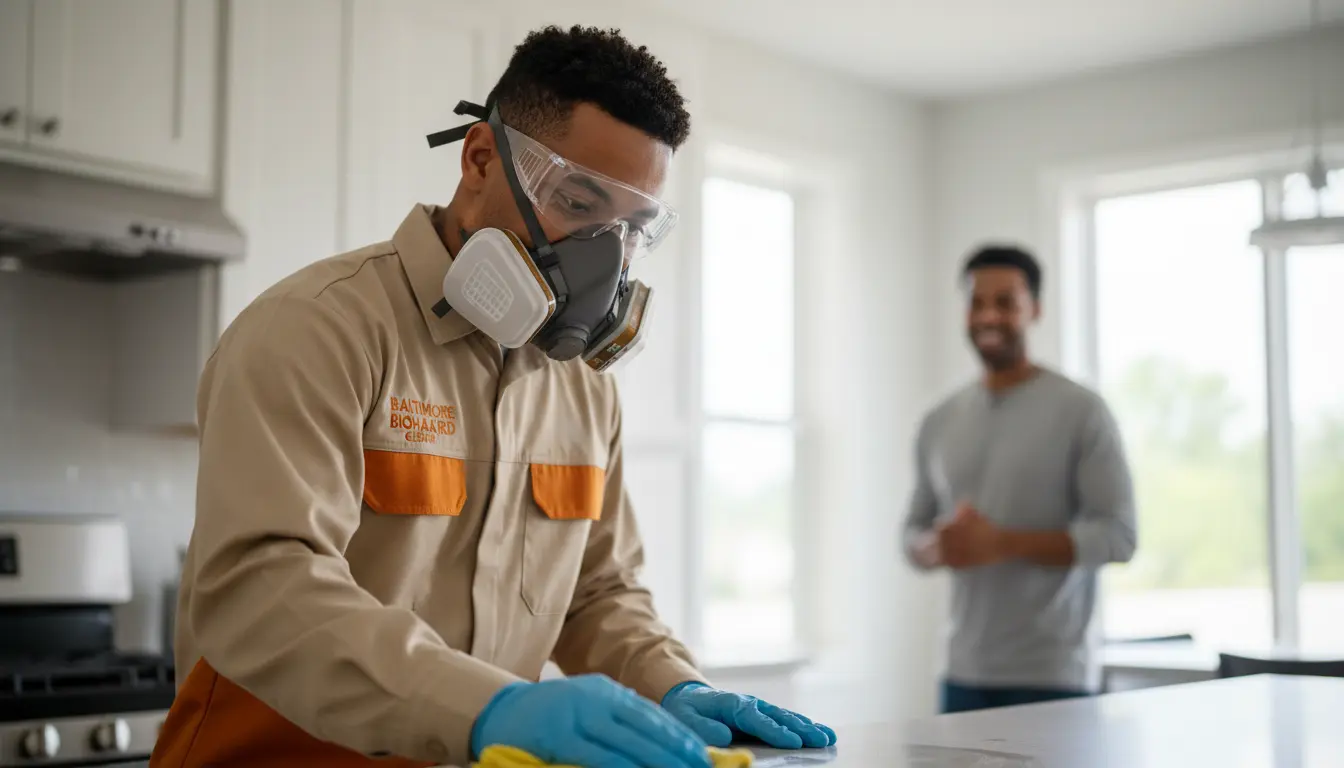
The technician’s boot soles made a faint, sticky sound as he stepped across the threshold of the Baltimore rowhome. He paused, his gloved hand resting on the air-monitoring equipment, and noted the reading: elevated volatile organic compounds and a humidity level that had already accelerated biological activity beyond the initial dispatch report. In that single moment, years of training and the latest biohazard cleanup standards and safety practices (2026) told him this was not a cleaning job — it was a structural remediation requiring containment, precision, and forensic-level protocol. Every decision he made in the next hour would determine whether that property could be safely restored or would require complete demolition of its porous infrastructure.
For property owners, facility managers, and health-conscious residents across Baltimore, understanding what professional remediation actually involves has never been more critical. The field has evolved far beyond bleach and mops. Today’s standards integrate industrial hygiene, environmental microbiology, and strict regulatory compliance that protect everyone who enters a contaminated space. Whether you are dealing with an unattended death, a violent crime scene, a hoarding situation with biohazardous waste, or a workplace accident involving bloodborne pathogens, the difference between a thorough, certified cleanup and a superficial wipe-down can mean the difference between a safe living environment and a long-term health liability.
At Baltimore Biohazard Cleanup, we operate at the intersection of technical rigor and human compassion. Our teams hold current IICRC certifications, follow OSHA’s Bloodborne Pathogens Standard (29 CFR 1910.1030), and deploy the same equipment used in hospital-grade infection control. This article pulls back the curtain on the latest standards, the step-by-step technical process we follow, and exactly what Baltimore property owners should expect when they call for professional help. No fluff, no guesswork — just the protocols that keep people safe.
What Are the Current Standards Governing Biohazard Remediation?
The regulatory landscape for biohazard cleanup is not a suggestion box; it is a legal framework built on decades of occupational safety data and infectious disease research. In 2026, the baseline for any legitimate remediation company includes adherence to the IICRC S540 Standard for Trauma and Crime Scene Cleanup, which was most recently updated to incorporate stricter verification protocols for pathogen elimination. This standard is not optional — it is the industry gold standard that separates professional restoration from amateur janitorial work.
Alongside IICRC guidelines, the Occupational Safety and Health Administration mandates that any employee handling human blood, bodily fluids, or other potentially infectious materials must receive annual training, have access to hepatitis B vaccinations, and work under a written exposure control plan. In Maryland, the Department of the Environment (MDE) adds another layer by regulating the transport and disposal of medical and biological waste under COMAR 26.13.11. These are not bureaucratic hurdles; they are the rules that prevent the next emergency from happening inside your walls. For a deeper look at how these regulations apply specifically to businesses in the state, our detailed guide on understanding biohazard regulations for MD businesses provides a comprehensive breakdown.
The practical effect of these standards is a process that is methodical, measurable, and verifiable. Every surface is not just cleaned but tested for residual biological material using adenosine triphosphate (ATP) swabbing, a technology borrowed from the food safety and healthcare industries. If the ATP reading exceeds a predetermined threshold, the area is re-cleaned and re-tested until it passes. This is the level of accountability that the latest biohazard cleanup standards and safety practices (2026) demand, and it is the only way to guarantee that a site is truly safe for reoccupation.
The Step-by-Step Technical Process of Professional Remediation
When our team arrives at a Baltimore property, the first action is not to grab a mop. It is to perform a comprehensive initial risk assessment that evaluates the type and volume of biohazardous material, the structural composition of the affected area, the presence of HVAC systems that could spread contaminants, and the accessibility for waste removal. This assessment dictates every subsequent step, from the level of personal protective equipment required to the type of chemical agents that will be most effective.
After the assessment, the containment phase begins. Industrial-grade negative air machines are positioned to create a pressure differential that pulls airborne contaminants out of the work zone and through HEPA filtration before exhausting to the outside. This is not a suggestion — it is a non-negotiable step to prevent cross-contamination to unaffected rooms or units. In Baltimore’s historic rowhomes, where shared walls and common ventilation shafts are the norm, this containment becomes even more critical. Without it, biological aerosols can migrate through hairline cracks and infect neighboring properties.
Once containment is verified with a smoke test or air current measurement, the physical removal of biohazardous material begins. This includes saturated porous materials like carpet, drywall, and insulation, which cannot be effectively sanitized and must be removed and disposed of as regulated medical waste. The waste is double-bagged in red biohazard bags, labeled, and transported in sealed containers to an authorized incineration facility. Following removal, the remaining hard surfaces undergo a multi-step cleaning process: an initial gross removal of visible matter, followed by application of an EPA-registered hospital-grade disinfectant with a verified contact time (typically 10 minutes or more), and finally a sanitizing rinse. Each step is documented with photographs and written logs to create a chain of accountability.
The Role of ATP Fluorescence Testing in Verification
After the chemical disinfection phase, we do not simply pack up and leave. The verification phase is where the latest biohazard cleanup standards and safety practices (2026) truly shine. ATP fluorescence testing measures the presence of adenosine triphosphate, a molecule found in all living cells, including bacteria, mold, and residual blood components. A handheld luminometer reads the sample and returns a numerical value. If that number is above the industry-accepted threshold for a clean surface (typically below 10 relative light units for direct contact surfaces), the area is re-cleaned and re-tested.
This scientific verification step eliminates guesswork. It provides property owners, insurance adjusters, and health inspectors with objective data that the space is biologically clean. It also protects our technicians and future occupants from unseen hazards. In cases involving MRSA, HIV, hepatitis B or C, or even coronaviruses, this testing is the only way to confirm that the disinfection process worked. Relying on visual inspection alone is a gamble with human health.
Finally, after testing is completed and passed, the structural encapsulation process begins. This involves applying antimicrobial sealants to any remaining exposed subflooring, wall cavities, or joists to prevent future microbial growth. In Baltimore’s humid climate, where summer relative humidity regularly exceeds 70 percent, this step is vital. Unsealed wood can absorb moisture and become a breeding ground for mold within days, even if the site appeared dry at the time of remediation.
Professional Remediation vs. Standard Cleaning: A Data Comparison
To understand why professional biohazard remediation is not just a more thorough version of residential cleaning, consider the following metrics. These data points are drawn directly from the IICRC S540 standard and independent industry research.
| Feature/Metric | Professional Biohazard Remediation | Standard Residential Cleaning |
|---|---|---|
| Regulatory Compliance | Full OSHA, EPA, IICRC, and state MDE compliance | None; no training or protocols for biohazards |
| Pathogen Elimination | Verified via ATP testing to >99.9% reduction | Visual inspection only; no verification |
| Structural Assessment | Identifies hidden biological seepage and porous material saturation | Surface-level only; misses subfloor and wall cavity contamination |
| Containment Protocol | Negative air pressure, HEPA filtration, sealed barriers | No containment; pathogens can spread to entire structure |
| Waste Disposal | Regulated medical waste transport and incineration | Household trash; illegal and hazardous |
| Insurance Documentation | Detailed logs, photos, and test results provided | No documentation; claim denial risk |
The table makes one thing clear: standard cleaning is not equipped — legally, technically, or scientifically — to handle biohazardous situations. Attempting to use household bleach, which is rapidly inactivated by organic matter, or simply wiping down a surface and calling it clean, leaves behind active pathogens that can cause infection weeks or months later. The risks of DIY biohazard cleanup are well-documented, and the consequences can include fines, legal liability, and serious illness.
Expert Insights: Diagnostic Tips and Common Mistakes
Over years of fieldwork in Baltimore, our senior technicians have developed diagnostic approaches that go beyond what any textbook can teach. One of the most critical is the detection of hidden biological seepage. When a body has been undiscovered for days or weeks, fluids do not stay on the surface. They wick into drywall, migrate under baseboards, and soak into subflooring. A simple moisture meter is not enough; we use thermal imaging cameras and borescopes to look inside wall cavities and under flooring. If the thermal image shows a cooler, damp patch that does not match the surrounding structure, we know biological fluid has migrated there and the material must be removed.
Another essential diagnostic principle involves porous material replacement. Many property owners ask why we cannot simply clean a blood-stained carpet or a urine-saturated mattress. The answer is structural: porous materials have microscopic voids that trap biological material. No amount of scrubbing or chemical application can reach every crevice. Bacteria and viruses survive inside those pores and can re-emerge when the material is re-wetted or disturbed. The only safe option is removal and replacement. This is not a upsell; it is a scientifically sound safety protocol.
Third, the importance of negative pressure cannot be overstated. Without it, every time a technician moves through a space, they create air currents that carry aerosolized pathogens into hallways, adjacent rooms, and even HVAC returns. In one Baltimore apartment building we remediated, the HVAC system had pulled airborne contaminants from a third-floor unit into the first-floor common area before our team arrived. We had to decontaminate the entire ductwork system, which added significant time and cost. Proper containment from the start prevents this cascade.
Common Mistakes Property Owners Make
The most frequent mistake we see is the use of household bleach on biological matter. Bleach is a disinfectant only on clean, non-porous surfaces. When it contacts blood or tissue, the organic material neutralizes the active chlorine almost instantly. The result is a surface that looks clean but is still biologically contaminated. Worse, bleach fumes can irritate the lungs and eyes of anyone nearby, creating a secondary health hazard.
Another common error is waiting for odors to dissipate naturally. Odors from decomposition are caused by volatile organic compounds produced by bacterial activity. If you smell it, the bacteria are still active and the air is still contaminated. Waiting does not make the problem go away — it allows the contamination to spread deeper into the structure. By the time a property owner calls us, the odor has often migrated through shared walls in a rowhome, affecting neighbors and creating a landlord-tenant dispute.
Finally, allowing untrained personnel into the site — whether family members, well-meaning friends, or general contractors — exposes them to bloodborne pathogens without any protection. We have cleaned up sites where someone attempted to remove a mattress themselves, only to track biological fluid through the house on their shoes. This turns a contained problem into a widespread contamination event. Professional remediation teams are trained, vaccinated, and insured for exactly this reason.
Understanding the Cost Structure of Biohazard Cleanup
- Standard site mobilization fee: This covers the arrival of the response vehicle, setup of containment barriers, deployment of negative air machines, and initial air quality testing. In the Baltimore metro area, mobilization typically ranges from $350 to $700 depending on the time of day and urgency of the call.
- Hourly remediation rates: Most professional companies charge by the technician hour. Rates generally fall between $125 and $250 per hour per technician, and a standard trauma scene cleanup requires a minimum of two technicians for safety and efficiency. The total hours depend on the square footage of the affected area and the severity of contamination.
- Specialized disposal fees: Regulated medical waste disposal is not included in the hourly rate. Costs are calculated by weight and volume, with typical charges of $75 to $200 per disposal box or drum. This covers the transport to a licensed incineration facility and the accompanying chain-of-custody documentation.
Several factors influence the final cost of a remediation project. The most significant is the extent of structural material replacement required. If biological fluids have saturated drywall, insulation, flooring, and cabinetry, the removal and replacement of those materials can account for 40 to 60 percent of the total bill. Second, the total volume of biohazardous waste directly correlates with disposal fees — a single unattended death can generate multiple drums of waste. Third, the necessity for specialized HVAC decontamination adds a layer of complexity. If the contamination has entered the ductwork, technicians must fog the entire system with an EPA-registered antimicrobial and replace filters, which can add $500 to $1,500 to the project.
It is important to note that homeowners insurance policies often cover biohazard cleanup under their property damage or personal liability clauses, especially in cases of sudden and accidental events. Our team works directly with insurance adjusters to provide the documentation they need for claim approval, including the ATP test results and waste disposal receipts. For a full breakdown of how our pricing works and what to expect during the estimate process, we encourage property owners to reach out through our contact page.
Safety Protocols and Required Certifications
The safety of our technicians, the property owner, and the surrounding community is the single most important priority in every biohazard remediation project. This commitment is operationalized through a strict adherence to the OSHA Bloodborne Pathogens Standard (29 CFR 1910.1030), which requires our team to maintain a written exposure control plan, use universal precautions at all times, and wear appropriate PPE including Tyvek suits, N100 respirators, face shields, and cut-resistant gloves. Every technician completes annual refresher training that covers new pathogens, updated disinfectant technologies, and changes in regulatory requirements.
Beyond OSHA, our company holds current certifications from the IICRC in trauma and crime scene cleanup. This certification is not a single class; it involves ongoing education in microbiology, structural restoration, and waste management. It also requires passing a proctored exam and maintaining continuing education credits every two years. When a property owner hires an IICRC-certified firm, they are hiring a team that has proven its knowledge against an independent, industry-recognized standard.
Finally, we use only authorized waste management services for disposal of all biohazardous materials. In Maryland, this means working with transporters and treatment facilities that are permitted by the Maryland Department of the Environment. Our waste manifests are kept on file for a minimum of three years, providing a complete audit trail from the site to the incinerator. This documentation is critical for insurance claims, legal proceedings, and any future property transactions where the buyer may require proof of proper remediation.
Frequently Asked Questions About Biohazard Cleanup
How quickly should I call a professional after discovering a biohazard situation?
Time is the enemy of biohazard remediation. The moment biological material begins to decompose, it releases volatile organic compounds that can permeate porous materials and trigger microbial growth. In Baltimore’s humid climate, this process accelerates. We recommend calling a professional within hours of discovery, not days. Immediate containment and removal prevent secondary damage to the structure and reduce the risk of airborne pathogen exposure to anyone in the building. Delaying the call often doubles or triples the eventual cost of remediation.
Can biohazard cleanup be covered by homeowners insurance?
Yes, in many cases. Most standard homeowners insurance policies include coverage for sudden and accidental damage, which can apply to biohazard events such as a death, crime scene, or accidental injury. However, coverage depends on the specific policy language and the circumstances of the incident. Our team provides detailed documentation — including ATP test results, photographs, waste disposal receipts, and a final clearance report — that satisfies insurance adjusters’ requirements. We also work directly with your adjuster to ensure the claim is processed accurately. It is always wise to review your policy or speak with your agent about coverage for biohazard remediation before an emergency occurs.
What happens to the waste after it is removed from the property?
All biohazardous waste removed from the site is classified as regulated medical waste under Maryland law. It is double-bagged in red biohazard bags, placed in rigid, leak-proof containers, and transported by a licensed medical waste hauler to a permitted treatment facility. At that facility, the waste is incinerated at temperatures exceeding 1,800 degrees Fahrenheit, which destroys all pathogens and reduces the material to sterile ash. Every step of this process is documented with a chain-of-custody manifest that we provide to the property owner for their records.
Is it safe to stay in the home during the cleanup process?
In most cases, no. The containment area must be sealed off from the rest of the property, and negative air machines create a pressure differential that can pull air from the living areas into the work zone. Additionally, the chemicals used for disinfection and the noise from equipment can be disruptive. For the safety and comfort of the occupants, we recommend that all residents and pets vacate the property during active remediation. For large-scale projects involving whole-home contamination, we can provide guidance on temporary relocation options. Once the final ATP testing is complete and we issue a clearance certificate, it is safe to return.
Professional Biohazard Remediation in Baltimore
The latest biohazard cleanup standards and safety practices (2026) exist for a single reason: to protect human life from invisible threats. Every regulation, every piece of testing equipment, and every certification is a safeguard against the consequences of improper cleanup — which can range from chronic respiratory illness to fatal infections. For property owners in Baltimore, the choice is not between professional help and a cheaper alternative; it is between a scientifically verified, legally compliant restoration and a gamble with long-term health and property value.
At Baltimore Biohazard Cleanup, we bring technical expertise, regulatory knowledge, and genuine compassion to every site we enter. Our teams are trained to handle the most difficult and sensitive situations with discretion and professionalism. We serve all of Baltimore and the surrounding areas, including Annapolis, Severna Park, Glen Burnie, Cockeysville, Timonium, Lutherville, Reisterstown, Owings Mills, and White Marsh. When you need a site restored to safety and peace of mind restored to your life, we are here. Reach out to us directly through our contact page or explore our blog for more information on prevention strategies and emergency response.