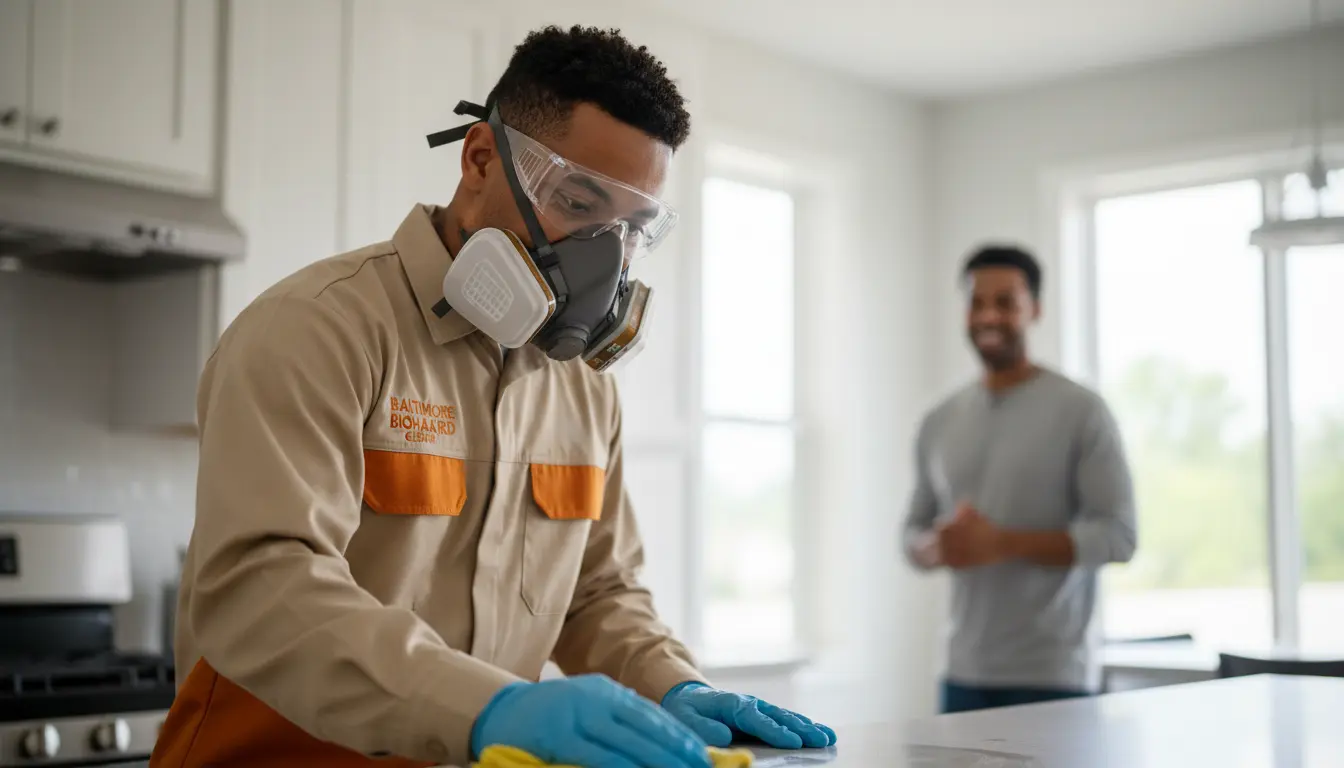
A property manager in Baltimore received a call about a unit in a historic Fells Point rowhome. The tenant had been deceased for nearly two weeks before anyone noticed, and the Mid-Atlantic summer humidity had accelerated biological decomposition to a point where fluids had seeped through the hardwood floors and into the ceiling below. The odor was so pervasive that neighbors three doors down had complained. That moment—when the reality of biohazard remediation collides with the business of insurance claims—is where this guide begins.
Handling insurance claims for biohazard cleanup services is rarely straightforward. Most standard homeowner or rental property policies have specific exclusions for biological contamination, trauma scenes, or hoarding situations. Yet with the right documentation, a clear understanding of policy language, and a professional remediation partner who understands the claims process, property owners in Baltimore can recover a significant portion—sometimes all—of the cleanup costs. The key is knowing what to do from the moment the scene is secured.
The First 24 Hours: Securing the Scene and Notifying Your Insurer
Time is the single most critical factor in biohazard claims. When a traumatic event, unattended death, or infectious disease outbreak occurs, biological materials begin breaking down immediately. In Baltimore’s humid climate, that timeline accelerates. Bloodborne pathogens can remain viable on surfaces for days, and porous materials like drywall, carpet, and untreated wood absorb fluids within hours. The longer the scene sits, the more extensive—and expensive—the remediation becomes.
Your first call should always be to a professional biohazard remediation service that offers emergency biohazard response. These teams are available 24/7 and can secure the scene, initiate containment protocols, and begin documentation. Simultaneously, notify your insurance provider. Most carriers require claims to be filed within a specific window—often 24 to 48 hours—to qualify for coverage. Provide the adjuster with the remediation company’s contact information and request a field adjuster visit as soon as possible. A joint walkthrough with the remediator and adjuster prevents disputes later.
Understanding Policy Coverage for Biohazard Cleanup
Insurance policies vary widely in how they handle biohazard claims. Standard homeowners insurance (HO-3 policies) typically covers sudden and accidental damage, such as a pipe burst that causes sewage backup requiring sewer backup remediation. However, many policies exclude gradual damage, such as decomposition from an unattended death, unless a specific rider is in place. Commercial property policies often include biohazard cleanup as part of their “pollutant cleanup” coverage, but limits may apply.
Property owners in Baltimore should review their declarations page for endorsements like “fungi, wet or dry rot, or bacteria coverage” and “accidental discharge or overflow of water or steam.” These endorsements often cover microbial remediation and structural drying, which are essential components of biohazard restoration. If the event involves a crime scene, law enforcement may seal the area, making it impossible to begin cleanup immediately. In those cases, document the date and time of the sealing, as insurers often extend deadlines when government entities control access. For more details on why professional intervention matters, see why choose professional biohazard services in Baltimore.
Documentation: The Backbone of a Successful Claim
Insurance adjusters approve claims based on evidence, not emotional appeals. Every step of the remediation process must be documented with time-stamped photographs, written logs, and laboratory results. Professional biohazard remediation companies follow the IICRC S540 standard, which requires a detailed scope of work, including before-and-after ATP (adenosine triphosphate) testing to verify pathogen elimination. These tests provide objective proof that the site is safe for reoccupancy—a requirement many insurers now demand before releasing final payment.
Your remediation team should provide a chain-of-custody record for all biohazardous waste, including blood-soaked materials, sharps, and contaminated personal belongings. This waste must be transported and disposed of according to federal and state regulations. Baltimore Biohazard Cleanup offers biohazard waste transport services that include proper manifesting, which insurers often require for reimbursement. Also, keep a log of all communication with your adjuster, including dates, names, and promised follow-ups. Inconsistent documentation is the number one reason claims are reduced or denied.
Common Pitfalls That Derail Biohazard Claims
Even with proper documentation, property owners make avoidable mistakes. The most common is attempting to clean the scene themselves or hiring a general cleaning service rather than a certified biohazard remediation company. Standard janitorial crews lack the training, equipment, and insurance to handle bloodborne pathogens, and their work rarely meets IICRC standards. Insurers often reject claims when non-specialist work is performed because it increases the risk of cross-contamination and liability.
Another frequent error is disposing of contaminated materials before the adjuster has inspected them. If you remove biohazardous waste prematurely, the adjuster cannot verify the extent of contamination, leading to a lower payout. Always wait for adjuster approval before moving any item, even if it is causing odor issues. Finally, do not accept an initial lowball offer without a second opinion. Many claims adjusters are not trained in biohazard remediation costs. A professional remediator can provide a detailed line-item estimate that justifies the full scope of work, including negative air machine rental, hospital-grade disinfectants, and specialized enzyme treatments for odor elimination. For odor-specific cases, review odor elimination services to understand the technical processes involved.
Expert Diagnostic Tips for Property Owners
Experienced remediators look beyond visible blood or tissue. Biological fluids wick into drywall, baseboards, and subflooring, creating hidden reservoirs of pathogens. One diagnostic technique is thermal imaging combined with moisture meters. When used together, they reveal areas where fluids have migrated beyond the immediate spill site. In Baltimore’s older rowhomes, where walls share structural elements with neighboring units, undetected seepage can lead to cross-contamination and long-term liability for property owners.
A second critical diagnostic is ATP bioluminescence testing. This test measures organic residue on surfaces after cleaning. A reading below 30 relative light units (RLU) indicates a surface is safe for reoccupancy. Many insurers now require ATP results before releasing final payment because it provides objective proof of decontamination. Without this data, property owners may face disputes months later when mold or bacterial growth appears.
The third tip involves porous material assessment. Carpet, upholstery, and drywall that have been exposed to blood or bodily fluids cannot be effectively sanitized. Even after chemical treatment, pathogens can remain viable deep within the fibers or gypsum core. Professional remediators use a simple rule: if the material is porous and the contamination is Category 3 (water containing fecal matter, urine, or blood), it must be removed and replaced. Attempting to clean these materials is a waste of money and creates ongoing health risks.
Common mistakes property owners make include using household bleach on biological matter. Bleach is inactivated by organic materials, meaning it cannot penetrate blood clots or tissue. It also produces toxic fumes when mixed with other chemicals. Another mistake is waiting for odor to dissipate naturally. Odor molecules from decomposition are volatile organic compounds that bind to porous surfaces. They do not evaporate; they require enzymatic treatment and ozone or hydroxyl generation to be neutralized. Finally, allowing untrained personnel into the scene risks cross-contamination. Every person who enters a trauma scene without proper PPE becomes a vector for pathogens.
Pricing Structures for Biohazard Remediation
- Site mobilization and assessment fees typically range from $250 to $750, covering travel, initial hazard evaluation, and setup of containment barriers and negative air machines.
- Hourly remediation rates for certified technicians generally fall between $150 and $400 per hour, depending on the complexity of the scene, the number of personnel required, and the level of PPE needed (e.g., Level B or C hazmat suits).
- Itemized costs for specialized disposal of biohazardous materials are often calculated by weight or volume, with rates of $50 to $150 per pound for regulated medical waste. This includes proper packaging, labeling, transport, and incineration.
Safety Standards and Certifications
Biohazard remediation is not a janitorial service. It is a regulated industry governed by federal, state, and local standards. The Occupational Safety and Health Administration (OSHA) Bloodborne Pathogens Standard (29 CFR 1910.1030) requires employers to provide a written exposure control plan, hepatitis B vaccinations, and annual training for all employees who may come into contact with blood or other potentially infectious materials. Every technician on a biohazard cleanup site must have current certification in bloodborne pathogen safety and the proper use of PPE, including full-face respirators, Tyvek suits, and chemical-resistant gloves.
The Institute of Inspection, Cleaning and Restoration Certification (IICRC) establishes the S540 Standard for Trauma and Crime Scene Cleanup. This standard outlines the minimum requirements for structural remediation, including pre-cleaning assessment, containment, cleaning, disinfection, and post-cleaning verification. IICRC certification is not mandatory in all jurisdictions, but it is a marker of professionalism that insurers recognize. Baltimore property owners should verify that their remediation provider holds current IICRC certifications and carries general liability and workers’ compensation insurance. Without this coverage, property owners could be held liable for injuries or damages that occur during cleanup.
Additionally, authorized waste management services must handle biohazardous waste. In Maryland, medical waste is regulated by the Department of the Environment. Improper disposal—such as placing blood-soaked materials in standard trash—carries fines of up to $10,000 per violation and potential criminal charges. Professional remediators maintain contracts with licensed medical waste transporters who provide documented chain-of-custody from the scene to the disposal facility. For those managing hoarding situations, see how to handle hoarding cleanup safely in Baltimore for additional safety protocols.
Frequently Asked Questions About Biohazard Cleanup Claims
Does homeowners insurance cover biohazard cleanup after an unattended death?
Coverage for unattended death cleanup depends on the specific policy language. Most standard homeowners policies exclude gradual damage, including decomposition, unless the policyholder has purchased a specific endorsement for “accidental death” or “biological hazard cleanup.” However, if the death was sudden and the resulting damage was immediate—such as blood pooling on hardwood floors—some policies may cover the cleanup under their “sudden and accidental” provisions. The best approach is to have your remediation provider submit a detailed scope of work to the adjuster, who can then determine if the event qualifies under your policy. It is also worth noting that many insurers categorize unattended death as a “pollutant” event, which may have lower sub-limits.
Can I claim the cost of replacing porous materials like drywall and carpet?
Yes, but only if the replacement is deemed medically necessary for pathogen elimination. Insurance adjusters often push back on material replacement costs, arguing that cleaning is sufficient. However, the IICRC S540 standard clearly states that porous materials contaminated with Category 3 water or bloodborne pathogens cannot be reliably sanitized. To support your claim, request ATP test results from your remediation provider that show contamination levels above safe thresholds on those materials. Also, provide photographs of visible biological seepage. If the adjuster still denies replacement, ask for a written explanation and consider filing an appeal with your state’s insurance commissioner.
How long does the biohazard cleanup claims process take?
The timeline varies depending on the complexity of the scene and the responsiveness of the insurance company. A straightforward case—such as a small blood spill from an accident—can be resolved in 7 to 14 days. A large-scale trauma scene or hoarding situation may take 4 to 8 weeks. Delays often occur when the adjuster requires multiple rounds of documentation or when the remediation team encounters hidden contamination during the process. To speed things up, maintain open communication with both the remediator and the adjuster, and provide requested documentation within 24 hours. Also, ask your remediator if they offer direct billing to the insurance company, which eliminates the need for you to pay out of pocket and wait for reimbursement.
What happens if my claim is denied?
A denial is not the end of the process. First, review the denial letter carefully. It should specify the exact policy exclusion that applies. Common exclusions include “mold, fungi, or bacteria” and “pollutant cleanup.” If the denial is based on a technicality—such as late notification—you may have grounds to request a reconsideration. Gather all documentation from the remediation company, including the initial call log, the scope of work, and any ATP tests. Write a formal appeal letter that explains why the event falls under a covered peril. If the insurer still denies, contact the Maryland Insurance Administration for assistance. They can mediate disputes and investigate bad-faith claims practices. In extreme cases, you may need to hire an attorney who specializes in property insurance law.
Professional Biohazard Remediation in Baltimore
Navigating insurance claims for biohazard cleanup requires a combination of technical expertise, meticulous documentation, and a clear understanding of policy language. Baltimore property owners face unique challenges: historic rowhomes with shared structural walls, humid summers that accelerate decomposition, and a dense urban environment where emergency response must be immediate. Attempting to handle these situations without professional help risks not only claim denial but also long-term health consequences for occupants and neighbors.
Baltimore Biohazard Cleanup provides the full spectrum of biohazard cleanup services, from initial scene assessment to final ATP verification and waste transport. Our technicians hold current IICRC and OSHA certifications, and we work directly with insurance adjusters to ensure claims are processed accurately and quickly. When you choose a partner who understands both the science of remediation and the business of insurance, you protect your property, your finances, and your peace of mind. Do not leave a traumatic event to chance. Call us at the first sign of trouble, and let us handle the rest.