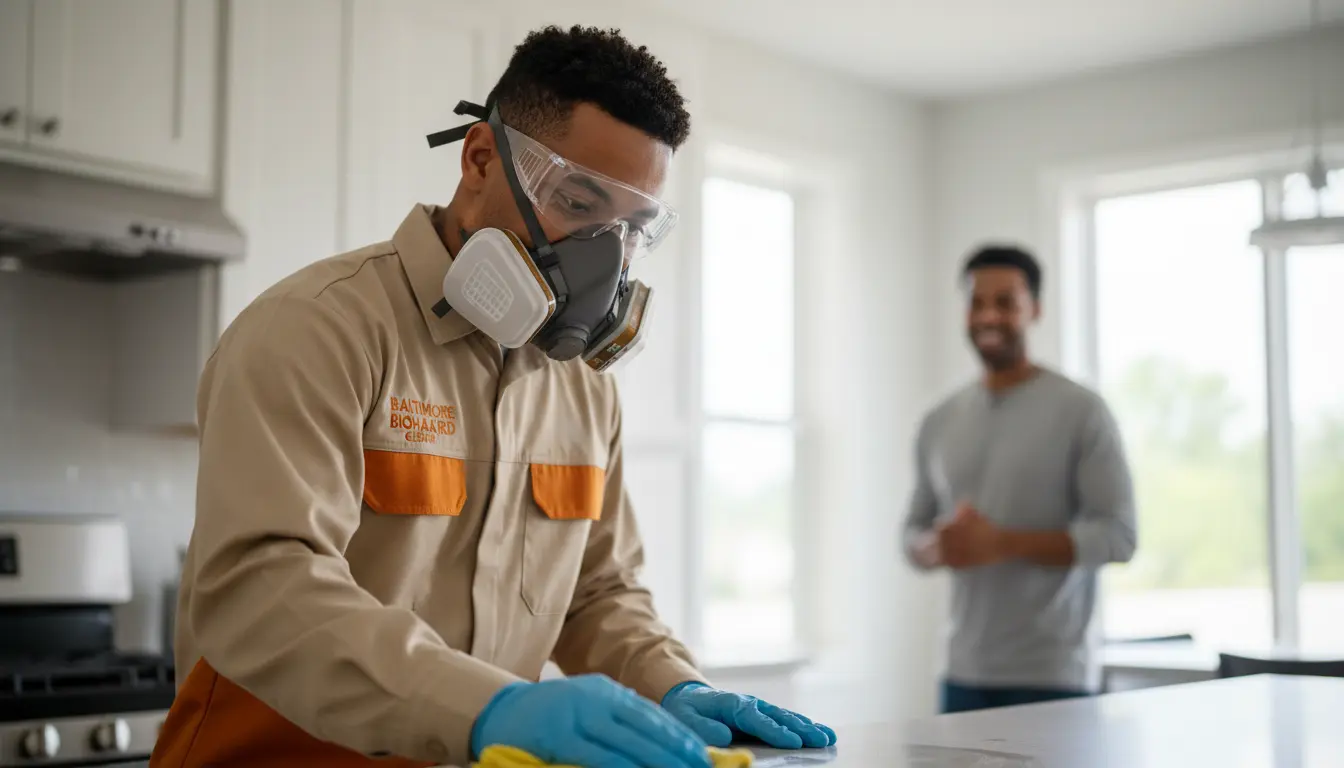
You might think that cleaning up after a traumatic event or a sewage backup is something you can handle with household supplies. That assumption is not only dangerous—it’s a violation of federal regulations and a direct path to expensive structural damage and long-term health liabilities for your Baltimore property. The real cost of amateur biohazard remediation includes fines from the Maryland Department of the Environment, lost property value from unseen microbial growth, and the emotional toll of exposing loved ones to bloodborne pathogens.
When you search for how to find discreet and compassionate biohazard cleanup services near me, you need a team that combines technical rigor with genuine empathy. In Baltimore, where historic rowhomes share walls and the humid Mid-Atlantic climate accelerates decomposition, a generic cleaning crew simply cannot handle the complexities of trauma scene remediation. Baltimore Biohazard Cleanup brings certified expertise, local regulatory knowledge, and a commitment to restoring your space without adding to your distress.
Why Professional Biohazard Remediation Is Non-Negotiable in Baltimore
Baltimore’s unique urban landscape—dense neighborhoods, aging infrastructure, and variable seasonal humidity—creates challenges that standard cleaning services are neither trained nor equipped to address. An unattended death in a Federal Hill rowhome, for example, can lead to fluid migration through shared floor joists, affecting adjacent units. Without proper containment, the risk of cross-contamination rises exponentially.
Professional remediation follows the IICRC S540 Standard for Trauma and Crime Scene Cleanup. This protocol ensures that every surface is tested for biological residue using adenosine triphosphate fluorescence testing, not just visually inspected. The difference between a janitorial wipe-down and true structural decontamination can mean the difference between a safe home and a lingering health hazard.
Moreover, Baltimore City and County have specific regulations regarding the disposal of biohazardous waste. Unauthorized dumping can result in substantial fines. Companies like Baltimore Biohazard Cleanup maintain contracts with licensed medical waste transporters, ensuring compliance from the moment they arrive on scene.
The Technical Process: From Risk Assessment to Final Clearance
Every project begins with a thorough risk assessment. A certified technician evaluates the extent of contamination, identifies porous versus non‑porous materials, and measures environmental factors such as humidity and air exchange rates. In Baltimore’s humid summers, decomposition odors can penetrate brick and mortar, requiring specialized enzyme treatments and negative air machines to prevent odor migration into neighboring properties.
Phase 1: Containment and Personal Protective Equipment
Before any cleaning begins, the affected area is isolated using polyethylene sheeting and negative pressure units. Technicians don full PPE—Tyvek suits, N95 or PAPR respirators, and chemical‑resistant gloves—to prevent exposure to bloodborne pathogens and airborne contaminants. This step is critical not only for worker safety but also for protecting the rest of the home from secondary contamination.
Phase 2: Physical Removal and Sanitization
All visible biohazard materials are removed using hospital‑grade disinfectants and specialized tools. Blood, tissue, and bodily fluids are treated with EPA‑registered antimicrobials that kill viruses and bacteria on contact. Porous materials like carpet, drywall, and upholstery that cannot be fully decontaminated are removed and disposed of according to state regulations.
Phase 3: ATP Testing and Structural Encapsulation
After cleaning, every surface is tested with an ATP luminometer to verify that biological residue has been eliminated. If readings exceed acceptable thresholds, the area is re‑cleaned and retested. Finally, the space may receive a sealant or encapsulation layer to lock in any remaining microscopic particles and prevent future off‑gassing.
This rigorous process—often taking multiple days—is what sets professional biohazard remediation apart from a standard cleaning service. It ensures that the property is not only visually clean but also microbiologically safe for re‑occupancy.
Professional Remediation vs. Standard Janitorial Cleaning
| Feature/Metric | Professional Biohazard Remediation | Standard Residential Cleaning |
|---|---|---|
| Regulatory Compliance | OSHA 29 CFR 1910.1030, IICRC S540, Maryland Dept. of Environment | None |
| Pathogen Elimination | ATP testing; EPA‑registered hospital‑grade disinfectants | Household bleach or general cleaners (ineffective against many pathogens) |
| Structural Assessment | Evaluation of hidden biological seepage and material porosity | Visual only; no testing for subsurface contamination |
| Waste Disposal | Licensed medical waste transport and incineration | Often improper disposal in regular trash (illegal) |
| Emotional Support | Trained in compassionate communication; discreet arrival and departure | No specialized training |
Expert Insights: Three Critical Diagnostic Tips
1. Detecting Hidden Biological Seepage
Biological fluids can wick into drywall, baseboards, and subflooring far beyond the visible stain. A professional uses moisture meters and thermal imaging to identify hidden saturation. In Baltimore rowhomes where walls are often shared, this seepage can travel into adjacent units, creating health risks for neighbors. Failing to address it leads to persistent odor and mold growth.
2. Why Porous Materials Must Be Replaced, Not Cleaned
Many property owners assume that scrubbing a blood‑stained carpet with bleach is sufficient. In reality, bloodborne pathogens penetrate deep into carpet fibers and padding. No amount of surface cleaning can eliminate them. The only safe course is removal and disposal of all porous materials that have been contaminated. Attempting to clean them leaves behind active viruses and bacteria.
3. Negative Pressure Prevents Cross‑Contamination
During remediation, airborne particles can spread through HVAC systems. Professional crews set up negative air machines to create a pressure differential, pulling air from the clean zone into the contaminated area and venting it outside through HEPA filtration. This prevents pathogens from drifting into other rooms or neighboring apartments.
Common Mistakes Property Owners Make
Using Household Bleach on Biological Matter
Bleach is rapidly inactivated by organic material and does not kill all pathogens (e.g., hepatitis B and C). It also damages surfaces and creates toxic fumes when mixed with ammonia. Professionals use EPA‑registered disinfectants with proven contact times for specific pathogens.
Waiting for Odor to Dissipate Naturally
Odor is a sign of ongoing microbial activity. In Baltimore’s humid climate, decomposition odors can persist for weeks, attracting pests and signaling the presence of harmful bacteria. Professional odor elimination uses ozone or hydroxyl generators to neutralize odors at the molecular level.
Allowing Untrained Personnel into the Site
Friends, family, or well‑meaning neighbors entering a contaminated area without proper PPE risk exposure to bloodborne diseases. They can also track pathogens onto clean surfaces, spreading contamination throughout the property. A professional team secures the scene and limits access.
Pricing for Biohazard Cleanup Services
- Site Mobilization Fee: $250–$500 to cover travel, initial assessment, and setup of containment equipment.
- Hourly Remediation Rate: $150–$300 per hour per technician, depending on complexity and hazard level.
- Specialized Disposal Costs: $100–$500 for licensed medical waste transport and incineration, based on volume.
Three key factors influence the final cost: 1) The extent of structural material replacement—more porous materials (carpet, drywall, insulation) drive up labor and disposal fees. 2) The total volume of biohazardous waste—larger incidents require more containment and longer decontamination cycles. 3) The need for specialized HVAC decontamination—if the contamination has spread into ductwork, additional coil cleaning and duct sealing may be necessary.
Baltimore Biohazard Cleanup provides transparent, itemized estimates before any work begins, so you know exactly what to expect.
Safety Standards and Certifications
All work is performed in accordance with OSHA’s Bloodborne Pathogens Standard (29 CFR 1910.1030), which mandates proper training, PPE, and exposure control plans. Technicians hold current IICRC certifications for trauma and crime scene remediation, ensuring they stay current with best practices.
Additionally, the company uses only authorized waste management services that track every container from pickup to final disposal, providing a chain of custody document for your records. This protects you from liability if any biohazard material is later found inappropriately.
For property owners in Baltimore, these standards are not optional. The Maryland Department of the Environment has strict regulations governing the transport and disposal of regulated medical waste. Non‑compliance can lead to fines and legal action. Hiring a certified professional is the only way to guarantee compliance.
Frequently Asked Questions About Biohazard Cleanup
How quickly should I call a professional after a traumatic event?
Immediately. Biological materials begin to break down within hours, especially in warm, humid conditions. In Baltimore’s summer climate, decomposition accelerates rapidly. Early intervention reduces the risk of structural damage, limits odor penetration, and lowers the overall cost of remediation. Most professional services offer 24/7 emergency response.
Can I stay in my home during the cleanup?
Usually not. The affected area is sealed off with negative air pressure, and the rest of the home may be exposed to airborne particles if containment fails. For safety, occupants are advised to vacate until the remediation is complete and ATP testing confirms the space is safe. Your remediation team can provide a timeline and help arrange temporary accommodations.
What happens to items that cannot be cleaned?
All porous materials that have been contaminated—such as carpet, drywall, insulation, and upholstered furniture—are removed, bagged, and disposed of as regulated medical waste. Non‑porous items (glass, metal, hard plastics) can be disinfected and tested. If ATP levels are acceptable, they are returned. If not, they are also discarded. The goal is to eliminate every trace of contamination.
How do you ensure privacy and discretion?
Discretion is a core part of compassionate service. Technicians arrive in unmarked vehicles, wear plain‑clothing outerwear over their PPE, and use discrete signage. They coordinate with property owners on scheduling to minimize visibility. All conversations are handled with the utmost sensitivity, and no details of the incident are shared without your consent.
Professional Biohazard Remediation in Baltimore
Finding the right team when you search for how to find discreet and compassionate biohazard cleanup services near me means looking beyond price to expertise, local knowledge, and genuine empathy. Baltimore Biohazard Cleanup provides certified, IICRC‑trained technicians who understand the unique challenges of the Baltimore area—from historic rowhomes to humid summers—and treat every client with respect.
Whether you need trauma scene remediation, unattended death cleanup, or emergency biohazard response, we are available 24/7 to restore your property safely and discreetly. Contact us today for a confidential consultation and a detailed estimate.