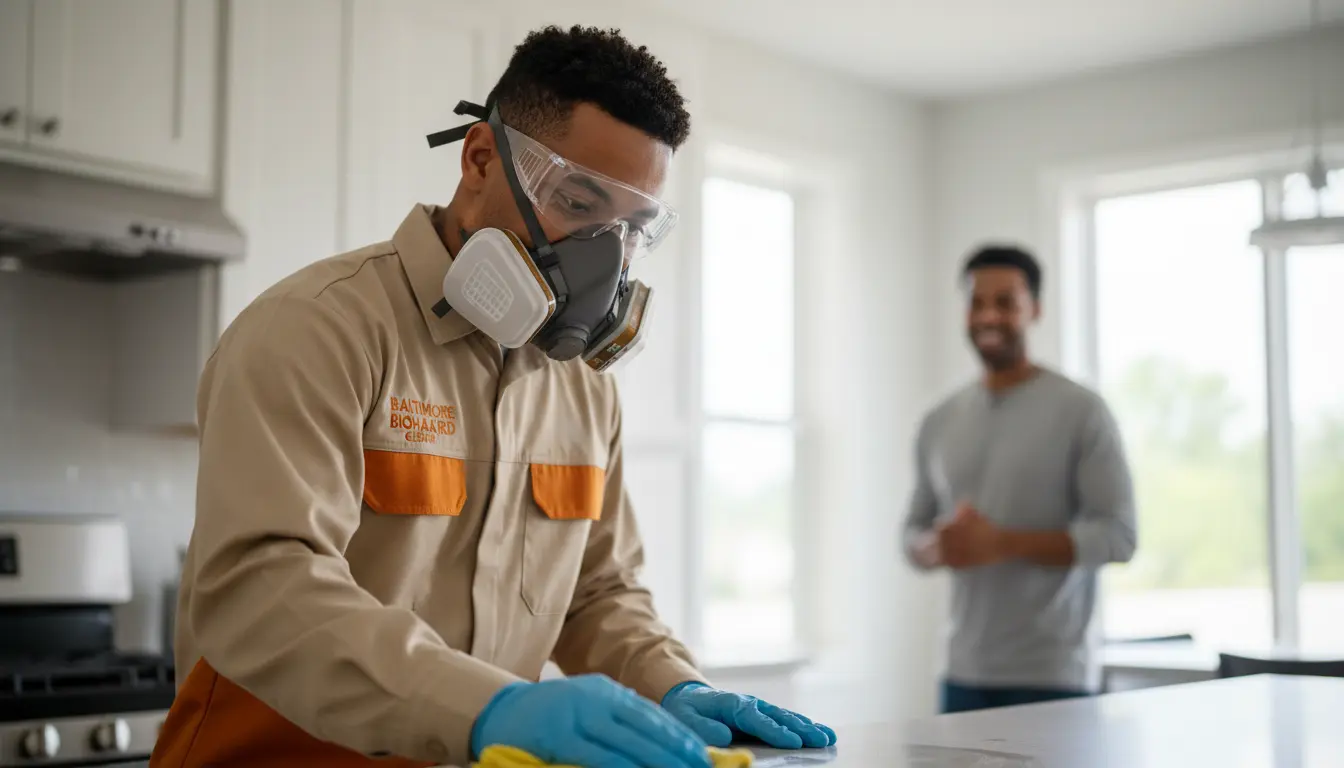
The answer is not found in a phone book or a simple internet search. It requires a systematic evaluation of credentials, technical capabilities, and local knowledge. Baltimore presents a distinct set of challenges — from the high humidity of the Mid-Atlantic that accelerates biological decomposition, to the shared structural elements of historic rowhomes that allow contaminants to travel undetected. A company that excels in suburban strip malls may be completely unprepared for the complexities of remediating a crime scene in a pre-war building. This article provides a detailed framework to ensure you select a provider that meets the rigorous demands of professional biohazard cleanup in Baltimore.
Understanding the Technical Workflow of Professional Remediation
A credible biohazard cleanup company follows a documented, scientific process that begins long before any cleaning agent touches a surface. The initial step is a thorough risk assessment. A trained technician evaluates the scene to identify all biological hazards, assess structural porosity, and determine the extent of contamination. This assessment drives every subsequent decision, from the level of personal protective equipment required to the type of chemical agents that will be used. Without this foundational step, any cleaning effort is guesswork.
Once the assessment is complete, the team establishes containment zones using industrial-grade negative air machines. These machines create negative pressure within the affected area, ensuring that airborne pathogens and particulates cannot drift into clean parts of the building. This is particularly critical in Baltimore’s rowhomes, where shared ventilation systems and thin party walls can turn a localized incident into a neighboring property’s problem. The use of HEPA filtration and sealed barriers is not optional — it is a core requirement of the IICRC S540 standard for trauma and crime scene cleanup.
Chemical Sanitization and ATP Testing
The physical removal of biohazardous material is only the first layer of remediation. After all visible contaminants are removed, the team applies EPA-registered hospital-grade disinfectants designed to inactivate bloodborne pathogens such as hepatitis B, hepatitis C, and HIV. These chemicals are selected based on their proven efficacy against specific pathogen classes, not for their pleasant scent or low cost. A professional company will document the dwell time — the period a disinfectant must remain wet on a surface to achieve its labeled kill claim — and verify it with a timer.
Verification is conducted using adenosine triphosphate (ATP) fluorescence testing. An ATP meter measures the presence of organic material on a surface. If the reading exceeds a threshold, the surface is re-cleaned and re-tested until it passes. This is the same technology used to validate cleanliness in hospital operating rooms. If a company cannot produce ATP test results, they are not performing true remediation. They are simply cleaning, which is insufficient for a biohazard site.
Professional Remediation vs. Standard Cleaning: A Data Comparison
To illustrate the difference between a certified biohazard remediation provider and a general cleaning service, consider the following comparison based on real-world operational metrics.
| Feature/Metric | Professional Biohazard Remediation | Standard Residential Cleaning |
|---|---|---|
| Regulatory Compliance | OSHA 29 CFR 1910.1030, EPA waste disposal, DOT transport regulations | None or minimal |
| Pathogen Elimination | EPA-registered hospital-grade disinfectants with verified dwell times | Household bleach or all-purpose cleaners |
| Structural Assessment | Evaluates porous materials for wicking and deep contamination | Surface cleaning only |
| Verification Method | ATP fluorescence testing with documented pass/fail thresholds | Visual inspection only |
| Containment Protocol | Negative air pressure, HEPA filtration, sealed barriers | None |
| Waste Disposal | Incinerated or treated as regulated medical waste | Household trash |
Expert Diagnostic Insights That Separate Professionals from Amateurs
Experienced technicians develop a diagnostic eye that goes beyond what is visible. One of the most critical skills is detecting hidden biological seepage. When blood or other fluids pool on a hardwood floor, the liquid can seep between the planks and into the subfloor through capillary action. To the untrained eye, the surface may appear clean after a wipe-down, but the subfloor remains a reservoir of active pathogens. A professional uses moisture meters and thermal imaging to identify these hidden zones, ensuring that the entire contaminated area is treated, not just the visible portion.
Another key insight involves porous materials. Drywall, carpet, upholstery, and unfinished wood cannot be fully decontaminated after significant biological exposure. The porous structure traps organic matter deep within the material, and no amount of surface cleaning can reach it. A trusted biohazard cleanup company in Baltimore will recommend removal and replacement of these materials, not a superficial treatment. Homeowners who insist on saving a section of drywall to reduce cost are often forced to pay far more later when odors re-emerge or new occupants develop respiratory issues.
Finally, negative pressure is not a suggestion — it is a requirement. Without it, the simple act of moving through a contaminated room can disturb settled pathogens and launch them into the air, where they can travel through HVAC ducts or under doors. This principle is well understood in hospital infection control but is often ignored by untrained cleanup crews. A provider that does not establish negative pressure is creating a contamination hazard for the entire building.
Common Mistakes Property Owners Make
One of the most frequent errors is using household bleach on biological matter. Bleach is corrosive, produces toxic fumes when mixed with organic material, and has a short shelf life. More importantly, bleach does not effectively penetrate porous surfaces. It may discolor a stain, but it does not eliminate the underlying pathogen reservoir. This mistake can lead to false confidence and ongoing health risks for anyone who occupies the space.
Another common mistake is waiting for odors to dissipate naturally. Odors from biological decomposition are caused by volatile organic compounds (VOCs) that continue to off-gas as long as the organic matter is present. Time does not fix this — only physical removal and chemical neutralization do. Property owners who delay professional intervention often find that the odor has migrated into adjacent rooms, furniture, and even HVAC systems, multiplying the cost and complexity of the eventual remediation.
Finally, allowing untrained personnel — including family members, well-meaning neighbors, or employees — into the site before remediation is complete exposes them to bloodborne pathogens and psychological trauma. The risk of occupational exposure to hepatitis B alone is substantial, and the emotional impact of witnessing a traumatic scene can be lasting. A professional company manages access to the site and provides a clear boundary between the contamination zone and the rest of the property.
Understanding Pricing for Biohazard Remediation in Baltimore
Pricing for professional biohazard cleanup is not a flat rate. It is determined by several specific factors that a reputable company will explain during the initial assessment. The most common pricing structure includes a standard site mobilization fee, which covers the cost of dispatching a certified team with all necessary equipment to your location. This fee typically ranges from $300 to $800 depending on the time of day and the distance from the company’s base of operations.
- Hourly remediation rates generally fall between $150 and $350 per technician. A typical scene requires a crew of two to four technicians, and the total hours are determined by the square footage of contamination, the number of rooms involved, and the complexity of the access path.
- Specialized disposal of biohazardous waste is priced by weight and category. Regulated medical waste, including sharps and pathological waste, must be incinerated or treated at a permitted facility. The cost of disposal can range from $100 to $1,000 or more for large-scale scenes.
- Structural material replacement is one of the most variable costs. If an assessment determines that sections of drywall, flooring, or cabinetry must be removed, the cost of those materials and the labor to install new ones is added to the total. This is not an upsell — it is a necessity for achieving a safe and decontaminated environment.
Three key factors influence the final cost more than any other variable. The extent of structural material replacement required is the first. A scene where fluids have soaked into subflooring, wall cavities, or insulation demands far more than surface cleaning. The total volume of biohazardous waste is the second factor. Larger volumes require more disposal containers, more transport fees, and longer processing times at the incineration facility. The third factor is the necessity for specialized HVAC decontamination. If pathogens have entered the ductwork, the entire system must be cleaned and treated, which adds significant time and equipment costs.
Safety Standards and Certifications That Define a Trusted Company
The safety of property owners, occupants, and cleanup personnel depends on strict adherence to established protocols. A trusted biohazard cleanup company in Baltimore will hold certifications that are not optional. The most important is compliance with the OSHA Bloodborne Pathogens Standard, codified in 29 CFR 1910.1030. This regulation requires employers to provide a written exposure control plan, offer hepatitis B vaccinations to at-risk employees, and enforce the use of appropriate personal protective equipment. A company that cannot produce its OSHA compliance documentation is not operating at a professional level.
IICRC certification is another critical marker. The Institute of Inspection, Cleaning and Restoration Certification offers a specific designation for trauma and crime scene cleanup (TCSC). Technicians with this certification have undergone training in bloodborne pathogens, advanced cleaning methods, psychological support for families, and legal documentation. When you hire an IICRC-certified firm, you are hiring individuals who have been tested on their knowledge and skills, not just given a mop and a spray bottle.
Additionally, the company must hold a valid permit for the transport and disposal of regulated medical waste in Maryland. This permit is issued by the Maryland Department of the Environment and is subject to regular inspection. A provider that uses standard trash disposal services for biohazardous waste is violating state law and creating a public health hazard. Verifying this permit is a simple step that protects you from liability and ensures that waste is handled from start to finish in a legally compliant manner.
Frequently Asked Questions About Biohazard Cleanup in Baltimore
What is the difference between biohazard remediation and regular cleaning?
Biohazard remediation is a regulated process governed by federal and state guidelines. It involves the identification, containment, removal, and disinfection of biological materials that pose a health risk. Regular cleaning uses household products and general techniques that are not designed to eliminate bloodborne pathogens or prevent cross-contamination. The two are fundamentally different in purpose, methodology, and outcome. If a company describes its work as deep cleaning or sanitizing without reference to OSHA or IICRC standards, it is not performing remediation.
How long does a typical biohazard cleanup take?
The duration depends on the size of the affected area, the type of biological material involved, and the structural complexity of the site. A small scene involving a single room may be completed in four to eight hours. A larger scene that requires multiple rooms and extensive structural material removal can take two to three days. The company should provide a time estimate after the initial assessment, but property owners should expect that thorough remediation takes longer than a quick surface cleaning. Rushing the process compromises safety.
Is it safe to stay in my home during the cleanup?
In most cases, it is not safe to remain in the home during active remediation. The use of negative air machines, chemical disinfectants, and physical removal creates a controlled hazard zone. The company will establish a clear boundary and instruct you on when it is safe to re-enter. For scenes involving airborne pathogens or extensive structural removal, the property may need to be vacated for 24 to 72 hours. Your safety and the safety of your family are the primary concerns, and a professional company will prioritize them over convenience.
Will my insurance cover biohazard cleanup costs?
Many homeowner’s insurance policies cover biohazard cleanup as part of their property damage or liability provisions, particularly when the incident is tied to a covered event such as a crime, accident, or natural death. However, coverage varies widely by policy and provider. A reputable company will work with your insurance adjuster to provide the necessary documentation, including ATP test results and detailed work logs, to support your claim. It is advisable to contact your insurance provider directly after the incident to understand your coverage limits and any deductibles that apply.
Professional Biohazard Remediation in Baltimore
Selecting a trusted biohazard cleanup company in Baltimore is not a decision to make under pressure, but when pressure is all you have, knowing the right questions to ask makes all the difference. A company that can demonstrate IICRC certification, OSHA compliance, proper waste disposal permits, and a technical workflow that includes ATP testing and negative pressure containment is not just offering a service — it is providing a scientifically validated path to safety. Baltimore Biohazard Cleanup brings that level of expertise to every scene, from a single-family home in Roland Park to a commercial property in the Inner Harbor. When you need a team that combines technical rigor with discretion and compassion, the choice is clear.