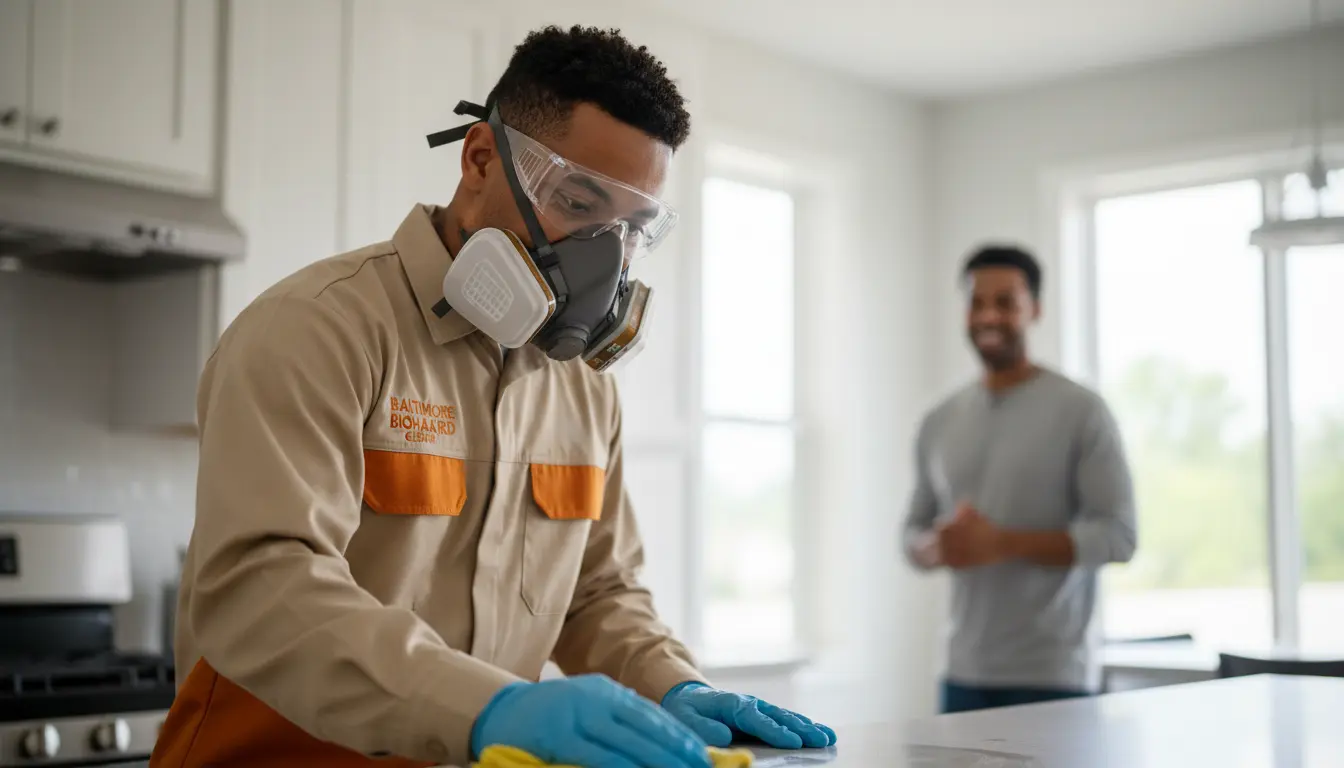
For families and property owners in Baltimore, every unattended death, undiscovered trauma scene, or severe sewage backup presents a dual hazard: immediate pathogen exposure and long-term structural deterioration. The primary keyword here is about understanding how professional remediation protects families and property owners from these compounding risks. In a city where many homes are over a century old, with shared walls and limited ventilation, the margin for error is razor thin. A single mistake in containment or disinfection can turn a localized incident into a building-wide contamination event.
Why Professional Remediation Is Non-Negotiable for Baltimore Homes
Baltimore’s dense urban layout, combined with its humid Mid-Atlantic climate, creates conditions that accelerate biological decomposition and odor migration. When a death occurs inside a rowhome, the body’s natural breakdown process releases fluids that can penetrate porous materials like brick, plaster, and old-growth pine flooring within hours. Without professional intervention, these fluids become a nutrient source for bacteria and mold, leading to microbial remediation challenges that are far more expensive to address later.
Certified biohazard technicians follow the IICRC S540 standard for trauma and crime scene cleanup, which mandates a specific sequence of containment, removal, and disinfection. This is light-years beyond what a standard cleaning crew can provide. The process begins with a risk assessment that identifies visible biohazards and hidden seepage using ATP fluorescence testing—a scientific method that measures adenosine triphosphate, a molecule present in all living cells. If the reading exceeds 10 relative light units after cleaning, the area must be re-treated. That level of precision is what prevents families from discovering a lingering contamination months later.
The Step-by-Step Technical Process of Professional Remediation
Every professional remediation job follows a repeatable workflow designed to minimize cross-contamination and ensure complete pathogen elimination. The first step is establishing a containment zone using poly sheeting and negative air pressure machines. These units create a vacuum that pulls air through HEPA filters, preventing airborne particles from escaping into unaffected areas of the property. In Baltimore’s older rowhomes, where walls are often shared, this containment is critical to protect neighboring units from exposure.
Once containment is secure, technicians don full PPE—tyvek suits, elastomeric respirators, and doubled gloves—and begin the physical removal of biohazardous materials. This includes cutting away saturated carpet, padding, and drywall, as well as removing porous subflooring that has absorbed biological fluids. All waste is double-bagged and labeled for disposal according to Maryland’s medical waste regulations. The next phase involves the application of EPA-registered hospital-grade disinfectants, often with an enzyme additive that breaks down organic matter at a molecular level. After the disinfectant dwell time, the area is tested again with ATP swabs to confirm cleanliness.
Finally, the site undergoes structural decontamination, which includes fogging the entire space with a broad-spectrum antimicrobial agent. This step targets microbes that may have settled on surfaces or been pulled into the HVAC system. For properties with shared ductwork—common in Baltimore apartment buildings—the HVAC may require professional cleaning and sealing to prevent recirculation. The entire process, from assessment to final clearance, typically takes 24 to 48 hours for a single-room incident, depending on the extent of saturation.
Professional Remediation vs. Standard Cleaning: A Data Comparison
| Feature / Metric | Professional Biohazard Remediation | Standard Residential Cleaning |
|---|---|---|
| Regulatory Compliance | Full compliance with OSHA 29 CFR 1910.1030, EPA, and Maryland Department of the Environment waste disposal rules | No awareness of bloodborne pathogen regulations; may improperly dispose of waste |
| Pathogen Elimination | Targets 99.99% reduction using ATP testing and hospital-grade disinfectants | Surface cleaning only; does not kill viruses or bacteria in porous materials |
| Structural Assessment | Identifies hidden biological seepage via moisture meters and thermal imaging | No assessment; assumes visible cleaning is sufficient |
| Cross-Contamination Prevention | Negative air pressure, HEPA filtration, and sealed containment zones | No containment; pathogens can spread to other rooms |
| Odor Removal | Ozone or hydroxyl generators eliminate volatile organic compounds | Masking agents only; odors return after a few days |
Source: IICRC S540 Trauma and Crime Scene Cleanup Standard
Expert Insights: What Property Owners Need to Know
Three Diagnostic Tips That Separate Professionals from Amateurs
First, always test for hidden biological seepage using a moisture meter. In Baltimore’s rowhomes, hardwood floors are often laid directly over a brick subfloor or a concrete slab. A death scene can cause fluids to wick through the wood and into the substrate, creating a perfect environment for mold and bacterial growth. A moisture meter with a wood-specific setting can detect moisture levels above 15%, which indicates the need for subfloor removal. Without this diagnostic step, the homeowner might seal the floor only to have the odor return and the mold spread.
Second, understand that porous materials are rarely salvageable. Drywall, insulation, carpet, and upholstered furniture absorb biological fluids like a sponge. Even if the surface appears clean, the interior of the material remains contaminated. The industry standard is to remove and replace any porous material that has been in direct contact with blood or bodily fluids. Attempting to clean it only creates a false sense of safety and leaves behind a long-term health risk for occupants.
Third, the importance of negative pressure cannot be overstated. In a sealed room, airborne pathogens can circulate for hours after the visible cleanup. Negative air pressure units, combined with HEPA filtration, actively remove these particles from the air and prevent them from drifting into hallways or adjacent units. This is especially critical in multi-unit buildings where a single contamination event could expose dozens of families.
Common Mistakes Property Owners Make—and the Real Consequences
Using household bleach on biological matter. Bleach is a disinfectant, but it is deactivated by organic material. When blood is present, the proteins in the blood neutralize the bleach, turning it into a watery solution that does very little. Worse, bleach can react with ammonia (found in urine) to produce toxic chloramine gas. Professional remediators use quaternary ammonium compounds or hydrogen peroxide-based disinfectants that remain effective in the presence of organic soils.
Waiting for the odor to dissipate naturally. Odors from decomposition are caused by volatile organic compounds (VOCs) produced by bacteria. Waiting simply allows the bacteria to multiply, leading to deeper penetration and eventual structural damage. In Baltimore’s humid climate, a death scene that goes untreated for more than a week can result in the need to replace entire floor joists and wall studs. The cost of professional remediation becomes far cheaper than the cost of structural repairs down the line.
Allowing untrained personnel into the site. Family members, well-meaning friends, or even janitorial staff should never enter a biohazard scene without proper PPE and training. Exposure to bloodborne pathogens can lead to hepatitis B, hepatitis C, or HIV infection. In addition, these individuals can unknowingly track contaminants out of the house, spreading the hazard to other areas. Professional remediation ensures that no one is exposed who does not need to be, and that the site is fully decontaminated before anyone else enters.
Pricing for Professional Biohazard Remediation in Baltimore
Pricing for professional remediation varies based on the specific circumstances of each incident, but there are some general benchmarks. Most service providers charge a site mobilization fee that covers the cost of bringing equipment, PPE, and trained personnel to the location. This fee typically ranges from $250 to $500 for a standard residential call within the Baltimore metro area. Once on site, the remediation is billed at an hourly rate between $150 and $300 per technician, depending on the complexity of the situation and the materials required.
Itemized costs for specialized disposal of biohazardous waste add another layer. Medical waste disposal in Maryland requires compliance with the Maryland Department of the Environment, and the disposal fee is calculated per pound of waste. A typical unattended death scene can generate 50 to 200 pounds of contaminated materials, leading to disposal costs of $200 to $800. Additionally, if the HVAC system requires decontamination, that service can add $500 to $1,500.
Three primary factors influence the final cost: the extent of structural material replacement required, the total volume of biohazardous waste, and the necessity for specialized HVAC decontamination. For example, a death scene in a finished basement with carpet, drywall, and a forced-air system will cost significantly more than a scene in a room with hardwood floors and no ductwork. Property owners should request a detailed estimate before any work begins, and reputable companies like Baltimore Biohazard Cleanup provide free on-site assessments to determine the scope of work.
Safety and Standards: The Backbone of Professional Remediation
Every technician at a certified remediation company is trained in accordance with OSHA’s Bloodborne Pathogens Standard (29 CFR 1910.1030), which mandates proper handling of human blood and other potentially infectious materials. This training covers everything from correct sharps disposal to the use of personal protective equipment and the procedures for reporting exposures. In addition, the IICRC S540 standard for trauma and crime scene cleanup provides a framework for the entire remediation process, including containment, removal, and clearance testing.
These standards exist for a reason: they protect the workers, the property owners, and future occupants. In Baltimore, where many properties are passed down through generations or rented out to families, the stakes are high. A single undiscovered bloodborne pathogen can lead to a lawsuit, a health crisis, or a loss of property value. By hiring a company that follows these protocols, property owners are not only protecting themselves legally but also ensuring that the space is safe for habitation. According to Why Choose Professional Biohazard Services In Baltimore, the IICRC certification also requires ongoing education, meaning that technicians are up to date on the latest cleaning technologies and regulatory changes.
Frequently Asked Questions About Biohazard Remediation
What is the difference between biohazard cleaning and regular cleaning?
Biohazard cleaning is a specialized field that deals with biological materials that pose a risk to human health, such as blood, bodily fluids, and human remains. Regular cleaning focuses on removing dirt and dust but does not address pathogens or hazardous waste. Professional biohazard remediation follows strict protocols for containment, disinfection, and disposal, and is typically required by law for trauma scenes or unattended deaths. The technicians use EPA-registered disinfectants and ATP testing to verify that all pathogens have been eliminated, something a standard cleaning crew cannot do.
How quickly does a professional remediation company need to respond?
Immediate response is critical, especially in Baltimore’s humid climate. Within 24 hours of a death, decomposition begins, and the bodily fluids can start to seep into porous materials. Odors can become noticeable within 48 hours, and mold growth can begin within 72 hours. The faster the remediation team arrives, the less damage there will be to the property and the lower the risk of airborne pathogen spread. Companies like Emergency Biohazard Cleanup 24 7 Help For Baltimore Residents offer 24/7 dispatches to minimize the window for contamination.
Can I clean up after a loved one’s death myself to save money?
We strongly advise against it. Not only does DIY cleanup expose you to serious health risks, but it also often fails to fully decontaminate the area. Many people use household products that are ineffective against bloodborne pathogens, leaving behind a hidden hazard. Additionally, improper disposal of biohazard waste is illegal in Maryland and can result in fines. The emotional toll of cleaning a loved one’s death scene is also significant; professional remediation teams are trained to handle the work with compassion and discretion, allowing families to focus on grieving rather than scrubbing.
What happens to the biohazard waste after removal?
All biohazard waste is placed in red biohazard bags and sealed in approved containers. It is then transported by a licensed medical waste disposal company to an incineration facility. In Maryland, the disposal must comply with the Maryland Department of the Environment regulations, which require tracking manifests and proper labeling. The waste is never sent to a standard landfill, ensuring that the pathogens are completely destroyed. This process is part of the comprehensive service offered by Property Biohazard Restoration providers.
How do I know if a remediation company is properly certified?
Look for certifications from the IICRC (Institute of Inspection, Cleaning and Restoration Certification) and for compliance with OSHA standards. A reputable company will be happy to provide proof of their certifications and insurance. You can also check their website for details; for example, About Us page of Baltimore Biohazard Cleanup lists their credentials and years of experience. Additionally, ask if they follow the IICRC S540 standard specifically, as this is the benchmark for trauma and crime scene cleanup.
Professional Biohazard Remediation in Baltimore
When the unthinkable happens in a Baltimore home—whether it’s an unattended death, a violent crime, or a catastrophic sewage backup—the immediate priority is safety, but the long-term priority is restoration. Professional remediation bridges that gap by providing a scientifically rigorous, code-compliant process that protects both the physical structure and the emotional well-being of those who live there. Families can return to their homes knowing that every trace of biohazard has been removed, every surface decontaminated, and every air duct sealed.
For property owners in Baltimore, the choice is not just about cleaning; it’s about the future of their investment. A contaminated property that is not properly remediated can lose significant value, become uninhabitable, or even trigger legal liability. By partnering with a certified, locally-experienced team like Baltimore Biohazard Cleanup, you ensure that your property is restored to a safe, livable condition. The company’s technicians understand the specific challenges of the Baltimore area—from the Victorian-era rowhomes to the suburban split-levels—and they bring the same level of care to every job, no matter how small or large.