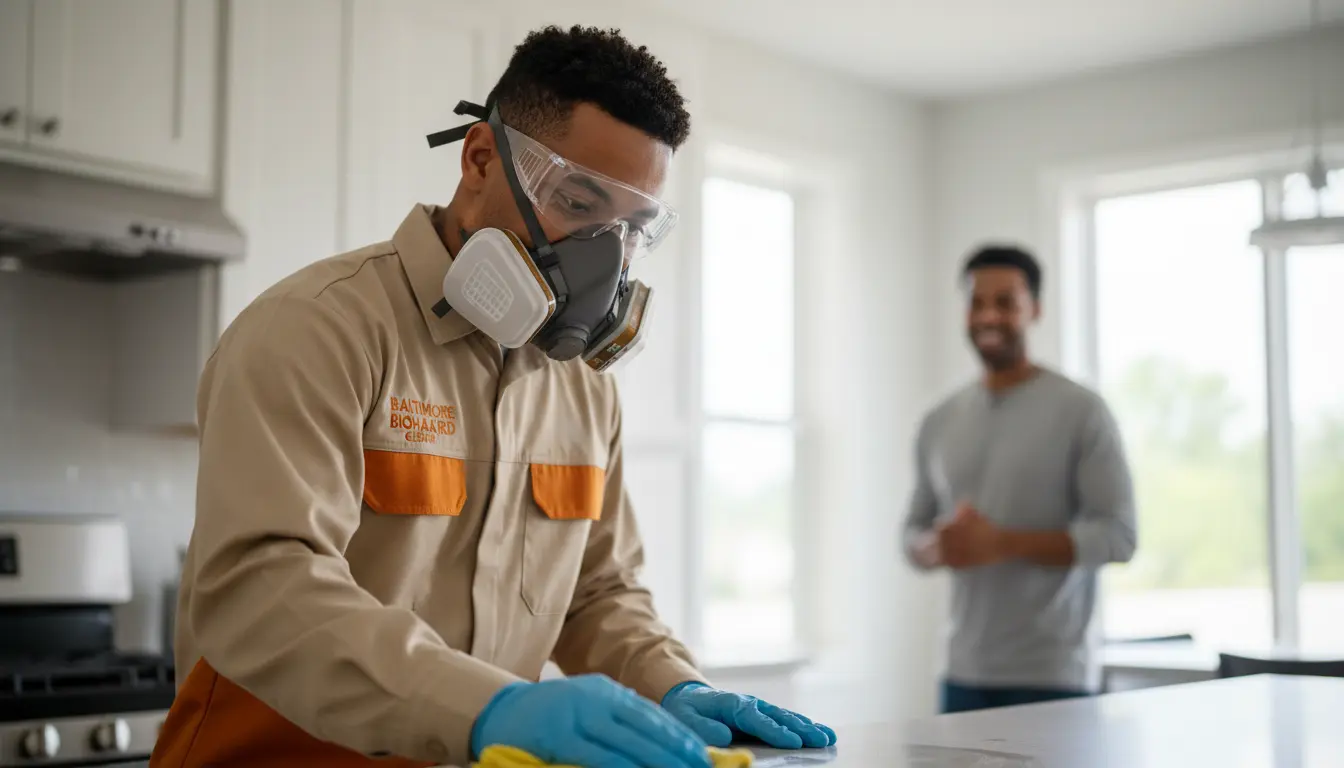
If you are reading this because you discovered a contaminated area in your Baltimore home or business, you may be considering cleaning it yourself. That is a high-risk mistake that can lead to health code violations, liability, and long-term health hazards. Professional decontamination is not just a luxury—it is a safety requirement that protects occupants, property value, and regulatory compliance. In Baltimore, the combination of aging rowhomes, high humidity, and dense urban living makes improper cleanup even more dangerous.
This article explains how professional decontamination improves indoor safety by following IICRC S540 standards, using EPA-registered antimicrobials, and applying forensic-level assessment. Whether you are dealing with a trauma scene, meth lab residue, or infectious disease outbreak, the technical process of professional remediation ensures that every pathogen, odor, and structural risk is eliminated. At Baltimore Biohazard Cleanup, we bring over a decade of certified experience to every site.
The Technical Process of Professional Decontamination
Professional decontamination follows a strict workflow designed to contain hazards, remove contaminants, and verify cleanliness. The first step is a risk assessment using adenosine triphosphate (ATP) testing to measure biological load. This data guides the level of PPE required, including full-face respirators, Tyvek suits, and boot covers. Next, the area is isolated with negative air machines to prevent airborne contaminants from migrating to adjacent rooms. In Baltimore rowhomes, shared walls and ductwork demand special attention to cross-contamination prevention.
Physical removal of biohazardous materials follows. This includes not just visible blood or tissue, but also porous materials like drywall, carpet, and insulation that have absorbed biological matter. Professional crews use hospital-grade disinfectants and specialized enzyme treatments that break down proteins at a molecular level. After cleaning, ATP fluorescence testing confirms that surfaces are below the threshold for organic residue. The final step is structural encapsulation—applying a sealant to surfaces that cannot be removed, such as brick or concrete, to lock in any remaining contaminants.
Professional Remediation vs. Standard Cleaning: A Data Comparison
| Feature/Metric | Professional Biohazard Remediation | Standard Residential Cleaning |
|---|---|---|
| Regulatory Compliance | OSHA 29 CFR 1910.1030, EPA TSCA, IICRC S540 | None |
| Pathogen Elimination | EPA-registered disinfectants, ATP verification (<10 RLU) | Household bleach (ineffective against many pathogens) |
| Structural Assessment | Moisture meters, thermal imaging, porosity testing | Visual inspection only |
| Waste Disposal | Licensed medical waste transporter, incineration | Trash bag to landfill (illegal) |
Source: IICRC S540 Trauma and Crime Scene Cleanup Standard
Expert Insights: What Professionals See That You Miss
Hidden biological seepage is one of the most common surprises. Blood and other fluids can wick into subflooring, behind baseboards, and even into the HVAC system. Standard cleaning only addresses surface contamination, leaving pathogens that can re-emerge months later. Professional remediation includes thermal imaging to detect moisture pockets and borescopes to inspect wall cavities.
Porous materials like upholstery, mattresses, and unfinished wood cannot be fully decontaminated. The IICRC S540 standard requires removal and replacement of any porous item that has been exposed to blood or bodily fluids. Attempting to clean them only spreads contamination and creates ongoing health risks. Negative pressure containment is another critical step. Without it, air currents carry pathogens into adjacent rooms, turning a contained area into a whole-building problem.
Common Mistakes Property Owners Make
Using household bleach on biological matter is a frequent error. Bleach corrodes surfaces, fails to kill certain viruses like hepatitis B, and can actually fix proteins to surfaces, making them harder to remove. Waiting for the odor to dissipate naturally is another mistake. Odors indicate active microbial growth, and without professional intervention, the contamination will spread structurally and financially. Finally, allowing untrained personnel into the site—even with gloves and masks—risks exposing them to airborne pathogens and creates liability for the property owner.
Pricing Structure for Professional Decontamination
- Standard site mobilization fee: $150–$350, covering travel, PPE setup, and initial assessment within Baltimore City and County.
- Hourly remediation rates: $175–$350 per hour, depending on the number of technicians and equipment required. Trauma and crime scene cleanup typically involves a four-person crew.
- Specialized disposal costs: $500–$2,000 for biohazardous waste, including proper packaging, transport, and incineration. This is a legal requirement under Maryland medical waste regulations.
- HVAC decontamination: $600–$1,500 if the system has been contaminated, including duct cleaning, antimicrobial fogging, and HEPA filter replacement.
Several factors influence the final cost. The extent of structural material replacement is the biggest variable—replacing drywall, flooring, and insulation can add thousands. The total volume of biohazardous waste, measured in pounds, directly affects disposal fees. And the necessity of specialized HVAC decontamination, often required in multi-unit buildings, raises the scope.
Safety Standards and Certifications
Professional decontamination companies must hold IICRC certification in trauma and crime scene cleanup (S540) and comply with OSHA’s Bloodborne Pathogens Standard 29 CFR 1910.1030. This standard mandates annual training, hepatitis B vaccination for employees, and strict protocols for handling sharps and contaminated materials. In Baltimore, the Maryland Department of the Environment also requires proper waste tracking manifests for any biohazardous material.
These standards are not bureaucratic red tape—they directly protect occupants. For example, following OSHA’s universal precautions prevents the transmission of HIV, hepatitis C, and other pathogens to workers and residents. Using authorized waste management services ensures that contaminated materials are incinerated, not dumped in a landfill where they could leach into groundwater. Property owners who hire unlicensed cleaners risk fines, legal liability, and future health problems.
Frequently Asked Questions About Professional Decontamination
How long does professional decontamination take?
The timeline depends on the contamination level, site size, and material porosity. A standard trauma scene in a single room may be completed in 8–12 hours, while a hoarding or meth lab cleanup can take several days. The process is not rushed—ATP testing and visual inspections must confirm zero contamination before the crew clears the site. Baltimore Biohazard Cleanup provides a detailed timeline after the initial assessment.
Is professional decontamination safe for pets and children?
Yes, but only after the area is cleared and ventilated. During the process, the site is sealed with negative air pressure, and pets and children must be kept away. Once the final ATP test passes, all chemicals are removed, and the area is dry, it is safe for occupancy. Professionals use EPA-registered disinfectants that break down into harmless compounds after drying.
What happens if I try to clean it myself?
DIY cleanup often leads to incomplete microbial removal, cross-contamination, and legal issues. Without proper disposal, you could face fines from the Maryland Department of the Environment. Long-term health risks include respiratory illness from mold spores and bloodborne pathogen exposure. Many homeowners end up paying more for professional restoration after a failed DIY attempt than they would have with initial professional help.
Do you work with insurance companies?
Yes. Baltimore Biohazard Cleanup provides detailed documentation, including ATP test results, photographs, and waste manifests, that insurance adjusters accept. We work directly with your provider to streamline the claims process. Most homeowner and business insurance policies cover professional decontamination for covered events like trauma, uncontrolled sewage, or infectious disease outbreaks.
Professional Biohazard Remediation in Baltimore
Professional decontamination transforms a hazardous site into a safe, habitable space. It protects your family, your tenants, and your property from the silent dangers of biological contamination. In Baltimore, where historic rowhomes share walls and humidity accelerates decomposition, the expertise of a certified specialist is not optional—it is the only way to ensure complete safety.
Baltimore Biohazard Cleanup is the city’s most trusted provider, offering discreet, rapid response and transparent pricing. Our team holds IICRC S540 certification and follows OSHA and Maryland regulations to the letter. Whether you need emergency biohazard cleanup after a trauma incident or infectious disease decontamination, we are here to restore your property to a safe, normal condition. Contact us today for a confidential assessment.