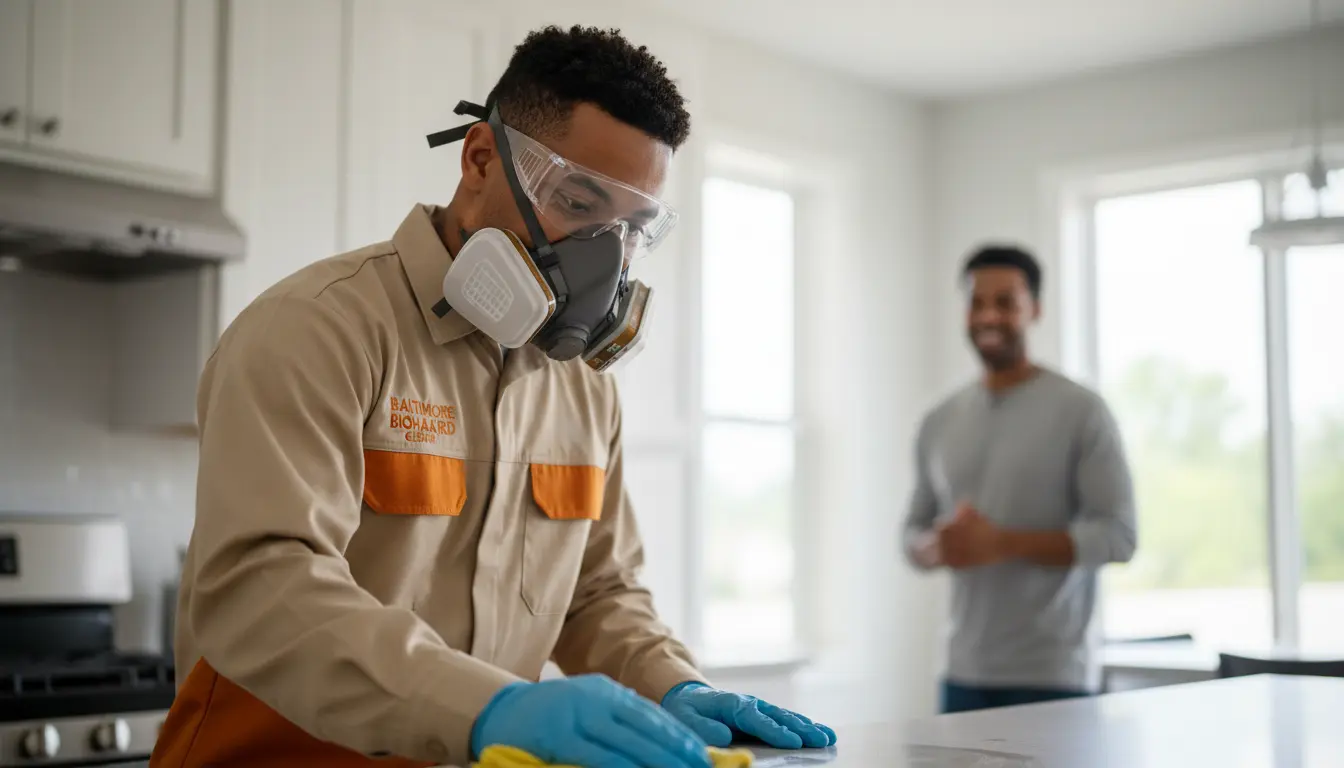
If you are currently comparing biohazard cleanup companies in Baltimore, MD, and your main criterion is the lowest upfront price, you may be setting yourself up for a cost that is far higher than any invoice. The single most expensive mistake property owners make after a traumatic incident, a violent crime, or an unattended death is hiring a general cleaning crew or a low-bid biohazard company that lacks proper certification. The consequence is not just a poorly cleaned scene. It is a potential liability for cross-contamination, a failure to meet Maryland state regulations for waste disposal, and the real risk of long-term property devaluation. A home in Federal Hill or a commercial space in Fells Point that has been improperly remediated can develop persistent odor issues and structural damage that costs tens of thousands of dollars to correct. This article exists to give you the technical framework to distinguish between a true remediation specialist and a company that simply owns a mop and a biohazard sticker. You will learn exactly what standards to demand, what questions to ask, and why the cheapest quote is often the most expensive mistake.
Baltimore presents unique challenges that make professional remediation non-negotiable. The city’s dense urban layout, with its historic rowhomes sharing party walls and common ventilation systems, means that biological contamination can easily migrate into adjacent units if not properly contained. The Mid-Atlantic climate, with its high seasonal humidity, accelerates the rate of decomposition and can cause odor to penetrate porous materials like brick, plaster, and original hardwood flooring within hours. A company that understands these local variables will adjust its protocol accordingly, using negative air pressure and industrial-grade desiccants to manage moisture and prevent microbial amplification. The companies that do not account for these factors will leave behind a scene that is visually clean but biologically hazardous. This guide is designed to help you navigate the process of choosing professional biohazard services in Baltimore with confidence and technical precision.
The Remediation Workflow: What Professional Standards Demand
The difference between a certified biohazard remediation company and a general cleaning service is most visible in the step-by-step technical process. A professional team follows a strict workflow that begins before a single piece of equipment is brought onto the site. The first step is a thorough risk assessment. This involves evaluating the type and volume of biohazardous material present, the porosity of the affected surfaces, and the layout of the space to determine the best containment strategy. In a Baltimore rowhome, this assessment must also account for shared walls and the potential for airborne contaminants to reach neighboring residences. The team then establishes a containment zone using heavy-duty polyethylene sheeting and zipper entries, and sets up negative air machines with HEPA filtration. These machines create a pressure differential that prevents airborne pathogens from escaping the work area, a critical step in preventing cross-contamination that is often skipped by unqualified operators.
Once containment is established, the physical removal phase begins. All biohazardous materials, including blood, bodily fluids, and contaminated porous items like carpet, drywall, and insulation, are carefully removed and placed into regulated medical waste bags. These bags are then placed in rigid, leak-proof containers for transport. The removal process is not merely about cleaning; it is about eliminating the source of contamination entirely. After the physical removal, the team applies an EPA-registered hospital-grade disinfectant using a low-pressure sprayer or fogging equipment. The disinfectant must have a verified contact time—usually ten minutes or more—to ensure complete viral and bacterial inactivation. Following disinfection, the team conducts adenosine triphosphate (ATP) testing. ATP testing uses a bioluminescence meter to measure the presence of organic material on a surface. A reading below a specific threshold, typically 30 relative light units (RLUs), indicates that the surface is hygienically clean. This scientific verification step is a hallmark of a professional operation and something no general cleaning service can provide.
The final phase is structural decontamination and, where necessary, restoration. For surfaces that cannot be adequately cleaned, such as deeply saturated wood or porous concrete, the team may apply a specialized encapsulant that seals any remaining contaminants. In cases where structural materials must be replaced, the remediation team coordinates with a forensic restoration specialist to ensure that the new materials are properly installed and that the site is returned to a safe and habitable condition. Throughout this entire process, the team documents every step with photographs and written reports. This documentation is essential for insurance claims and for demonstrating compliance with IICRC S540 standards. A company that cannot provide this level of documentation is not performing true remediation. For a detailed breakdown of the process after a traumatic event, refer to the step-by-step biohazard cleanup after trauma incidents guide.
Comparing Professional Remediation to Standard Cleaning
To illustrate the technical gap between a certified biohazard remediation company and a standard residential cleaning service, consider the following comparison based on the IICRC S540 standard for trauma and crime scene cleanup. This table highlights the critical differences in regulatory compliance, pathogen elimination, and structural assessment, all of which have direct consequences for the safety and value of your property.
| Feature/Metric | Professional Biohazard Remediation | Standard Residential Cleaning |
|---|---|---|
| Regulatory Compliance | Follows OSHA 29 CFR 1910.1030, EPA waste disposal regulations, and Maryland Department of the Environment guidelines for medical waste transport. | No specific regulatory framework for biohazardous materials; waste may be disposed of in general trash. |
| Pathogen Elimination | Uses EPA-registered hospital-grade disinfectants with verified contact times; verifies efficacy with ATP testing. | Relies on household bleach or all-purpose cleaners that are not effective against all bloodborne pathogens. |
| Structural Assessment | Evaluates material porosity and saturation; removes and replaces contaminated porous materials; applies microbial remediation as needed. | Cleans visible stains only; does not assess for hidden seepage or structural damage. |
| Containment Protocol | Establishes negative pressure zones with HEPA filtration; uses polyethylene sheeting and zipper entries to prevent cross-contamination. | No containment; airborne pathogens can spread throughout the structure. |
| Documentation | Provides detailed written and photographic reports for insurance and compliance. | No formal documentation of cleaning process or results. |
This table makes it clear that the differences are not minor. A standard cleaning crew may leave behind biological material that poses a long-term health risk to occupants. Professional remediation, by contrast, is a scientifically grounded process designed to restore a site to a safe and hygienic condition. When you are comparing biohazard cleanup companies in Baltimore, MD, you should verify that the company follows the IICRC S540 standard and can provide evidence of compliance.
Expert Diagnostic Insights for Property Owners
As a certified remediation specialist, I can tell you that the most dangerous contaminants are often the ones you cannot see. The following three diagnostic tips are what professionals use to assess a scene, and you can use them to evaluate the competence of any company you are considering. First, hidden biological seepage is a common issue in Baltimore’s older structures. Blood and other fluids can wick into the seams of hardwood flooring, behind baseboards, and into the mortar of brick walls. A professional will use a moisture meter and a thermal imaging camera to detect this hidden contamination. If a company does not mention using these tools, they are likely missing a significant portion of the contamination.
Second, porous materials such as drywall, carpet, and upholstery cannot be fully decontaminated after exposure to blood or bodily fluids. The porous structure traps pathogens, and no amount of surface cleaning can eliminate them. The only safe course of action is removal and replacement. A company that offers to “deep clean” these materials is not following industry standards and is leaving a health hazard in place. Third, the use of negative pressure is not optional. Without it, airborne pathogens can travel through HVAC systems and into other parts of the building. In a Baltimore rowhome with a shared ventilation system, this can affect neighboring properties. A company that does not set up negative air machines is creating a public health risk.
Common mistakes that property owners make include using household bleach on biological matter. Bleach is corrosive and can damage surfaces, and it does not penetrate organic material effectively. It may change the color of a stain without actually killing all the pathogens. Another mistake is waiting for odor to dissipate naturally. Odor is caused by volatile organic compounds (VOCs) released by decomposing matter. Waiting does not remove the source; it only allows the contamination to spread. A third mistake is allowing untrained personnel, such as family members or friends, to enter the site. This exposes them to bloodborne pathogens and creates additional liability. The consequences of these mistakes range from long-term health issues like hepatitis or HIV exposure to structural damage that requires major renovation. For a more comprehensive look at the risks involved, read about the top risks of DIY biohazard cleanup and how to avoid them.
Understanding Pricing Structures in Baltimore
- Standard site mobilization fees: Most professional companies charge a base fee to dispatch a team and bring the necessary equipment to the site. This fee covers the cost of the containment materials, negative air machines, HEPA vacuums, and the initial risk assessment. In Baltimore, this fee typically ranges from $500 to $1,500 depending on the time of day and the urgency of the response.
- Hourly remediation rates: The bulk of the cost is often calculated on an hourly basis. Professional technicians with IICRC certification and OSHA training command higher rates, typically between $150 and $300 per hour per technician. A standard team of three to four technicians can complete a moderate-sized scene in four to eight hours, so the hourly cost is a significant factor.
- Specialized disposal fees: Biohazardous waste must be transported and disposed of at a licensed medical waste facility. This involves using incineration or autoclaving to render the waste safe. Disposal fees are often charged by the pound or by the container, and they can add several hundred to over a thousand dollars to the total cost, depending on the volume of waste generated.
Three primary factors influence the final cost. The extent of structural material replacement required is the most significant variable. A scene that requires the removal of large sections of drywall, flooring, and cabinetry will be far more expensive than a surface-level cleanup on non-porous materials. The total volume of biohazardous waste is another factor. A larger volume requires more disposal containers and longer disposal processing times. Finally, the necessity for specialized HVAC decontamination can add significant cost. If the contamination has entered the ductwork, the entire system may need to be cleaned and disinfected by a specialist, which can cost several thousand dollars. When you are comparing biohazard cleanup companies in Baltimore, MD, ask for a detailed written estimate that breaks down these components. A company that cannot provide this level of detail may be hiding costs or lacking the technical understanding to properly scope the job.
Safety Standards and Certifications: What to Look For
The safety of everyone involved in a biohazard remediation project depends on strict adherence to established standards. The most important certification to look for is IICRC certification, specifically in the S540 standard for trauma and crime scene cleanup. This certification ensures that the technicians have received formal training in bloodborne pathogen safety, proper containment protocols, and the use of personal protective equipment (PPE). Another critical requirement is compliance with the OSHA Bloodborne Pathogens Standard, 29 CFR 1910.1030. This standard mandates that employees have access to hepatitis B vaccinations, that they use appropriate PPE, and that they follow specific procedures for handling and disposing of contaminated materials. A company that cannot produce its OSHA compliance documentation should be avoided.
In addition to these certifications, the company must use authorized waste management services. In Maryland, biohazardous waste must be transported by a licensed medical waste hauler and disposed of at a permitted facility. The company should provide you with a manifest or certificate of destruction that proves the waste was properly handled. This is not just a paperwork formality; it is a legal requirement that protects you from potential liability. If an unlicensed company disposes of biohazardous waste in a regular landfill, you could be held responsible for environmental contamination. The practical importance of these standards cannot be overstated. They protect property owners and future occupants from communicable diseases such as hepatitis B, hepatitis C, HIV, and MRSA. They also protect the structural integrity of the building by ensuring that all contaminated materials are removed and that the site is properly decontaminated. For a deeper understanding of the regulations that apply to businesses in Maryland, review the understanding biohazard regulations for MD businesses guide.
Frequently Asked Questions About Biohazard Remediation
What is the difference between biohazard remediation and regular cleaning?
Biohazard remediation is a specialized process that involves the removal, decontamination, and restoration of a site that has been exposed to biological hazards such as blood, bodily fluids, or infectious waste. Regular cleaning services are not equipped with the training, PPE, or disinfectants necessary to safely handle these materials. The remediation process follows strict protocols established by the IICRC and OSHA to ensure that all pathogens are eliminated and that the site is restored to a safe and habitable condition. Regular cleaning may leave behind invisible contaminants that pose a long-term health risk.
How long does the remediation process typically take?
The duration of a remediation project depends on several factors, including the size of the affected area, the type and volume of biohazardous material, and the extent of structural damage. A typical scene in a Baltimore rowhome may take between four and eight hours for the initial cleanup and disinfection. However, if structural materials need to be removed and replaced, the process can extend to several days. The remediation team can provide a more accurate timeline after completing the initial risk assessment.
Is it safe to stay in the property during the remediation?
In most cases, it is not safe to remain in the property during the active remediation process. The containment zone and the use of negative air machines create an environment that is designed to prevent the spread of contaminants, but it is not suitable for occupancy. The remediation team will advise you on when it is safe to re-enter the property. Typically, the property is safe to occupy after the final ATP testing has been completed and the containment materials have been removed.
Will my insurance cover the cost of biohazard remediation?
Many homeowner’s insurance policies and commercial property policies do cover biohazard remediation, particularly after events like a violent crime, an unattended death, or a traumatic accident. Coverage can vary widely, so it is essential to contact your insurance provider as soon as possible. A professional remediation company can provide the detailed documentation and photographs needed to support your insurance claim. It is advisable to work with a company that has experience in dealing with insurance claims to ensure that the process is handled smoothly.
What happens to the waste after it is removed?
All biohazardous waste is placed in regulated medical waste bags and then transported to a licensed medical waste processing facility. At the facility, the waste is either incinerated at extremely high temperatures or autoclaved to sterilize it. The resulting ash or sterilized material is then disposed of in a permitted landfill. The remediation company must provide you with a certificate of destruction or a manifest that documents the proper disposal of the waste. This documentation is your proof that the waste was handled in compliance with environmental regulations.
Professional Biohazard Remediation in Baltimore
Comparing biohazard cleanup companies in Baltimore, MD, requires more than a glance at a price list. It demands a careful evaluation of the company’s certifications, its technical processes, its understanding of local building challenges, and its commitment to safety standards. The difference between a proper remediation and an incomplete one can mean the difference between a safe, habitable property and a long-term health hazard. Whether you are dealing with the aftermath of a traumatic incident, a crime scene, or an unattended death, the decision you make in the first few hours will have lasting consequences for your property and your peace of mind.
Baltimore Biohazard Cleanup brings the technical rigor, compassionate discretion, and local expertise that this situation demands. Our team is IICRC-certified, fully compliant with OSHA standards, and experienced in navigating the unique challenges of the Baltimore area, from historic rowhomes to modern commercial spaces. We do not cut corners on containment, disinfection, or documentation. We restore your property to a safe condition and provide the records you need for insurance and regulatory compliance. When you are ready to move forward, contact us to schedule a discreet and immediate assessment.