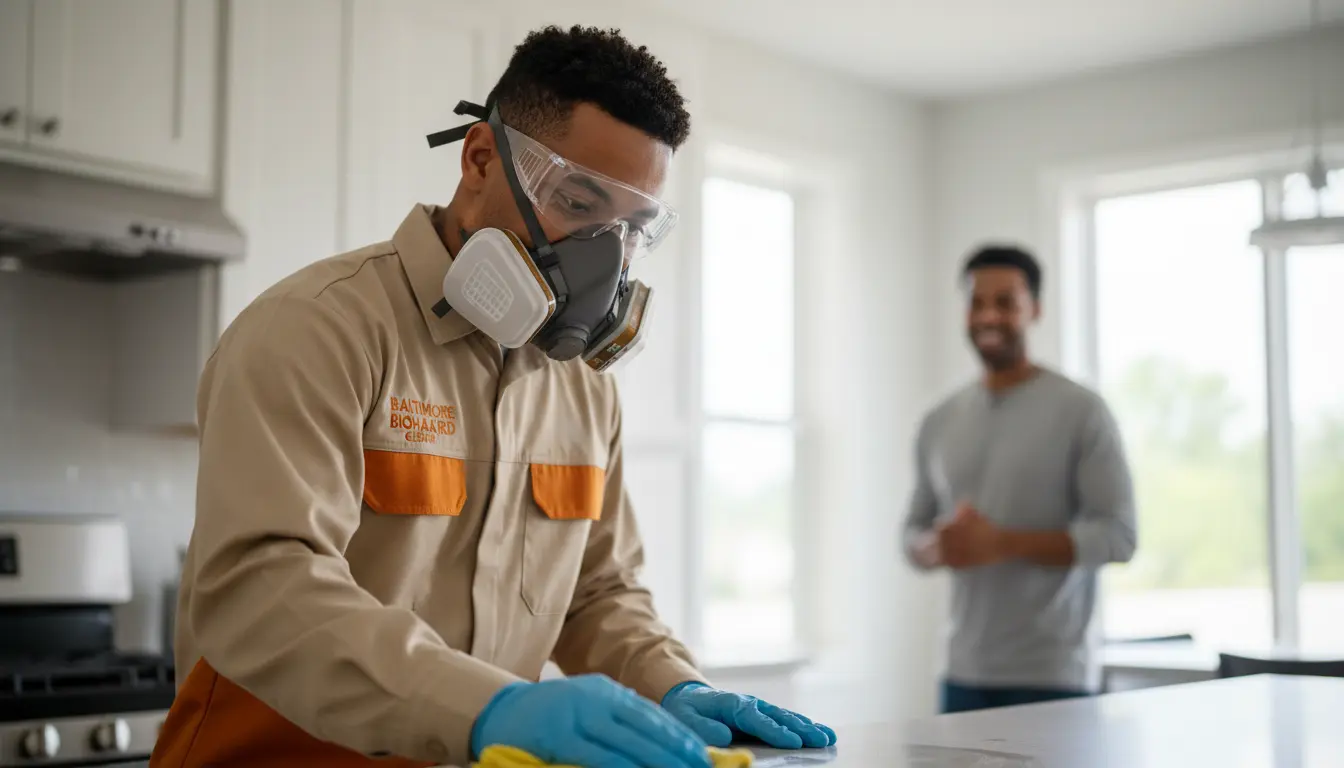
Many property owners, real estate agents, and even facility managers hold serious misconceptions about what biohazard cleanup actually involves. They assume bleach and a mop will suffice, or that standard janitorial crews can handle a trauma site. These beliefs do not just risk incomplete remediation; they expose everyone involved to bloodborne pathogens, airborne contaminants, and long-term structural damage. Understanding the reality of professional biohazard remediation is essential for anyone responsible for a property in Baltimore, especially given the unique challenges of the region’s housing stock and climate.
Baltimore Biohazard Cleanup operates at the intersection of technical rigor and compassionate discretion. We regularly encounter sites where well-meaning but untrained individuals have made the situation worse by attempting cleanup without proper protocols. This article exists to correct the record, explain the scientific and regulatory framework behind proper remediation, and help property owners make informed decisions when every minute counts.
The Technical Reality of Professional Remediation
Professional biohazard cleanup is not an extension of housekeeping. It is a specialized discipline governed by federal and industry standards, including the OSHA Bloodborne Pathogens Standard (29 CFR 1910.1030) and the IICRC S540 Standard for Trauma and Crime Scene Cleanup. Every step is deliberate, and every tool serves a distinct purpose in eliminating biological hazards and restoring structural integrity.
Our standard workflow begins with a comprehensive risk assessment. We evaluate the type of biological material present, the surface porosity of affected materials, the extent of saturation, and the potential for aerosolized contaminants. In Baltimore’s historic rowhomes, where lath and plaster walls and hardwood floors are common, the challenge increases because these materials absorb fluids far more readily than modern drywall or sealed concrete. Following assessment, we establish a containment zone using negative air pressure machines fitted with HEPA filtration. This creates a vacuum environment that pulls airborne particles away from clean areas and exhausts them through filters rated to capture 99.97% of particles down to 0.3 microns.
The actual removal of biohazards involves hospital-grade disinfectants that are EPA-registered for specific pathogens, not general cleaning agents. We apply enzyme-based treatments designed to break down organic matter at a molecular level, which prevents residual odors and minimizes the attraction of insects or rodents. After cleaning, we use adenosine triphosphate (ATP) fluorescence testing to confirm that biological residue has been eliminated at a microscopic level. ATP testing measures organic material on surfaces by detecting the presence of adenosine triphosphate, a molecule found in all living cells. A reading below a specific threshold indicates the surface is hygienically clean, not just visually clean. This is the same testing protocol used in hospital operating rooms.
Professional Remediation vs. Standard Janitorial Cleaning
To illustrate the difference in approach and outcome, consider the following comparison.
| Feature/Metric | Professional Biohazard Remediation | Standard Residential Cleaning |
|---|---|---|
| Regulatory Compliance | OSHA 29 CFR 1910.1030, EPA disinfectant labeling, DOT waste transport | No specific biohazard regulatory framework |
| Pathogen Elimination | ATP testing verified; >99.99% reduction of pathogens | Visual cleanliness only; pathogens remain |
| Structural Assessment | Evaluation of porous vs. non-porous materials; removal of saturated structural elements | No structural evaluation; cleaning attempts on absorbent materials |
| Containment | Negative air pressure with HEPA filtration; sealed containment zones | No containment; cross-contamination risk to entire structure |
| Waste Disposal | Registered biohazard waste transport; incineration per federal guidelines | Regular trash disposal; illegal and dangerous |
| Odor Mitigation | Enzyme treatments and hydroxyl generators; addresses source | Masking with fragrances; source remains |
Source: IICRC S540 Trauma and Crime Scene Cleanup Standard
These differences are not academic. A property owner who hires a standard cleaning service for a biohazard scene in Baltimore may unknowingly leave behind pathogens that can cause hepatitis B, hepatitis C, HIV, or bacterial infections. They may also face legal liability if waste is improperly disposed of. The financial cost of correcting an inadequate cleanup can exceed the cost of hiring a certified professional from the start.
Expert Insights into Detection and Prevention
Detecting Hidden Biological Seepage
One of the most technically demanding aspects of biohazard remediation is identifying biological fluids that have migrated beyond the visible area. In Baltimore’s rowhomes, structural elements like shared party walls and wooden subfloors can create capillary paths that draw blood or other fluids into adjacent rooms or even into the adjoining property. Our technicians use moisture meters and thermal imaging cameras to detect areas of saturation behind walls and under flooring. A visible stain on the surface may represent only a small fraction of the total contamination. Failing to locate and treat these hidden pockets guarantees future odor problems and potential health risks.
Porous Materials and Replacement
A hard rule in professional biohazard remediation is that porous materials such as upholstered furniture, carpets, mattresses, and unsealed wood cannot be reliably decontaminated. Once biological material saturates a porous surface, the internal structure harbors organic residue that no cleaning solution can fully reach. The only safe course is removal and disposal as biohazard waste. Property owners who attempt to salvage a mattress or a sofa after a trauma event often find that odors resurface within weeks, and they run the ongoing risk of pathogen exposure. Our property biohazard restoration protocols include thorough assessment of every surface to determine whether cleaning or replacement is appropriate.
Negative Pressure and Cross-Contamination
Many people assume that if they cannot see or smell a problem, none exists. Biological particulates can remain airborne for hours after a disturbance. Without containment, these particles travel through HVAC systems, under doors, and through cracks in walls. Using negative air pressure is not optional; it is a fundamental infection control measure. During a recent attic cleanup in a Fells Point property affected by rodent infestation, our team used negative air machines to prevent dried rodent urine particles from entering the living space below. Our rodent infestation cleanup services always employ this containment strategy.
Common Mistakes Property Owners Make
The most frequent errors we encounter involve well-intentioned but uninformed decisions. One of the most dangerous is using household bleach on biological matter. Bleach can effectively disinfect in controlled laboratory conditions, but it loses its efficacy in the presence of organic material. Blood and other bodily fluids contain proteins that deactivate bleach. Furthermore, bleach does not address the underlying organic residue, meaning the site may still attract pests or produce odors. An EPA-registered hospital disinfectant with a tuberculocidal claim is the appropriate choice.
Another common misconception is that odors will dissipate naturally if the space is aired out. Odors from biological decomposition are caused by volatile organic compounds (VOCs) that seep into porous materials. Opening windows only dilutes the air temporarily; it does not remove the source. In Baltimore’s climate, particularly in summer, the heat and humidity actively accelerate the vaporization of these compounds, making odors more intense and more persistent. Our odor elimination services use hydroxyl generators and thermal fogging to chemically neutralize VOCs at the molecular level.
A third mistake is allowing untrained personnel, including family members or maintenance staff, into the site before professional remediation begins. Every person who enters a contaminated area risks exposure to bloodborne pathogens and may inadvertently track contaminants to other parts of the building. This expands the scope of remediation and increases overall cost. In one Baltimore County case, a landlord allowed a maintenance worker to inspect a unit where a tenant had passed away. The worker tracked biological material into the hallway and onto a shared stairwell, turning a single-unit remediation into a multi-unit project.
Understanding Pricing for Professional Biohazard Cleanup
Pricing is a common point of confusion, partly because of the variability involved. Most professional remediation services, including those offered by Baltimore Biohazard Cleanup, base their estimates on several factors.
- Site mobilization fees cover the cost of dispatching a certified crew, transporting specialized equipment such as negative air machines and HEPA vacuums, and establishing containment protocols. In Baltimore, mobilization includes allowances for navigating traffic in dense urban zones and parking logistics in areas like Federal Hill or Mount Vernon.
- Hourly remediation rates are charged for the on-site work, which includes removal of biohazardous materials, application of disinfectants, structural cleaning, and waste packaging. The extent of contamination directly affects the number of hours required.
- Disposal fees for biohazardous waste are regulated and can vary by volume. Waste must be transported in registered vehicles to a licensed incineration facility, and the paperwork must comply with state and federal tracking requirements.
Three major factors influence the final cost. First, the extent of structural material replacement needed. If contamination has saturated sheetrock, flooring, or subflooring, removal and replacement add both labor and material costs. Second, the total volume of biohazardous waste. Larger volumes require more disposal containers and more transport fees. Third, the need for specialized HVAC decontamination. If biological particles have entered the ductwork, the entire system may require cleaning and disinfection to prevent recirculation of pathogens. This is particularly relevant in multi-unit buildings common in Baltimore.
Safety Standards and Certifications
Adherence to established safety standards is not optional; it is a legal and ethical requirement. Our crew members complete annual training under the OSHA Bloodborne Pathogens Standard, which covers proper use of personal protective equipment (PPE), decontamination procedures, and emergency response protocols. We also follow the IICRC S540 standard, which provides a framework for trauma and crime scene cleanup that includes scene assessment, cleaning methodology, and waste handling.
These standards exist to protect everyone involved. For the property owner, proper certification means that the work performed meets a defensible benchmark of care. If a future occupant or a subsequent buyer raises questions about a past incident, having a certified remediation company’s documentation provides legal protection. For the technicians, these protocols ensure that they do not become vectors for disease transmission. The use of Tyvek suits, N100 respirators, and puncture-resistant gloves is not theater; it is based on data about viral and bacterial transmission routes. Our infectious disease decontamination services follow the same rigorous protocols.
Furthermore, proper waste transport is governed by the Department of Transportation (DOT) and the Environmental Protection Agency (EPA). Biohazardous waste cannot be placed in standard dumpsters. It must be collected in clearly marked, puncture-resistant containers and transported by a licensed carrier to a facility that incinerates medical waste. Disposing of biohazardous waste improperly can result in significant fines for the property owner.
Frequently Asked Questions
Can I clean a trauma scene myself to save money?
Cleaning a trauma scene without professional training, equipment, and certification is not recommended and can be illegal depending on the circumstances. Bloodborne pathogens such as hepatitis B can survive on surfaces for up to a week. Without ATP testing and proper disinfectants, you have no way to confirm that the site is biologically safe. Additionally, improper disposal of contaminated materials can lead to environmental fines. The cost of professional remediation, while significant, is typically far lower than the medical costs of an exposure incident or the legal costs of non-compliance.
How soon should I call a biohazard cleanup company after an incident?
Immediately. In trauma incidents, unattended deaths, or infectious disease outbreaks, time is a critical factor. In Baltimore’s summer climate, biological decomposition accelerates rapidly, increasing the risk of structural damage and odor migration. Calling a service like our 24/7 emergency response team as soon as the scene is released by authorities reduces the total cost and complexity of the remediation.
Will my insurance cover professional biohazard cleanup?
Coverage depends on your specific policy, but many homeowner’s and property insurance policies include coverage for biohazard remediation as part of their dwelling protection or as an add-on. Some policies explicitly exclude coverage for certain scenarios, such as hoarding or meth lab decontamination. It is advisable to review your policy and contact your agent promptly. Our team can provide detailed documentation of the work performed, including photographs and ATP test results, to support your claim with meth lab decontamination or similar services.
What happens if I try to cover up a biohazard incident before selling a property?
Concealing a known biohazard incident is legally risky and medically unsound. In Maryland, sellers are required to disclose material defects that affect the property’s value or safety. A past biohazard incident, particularly if it involved blood, unattended death, or illicit drug manufacturing, is considered a material fact. Failure to disclose can result in lawsuits for fraud or negligent misrepresentation after the sale. Beyond the legal risk, untreated biological residue can cause health problems for new occupants and may resurface through odors during weather changes. Professional documentation provides a clear path to a safe and legally compliant sale.
Professional Biohazard Remediation in Baltimore
Correcting the common misconceptions about biohazard cleanup services starts with understanding that this work is not about simple cleaning. It is about restoring a space to a condition that is structurally sound, biologically safe, and free of the psychological weight that a traumatic event leaves behind. In Baltimore, where the housing stock includes many historic properties with unique vulnerabilities, the need for technically proficient remediation is especially acute.
Baltimore Biohazard Cleanup brings years of field experience, rigorous adherence to industry standards, and a deep respect for the sensitivity of every situation we handle. Whether you are a property owner facing an unexpected tragedy, a facility manager dealing with a hoarding situation, or a real estate professional preparing a property for sale, our team provides the discretion, expertise, and thoroughness necessary to ensure complete and lasting restoration. The misconceptions are understandable, but the right choice is always to rely on professionals who know the science, the regulations, and the local conditions that make every scene unique.