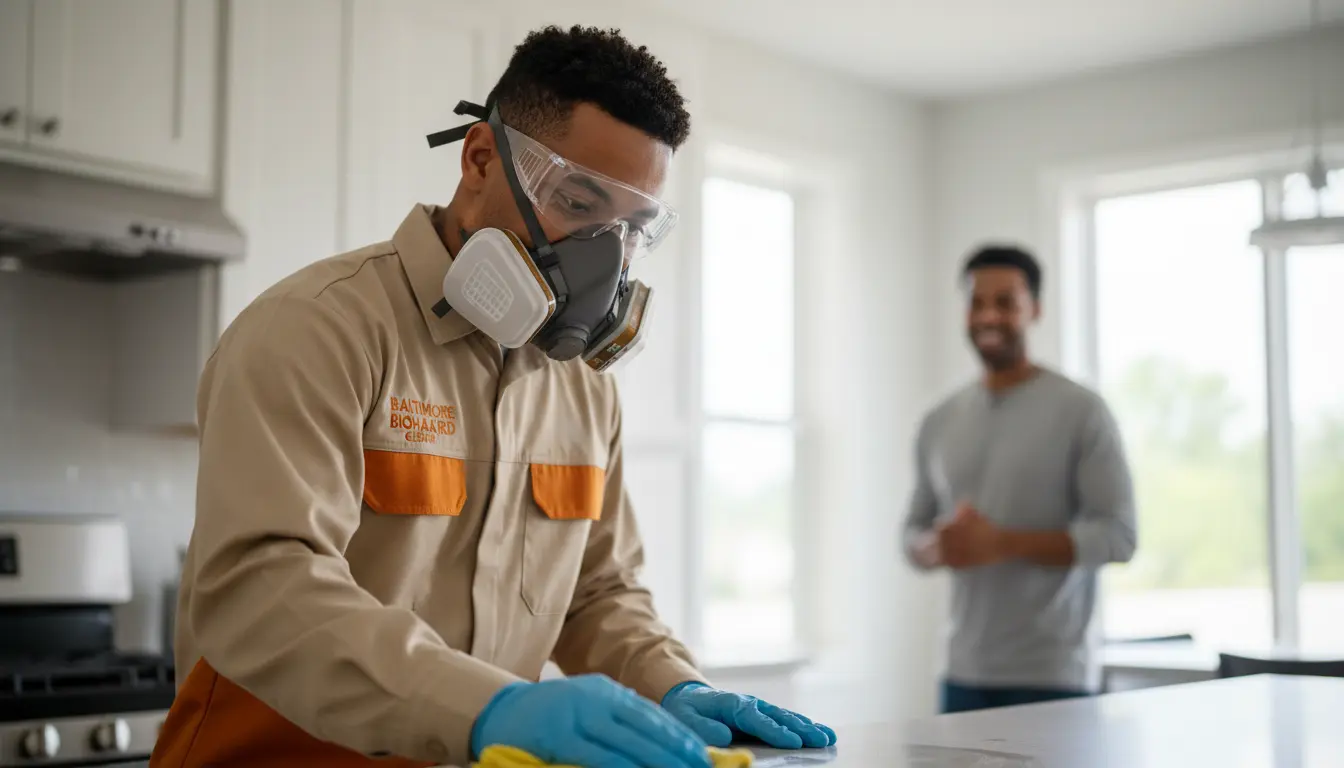
Understanding the difference between biohazard cleanup vs standard cleaning: What’s the difference? is not just an academic question for property owners in Baltimore. It is a matter of regulatory compliance, structural integrity, and public health. Standard cleaning services operate under general sanitation guidelines, designed for everyday dirt, dust, and minor messes. Biohazard remediation, by contrast, follows a strict framework governed by OSHA’s Bloodborne Pathogens Standard (29 CFR 1910.1030), the EPA’s guidelines for waste disposal, and the IICRC S540 Standard for Trauma and Crime Scene Cleanup. The two disciplines share almost nothing in common beyond the use of cleaning tools. The stakes, the training, the equipment, and the legal obligations are fundamentally different.
The Regulatory Framework That Separates Remediation From Routine Cleaning
A standard cleaning company in Baltimore operates under general business licenses and basic health department guidelines. Their employees carry mops, buckets, and over-the-counter disinfectants. They are trained to remove visible dirt and reduce surface bacteria to general habitable levels. There is no requirement for bloodborne pathogen training, no protocol for handling regulated medical waste, and no certification for structural decontamination. When a standard cleaner encounters blood, tissue, or other potentially infectious materials, they are legally and ethically out of their depth.
Professional biohazard remediation companies operate under a completely different regulatory umbrella. Every technician must complete OSHA-mandated training on bloodborne pathogens, proper use of personal protective equipment, and safe handling of sharps. The company must maintain a written exposure control plan, document all waste disposal through licensed medical waste transporters, and follow strict chain-of-custody procedures for biological materials. In Baltimore, where historic rowhomes share common walls and ventilation systems, the failure to contain a biological hazard can expose dozens of residents to bloodborne diseases such as hepatitis B, hepatitis C, and HIV. The regulatory framework exists precisely to prevent this kind of cross-contamination from occurring.
Property owners who attempt to use a standard cleaning crew for a biohazard situation are not just taking a health risk. They are potentially violating Maryland state regulations governing the transport and disposal of biomedical waste. The Maryland Department of the Environment has specific requirements for the labeling, storage, and incineration of biohazardous materials. A standard cleaning company cannot legally transport this waste to a landfill. Professional biohazard companies maintain contracts with licensed medical waste disposal facilities and provide all necessary manifests to document proper disposal. This is why understanding biohazard cleanup vs standard cleaning: What’s the difference? has direct legal consequences for property owners in Baltimore.
The Technical Process of Professional Biohazard Remediation
Initial Risk Assessment and Containment
The first step in any professional remediation is a thorough risk assessment. Technicians arrive in full Level C personal protective equipment, including Tyvek suits, N-100 respirators, chemical-resistant gloves, and boot covers. They establish a containment zone using polyethylene sheeting and negative air machines, which create a pressure differential that prevents airborne contaminants from escaping into unaffected areas of the building. This is particularly important in Baltimore’s older housing stock, where shared ductwork and porous brick walls can allow biological aerosols to travel between units. The containment protocol alone is something standard cleaning crews never employ.
Physical Removal and Structural Assessment
Once containment is established, technicians begin the physical removal of all biohazardous materials. This is not a surface-cleaning exercise. In cases of unattended death, biological fluids often soak through carpet, padding, subflooring, and into the joists below. Porous materials such as drywall, insulation, and hardwood flooring must be removed and disposed of as regulated medical waste. The technician assesses each structural element for the depth of contamination using moisture meters and visual inspection. In the Fells Point case mentioned earlier, remediation required removing the entire flooring system of the affected unit and part of the ceiling below. A standard cleaning crew would have mopped the surface and left behind a hidden reservoir of biological material that would continue to decompose and emit odors for months.
Chemical Sanitization and ATP Testing
After physical removal, the remaining structural surfaces undergo a three-step cleaning process. First, a pre-cleaning with a surfactant removes any remaining organic matter. Second, an EPA-registered hospital-grade disinfectant is applied with a controlled dwell time specific to the pathogen being targeted. Third, an adenosine triphosphate (ATP) fluorescence test is performed to verify the elimination of all biological material. ATP testing measures the presence of organic matter at a molecular level, providing a numerical readout that confirms the surface is truly clean. Standard cleaning protocols do not include this verification step. They rely on visual inspection, which is insufficient when dealing with invisible pathogens that can cause disease transmission months after the initial event.
Final Structural Encapsulation and Odor Control
The final stage of professional remediation involves encapsulating any remaining porous surfaces with a specialized sealant and deploying industrial-grade ozone generators or hydroxyl machines to neutralize volatile organic compounds responsible for odor. In Baltimore’s humid climate, odor molecules from decomposition can become trapped in brick, mortar, and wooden beams. Standard air fresheners and carpet shampoos cannot penetrate these materials. Professional remediation uses thermal fogging and enzyme-based treatments that break down odor-causing compounds at the chemical level. This is the difference between masking a smell and eliminating it permanently.
Comparison Table: Professional Remediation vs. Standard Cleaning
| Feature/Metric | Professional Biohazard Remediation | Standard Residential Cleaning |
|---|---|---|
| Regulatory Compliance | OSHA 29 CFR 1910.1030, EPA, MDE, IICRC S540 | Basic business license, general sanitation |
| Pathogen Elimination | ATP testing verified, EPA-registered disinfectants with controlled dwell times | Visual inspection only, general household cleaners |
| Structural Assessment | Full evaluation of subfloor, drywall, insulation, HVAC | Surface-level inspection only |
| Containment Protocol | Negative air pressure, poly sheeting, HEPA filtration | None |
| Waste Disposal | Licensed medical waste transporter, incineration | Standard trash or landfill |
| Odor Elimination | Thermal fogging, hydroxyl generators, enzyme treatments | Air fresheners, carpet shampoo |
Source: IICRC S540 Trauma and Crime Scene Cleanup Standard
Expert Diagnostic Insights for Property Owners
Experienced remediation technicians develop diagnostic skills that go far beyond what standard cleaners possess. One key diagnostic technique involves using a thermal imaging camera to detect hidden moisture pockets behind walls and under floors. Biological fluids have a different thermal conductivity than clean water, so a trained technician can identify areas of suspected contamination even when no visible stain is present. This is critical in situations where a body has been removed but fluids have seeped into wall cavities. A standard cleaner would never look for this hidden contamination, leaving behind a long-term health hazard.
Another advanced diagnostic principle involves understanding the behavior of biological materials in porous substrates. Many property owners assume that a concrete subfloor in a Baltimore basement can be cleaned and sealed. In reality, concrete is highly porous, and blood or other biological fluids can penetrate several inches into the material. Professional technicians use specialized pH-neutral enzyme cleaners that break down proteins at the molecular level, followed by multiple rinses and a deep-penetrating sealant. Standard cleaning with bleach actually fixes proteins to surfaces, making them harder to remove and leaving behind a residue that can still transmit disease.
A third diagnostic insight relates to HVAC system contamination. When biological decomposition occurs, aerosolized particles can be drawn into the heating and cooling system of a building. In a Baltimore rowhome, this can circulate contaminants through multiple units before anyone notices an odor. Professional remediation includes cleaning and disinfecting all ductwork, replacing filters, and sometimes installing UV-C light systems to sterilize the air handler. Standard cleaning services have no protocol for HVAC decontamination, and property owners who overlook this step risk recontaminating a cleaned space the moment the heat turns on.
Common Mistakes Property Owners Make
One of the most frequent errors property owners make is attempting to clean biological materials with household bleach. Bleach is a disinfectant, but it is not a cleaner. It does not break down organic matter, and it can actually cause blood proteins to bond more tightly to surfaces. Furthermore, bleach loses its disinfecting power rapidly in the presence of organic material. Professional remediators use quaternary ammonium compounds or accelerated hydrogen peroxide-based disinfectants that remain effective even in the presence of heavy soil loads. Relying on bleach gives a false sense of security while leaving behind active pathogens.
Another common mistake is waiting for odors to dissipate naturally. In Baltimore’s humid climate, the odor of decomposition does not simply fade. The volatile organic compounds responsible for the smell are produced continuously as bacteria break down residual organic material. Waiting only allows the contamination to spread further into structural materials and HVAC systems. By the time an odor becomes noticeable to neighbors, the contamination has likely already penetrated deep into the building fabric. Professional remediation should begin as soon as a biohazard situation is discovered, not after the smell has become unbearable.
A third mistake involves allowing untrained personnel, including family members, friends, or standard janitorial staff, into the affected area before professional remediation begins. Every person who enters a biohazard zone without proper PPE and training becomes a potential vector for disease transmission. They can track biological material on their shoes and clothing into other parts of the building or their own homes. In Baltimore, where many properties are multi-unit dwellings, this can quickly escalate a contained incident into a community-wide public health issue. The site should be secured and access restricted to certified remediation technicians only.
Pricing Structures and Cost Factors
- Site mobilization fee: Most professional biohazard companies charge a base fee to mobilize a crew, equipment, and containment materials to the site. This typically ranges from $500 to $1,500 depending on the distance from the company’s base of operations and the urgency of the response. Emergency calls outside of normal business hours command a premium due to the need for immediate dispatch and overtime labor costs.
- Hourly remediation rates: Once on site, work is typically billed at an hourly rate that covers the entire crew, equipment usage, and consumables. Rates in the Baltimore area generally range from $200 to $500 per hour for a standard two to four-person team. More complex situations requiring specialized equipment such as negative air machines, thermal foggers, or HEPA vacuums will increase the hourly cost. A typical unattended death remediation can take between 8 and 40 hours depending on the extent of contamination.
- Specialized waste disposal fees: The disposal of biohazardous waste is regulated and expensive. Medical waste is typically incinerated, and the cost includes the specialized containers, transportation, and incineration fees. This can add $500 to $2,000 to a project, depending on the volume of waste generated. Structural demolition materials such as contaminated drywall, flooring, and insulation are also disposed of as regulated waste, adding to the total.
Three primary factors influence the final cost of a remediation project. The first is the extent of structural material replacement required. If biological fluids have penetrated subflooring, drywall, or insulation, these materials must be removed and replaced. The second factor is the total volume of biohazardous waste generated. Larger volumes require more disposal containers and higher transportation fees. The third factor is the necessity for specialized HVAC decontamination. If the building’s ductwork has been contaminated, additional time and equipment are needed to clean and disinfect the entire system. Property owners should request a detailed written estimate before work begins, and they should ensure the estimate includes all disposal and testing fees.
Safety Standards and Certifications
Professional biohazard remediation companies in Baltimore must hold certifications that demonstrate their competence and compliance with industry standards. The most important certification is IICRC certification in trauma and crime scene cleanup, which requires passing a comprehensive examination on the S540 standard. This certification ensures that technicians understand the science of microbial remediation, proper containment procedures, and the correct use of disinfectants and personal protective equipment. Without this certification, a company lacks the formal training to handle biohazard situations safely.
OSHA’s Bloodborne Pathogens Standard, 29 CFR 1910.1030, is the federal regulation that governs all work involving potential exposure to human blood or other infectious materials. Every technician must receive initial and annual training on this standard, and the company must maintain a written exposure control plan. This plan details the procedures for handling sharps, disposing of contaminated materials, and responding to accidental exposures. Property owners should ask to see a company’s written exposure control plan and proof of technician training before hiring. A company that cannot produce these documents is operating outside of federal safety regulations.
Finally, reputable companies work exclusively with authorized medical waste disposal services. In Maryland, medical waste must be tracked from the point of generation to the point of final disposal using a manifest system. The remediation company should provide the property owner with a copy of the manifest for their records. This documentation is important for insurance claims and for demonstrating compliance with environmental regulations. Failure to properly document waste disposal can result in fines and legal liability for the property owner.
Frequently Asked Questions
What is the difference between sanitization and disinfection in biohazard cleanup?
Sanitization reduces the number of bacteria on a surface to a safe level as determined by public health standards. Disinfection goes further by destroying or inactivating a broader range of pathogens, including viruses and fungi. In biohazard remediation, disinfection is the required standard because of the potential presence of bloodborne pathogens. Technicians use disinfectants registered with the EPA for specific claims against hepatitis B, hepatitis C, and HIV. The dwell time, or the amount of time the disinfectant must remain wet on the surface, is critical and varies by product. Professional remediators time each application to ensure full pathogen kill, which is a level of precision that standard cleaning protocols do not achieve.
Can I stay in my home during biohazard remediation?
In most cases, the affected area must be completely sealed off from the rest of the building, and occupants should not remain in the property during active remediation. The use of negative air machines, chemical disinfectants, and ozone generators creates an environment that is hazardous to untrained individuals. Additionally, the psychological toll of witnessing the remediation process can be significant for family members or tenants. Professional companies typically recommend that occupants vacate the property for the duration of the work, which can range from a few hours to several days depending on the scope of contamination. The company will provide guidance on when it is safe to re-enter the property after final clearance testing.
How long does professional biohazard remediation take?
The timeline for remediation depends on several factors, including the size of the affected area, the type of biohazard, the extent of structural penetration, and the condition of the property. A small blood cleanup in a single room might take four to six hours. An unattended death that has gone undiscovered for weeks in a multi-story Baltimore rowhome can take three to five days. The process cannot be rushed because each step, from containment to disinfection to verification testing, requires a specific amount of time to be effective. Rushing the process compromises safety and can result in incomplete remediation, leading to recurring odors and potential health risks. Professional companies provide a timeline estimate during the initial assessment and update it as work progresses.
What happens if biohazard material is found in an HVAC system?
If biological material has been drawn into the heating, ventilation, and air conditioning system, the entire ductwork must be cleaned and disinfected. This is a specialized process that involves using HEPA vacuum systems, rotating brushes, and antimicrobial fogging agents. The HVAC unit itself, including the evaporator coils and condensate pan, must also be cleaned. In some cases, porous duct lining may need to be replaced. Failure to address HVAC contamination means the system will continue to circulate biological particles throughout the property, creating a persistent health hazard and causing odors to return. Professional remediation includes a full HVAC assessment as part of the initial risk evaluation.
Professional Biohazard Remediation in Baltimore
The differences between biohazard cleanup and standard cleaning are not subtle. They involve entirely different regulatory frameworks, safety protocols, technical processes, and professional standards. Property owners in Baltimore who face a biohazard situation, whether from an unattended death, crime scene, hoarding situation, or industrial accident, need a response that goes far beyond what any janitorial service can provide. The health risks, legal obligations, and structural consequences of inadequate remediation are too significant to ignore.
Baltimore Biohazard Cleanup brings the full weight of certified training, industry-standard equipment, and years of local experience to every project. Our technicians are IICRC-certified, OSHA-trained, and deeply familiar with the unique challenges of Baltimore’s historic properties, humid climate, and dense urban environment. We handle every phase of remediation from initial containment to final ATP verification, and we provide complete documentation for insurance and regulatory purposes. When you need professional biohazard cleanup vs standard cleaning, the choice should be clear. Contact us today to discuss your situation and schedule a confidential assessment.