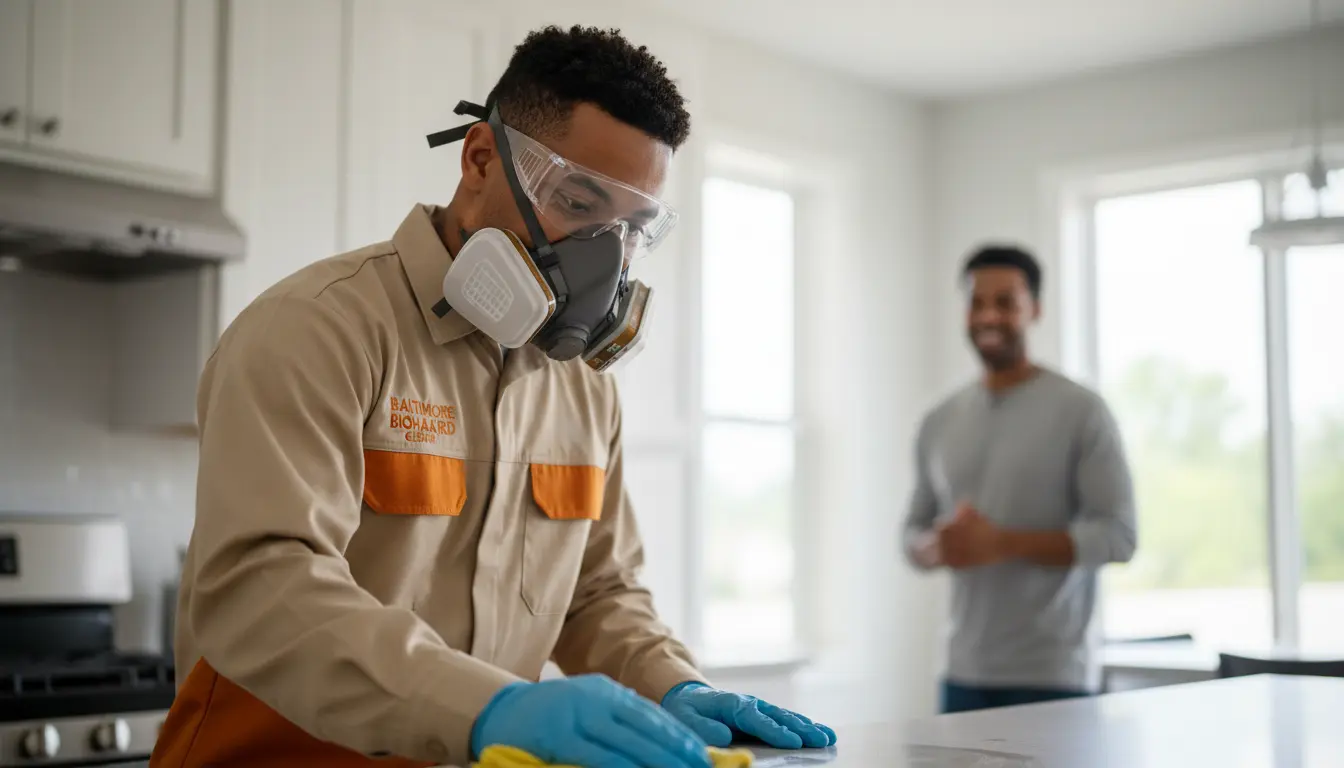
Biohazard cleanup for apartments, homes, and commercial properties in a city like Baltimore demands more than bleach and good intentions. It requires a systematic, science-backed approach that accounts for the unique structural challenges of our region—from century-old rowhomes with porous brick foundations to modern high-rises with shared HVAC systems. Every incident—whether a trauma scene, an unattended death, a hoarding situation, or a biohazardous spill—demands immediate containment, thorough decontamination, and verified clearance to protect everyone who will later occupy that space.
At Baltimore Biohazard Cleanup, we combine technical expertise with compassion. We understand that behind every call is a family, a landlord, or a business owner facing an overwhelming situation. Our job is to restore safety and peace of mind, using methods that meet or exceed industry standards. In this article, we break down exactly what professional biohazard remediation entails—and why it is the only safe choice for properties in the Baltimore area.
The Technical Process of Professional Biohazard Remediation
Professional biohazard cleanup is a multi-phase operation that follows a strict protocol. It begins with a comprehensive risk assessment of the site. Our technicians, all certified under the IICRC S540 standard for trauma and crime scene cleanup, evaluate the extent of contamination, identify all affected surfaces—including hidden areas like subflooring, insulation, and ductwork—and determine the appropriate level of personal protective equipment (PPE) required. In Baltimore’s humid Mid-Atlantic climate, biological decomposition accelerates rapidly, often turning a two-week-old incident into a deep structural contamination that requires extensive material removal.
Once the assessment is complete, we establish a containment zone using heavy-gauge polyethylene sheeting and negative air machines equipped with HEPA filtration. This creates negative pressure within the work area, preventing airborne pathogens from migrating to clean parts of the building—a critical step in multi-unit dwellings where cross-contamination prevention is paramount. Our crews then manually remove all visible biohazardous materials, including blood-soaked carpeting, contaminated drywall, and any porous items that cannot be disinfected. These materials are double-bagged in biohazard-labeled containers and transported to an authorized medical waste disposal facility, in compliance with Maryland Department of the Environment regulations.
The next phase involves chemical sanitization using EPA-registered hospital-grade disinfectants proven effective against a broad spectrum of bloodborne pathogens, including hepatitis B, hepatitis C, and HIV. We apply these with electrostatic sprayers to ensure even coverage on all surfaces, including hard-to-reach crevices. After the contact time required for viral inactivation, we perform ATP (adenosine triphosphate) fluorescence testing to verify that no organic residue remains. This scientific measurement gives us a quantifiable cleanliness score—anything above a set threshold triggers a repeat cleaning cycle. Only when ATP readings fall below industry benchmarks do we proceed to structural encapsulation, which seals any remaining microscopic contaminants behind a durable coating. This step is especially important in Baltimore’s older buildings, where porous materials like lathe-and-plaster walls can harbor pathogens even after cleaning.
Professional Remediation vs. Standard Janitorial Cleaning
Many property owners assume that any cleaning crew can handle a biohazard situation. The difference in outcomes is stark.
| Feature/Metric | Professional Biohazard Remediation | Standard Residential Cleaning |
|---|---|---|
| Regulatory Compliance | OSHA 29 CFR 1910.1030, EPA, Maryland Dept. of the Environment, DOT for transport | None; no training in bloodborne pathogens |
| Pathogen Elimination | EPA-registered hospital-grade disinfectants; ATP testing to verify zero organic residue | Household bleach or general cleaners; no verification of efficacy |
| Structural Assessment | Full evaluation for hidden contamination in subflooring, wall cavities, HVAC | Surface-level cleaning only; misses deep contamination |
| Cross-Contamination Prevention | Negative air pressure, HEPA filtration, sealed containment zones | No containment; pathogens can spread via air and foot traffic |
| Waste Disposal | Licensed medical waste hauler, incineration or autoclaving | Illegal disposal in regular trash; public health hazard |
Expert Insights: What Every Property Owner Needs to Know
Over years of remediating Baltimore properties, we have developed diagnostic approaches that go beyond basic cleaning protocols. Here are three professional tips that often make the difference between a successful restoration and a recurring problem.
Detecting hidden biological seepage. Blood and other body fluids can travel far beyond the visible stain. In a rowhome with shared walls, fluid can wick through mortar joints and into the adjacent unit. We use moisture meters and thermal imaging to locate these hidden pockets. If left untreated, they can cause persistent odors and microbial growth weeks later.
Porous materials require replacement, not cleaning. Carpets, upholstery, and unfinished wood are impossible to fully disinfect because bloodborne pathogens can penetrate deep into the fibers. Attempting to clean them often leaves behind viable pathogens. The IICRC S540 standard mandates removal and disposal of all porous materials that have come into direct contact with biohazards.
Negative pressure is non-negotiable. In multi-family buildings, the air handling system can spread airborne pathogens throughout the structure within minutes. Our containment protocol uses negative air machines to create a pressure differential that keeps contaminants inside the work zone. This is a fundamental difference between professional remediation and a standard cleaning crew that simply opens a window.
Common mistakes property owners make include using household bleach on biological matter—bleach is inactivated by organic material and can actually fix stains—waiting for odors to dissipate naturally, which allows pathogens to continue spreading, and allowing untrained personnel into the site, which exposes them to serious health risks like hepatitis and HIV. The consequences of these errors can include long-term health liabilities for occupants and structural damage that requires far more expensive remediation later.
Pricing Factors for Biohazard Cleanup in Baltimore
The cost of professional biohazard remediation varies significantly based on the specifics of each incident. Rather than a flat fee, most companies provide a quote after a site assessment. Here are the typical pricing components:
- Site mobilization and assessment fee – Usually $150–$350 to cover the initial response, travel, and evaluation. In Baltimore, this can be higher if the property is in a dense urban area with limited parking or if access requires coordination with building management.
- Hourly remediation rate – Ranges from $150 to $250 per technician per hour. A typical trauma scene cleanup in a one-bedroom apartment may require 4–8 hours with a team of two to three technicians.
- Disposal fees for biohazardous waste – Medical waste disposal is regulated and costs approximately $50–$150 per container (typically 15–30 gallons). Larger scenes with extensive material removal can generate multiple containers.
- Structural material replacement – If subflooring, drywall, or insulation must be removed, the cost of replacement materials and labor is added. This can range from $500 to $3,000 depending on the extent.
- Specialized HVAC decontamination – If bioaerosols have entered the ductwork, fogging with disinfectants and cleaning the system adds $300–$800.
Three major factors that influence overall cost: the volume of biohazardous waste (larger scenes require more disposal and labor), the porosity of affected materials (hard surfaces are easier to clean than porous ones), and the accessibility of the site (a cramped crawlspace or a third-floor walkup in a rowhome takes longer). Always get a detailed written estimate before work begins.
Safety Standards and Regulatory Compliance
Biohazard remediation is not a janitorial service; it is a regulated industry. At Baltimore Biohazard Cleanup, all technicians hold current certifications in OSHA’s Bloodborne Pathogens Standard (29 CFR 1910.1030) and are trained in the use of PPE, including full-face respirators, Tyvek suits, and chemical-resistant gloves. We follow the IICRC S540 standard for trauma and crime scene cleanup, which provides a framework for containment, cleaning, verification, and documentation.
These standards exist to protect everyone: our workers, property occupants, and the community. For example, OSHA requires that all surfaces that come into contact with blood or other potentially infectious materials be decontaminated immediately after the incident. Failure to comply can result in fines and legal liability if an occupant later contracts a disease. Additionally, Maryland law mandates that all biohazardous waste be transported and disposed of by a licensed medical waste hauler. Disposing of such waste in regular trash is illegal and can lead to penalties. By hiring a certified professional, property owners ensure they meet all legal and ethical obligations.
Frequently Asked Questions About Biohazard Cleanup
Can I clean up a biohazard scene myself to save money?
Doing so is extremely risky. Without proper training and equipment, you can be exposed to bloodborne pathogens that cause serious illness. Household cleaners are not effective against hepatitis or HIV. Additionally, improper disposal of biohazardous waste is illegal in Maryland. The long-term health and legal consequences far outweigh the upfront savings. Professional remediation guarantees the site is safe and compliant.
How soon after a traumatic incident should cleanup begin?
Immediately. The longer biohazardous materials remain, the deeper they penetrate porous surfaces, and the more they decompose, generating odors and airborne pathogens. In Baltimore’s warm, humid climate, biological decomposition can begin within hours. Emergency biohazard cleanup is available 24/7 precisely because time is critical. Contact a professional as soon as the scene is released by law enforcement.
Will my insurance cover biohazard cleanup?
Many homeowner and commercial property insurance policies include coverage for biohazard remediation, especially if it results from a covered peril like a crime, accident, or unattended death. However, coverage varies. We recommend contacting your insurance provider directly and asking about “biohazard cleanup” or “trauma scene cleanup” coverage. We can provide detailed documentation of the remediation process to support your claim.
What happens if biohazard contamination is found in shared building spaces?
If contamination has spread to hallways, stairwells, or common HVAC systems, the entire affected area must be contained and cleaned. In Baltimore’s historic rowhomes, shared walls and ductwork can allow migration. Our team conducts a thorough inspection of adjacent units and common areas to ensure no cross-contamination remains. We coordinate with building management and, if necessary, public health authorities to ensure the safety of all residents.
How do you verify that the site is completely clean?
We use ATP fluorescence testing, which measures the presence of organic residue on surfaces. A reading below a specific threshold indicates that no biological material remains. We also perform a visual inspection under UV light to detect any residual stains. Finally, we provide a detailed report of the cleaning and testing results for the property owner’s records.
Professional Biohazard Remediation in Baltimore
When a property in Baltimore is compromised by a biohazard event—whether it’s an apartment in Federal Hill, a home in Roland Park, or a commercial property in the Inner Harbor—the path to restoration requires expertise, speed, and compassion. The science of remediation has advanced significantly, and today’s protocols ensure that a site can be returned to a safe, habitable state if handled correctly. But the margin for error is slim. A single missed pocket of contamination can lead to persistent odor, microbial growth, and health risks for years.
Baltimore Biohazard Cleanup brings decades of combined experience to every job. Our team is certified, insured, and deeply familiar with the specific challenges of our region—from the humidity that accelerates decomposition to the architectural quirks of century-old buildings. We handle the entire process discreetly, from initial containment through final verification, so property owners can focus on recovery. If you are facing a biohazard situation in an apartment, home, or commercial property, contact us immediately. We are here to help, 24 hours a day, seven days a week.