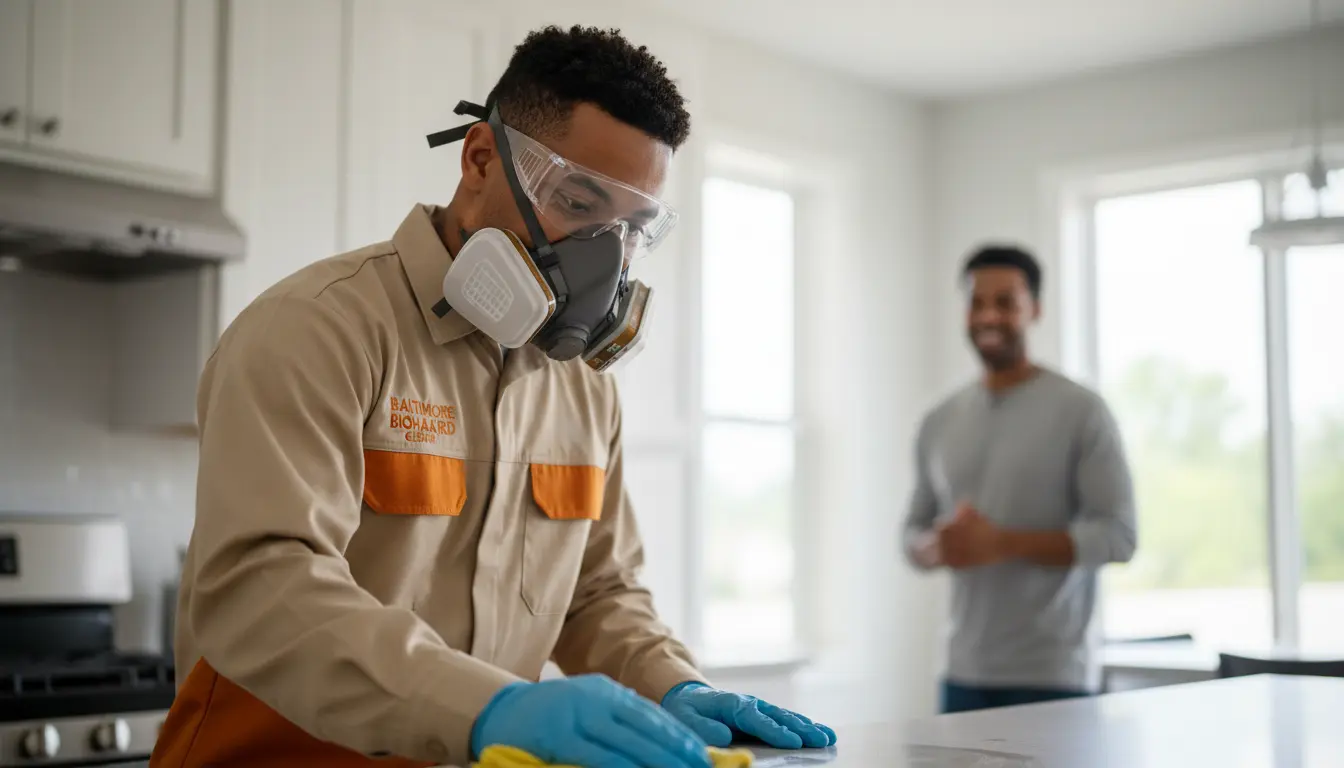
Most landlords assume that after a biohazard incident—a death, a violent crime, or a raw sewage backup—the smartest move is to call a regular cleaning crew and have the place scrubbed down. That assumption is not just wrong; it is financially dangerous. What many property managers in Baltimore do not realize is that a standard janitorial service lacks the training, equipment, and legal authority to handle bloodborne pathogens, chemical decontamination, or structural remediation. The real cost of a biohazard event is not the cleanup fee—it is the liability that follows an incomplete or illegal restoration. Failing to meet Maryland’s strict biohazard waste disposal regulations or the IICRC S540 standard can expose a property owner to years of health code violations, tenant lawsuits, and even criminal charges. That is why professional biohazard cleanup for landlords and property managers in Baltimore is not an optional service; it is a mandatory risk management step.
Baltimore’s unique housing stock—historic rowhomes with shared walls, aging plumbing, and porous brick—amplifies every risk. Moisture from a trauma scene can seep into neighboring units, and airborne pathogens can travel through common ventilation systems. Without a certified remediation specialist, the property remains contaminated even after the visible mess is gone. At Baltimore Biohazard Cleanup, we bring decades of forensic restoration experience, a deep understanding of local regulations, and the technical tools to return your property to a safe, habitable condition. Every job we complete is documented, tested, and certified to meet OSHA, EPA, and IICRC standards.
The Technical Process of Professional Biohazard Remediation in Baltimore
Professional biohazard cleanup follows a strict, science-based protocol that begins long before any physical cleaning takes place. The first step is a comprehensive risk assessment of the site. Our team evaluates the type and volume of biological material, the porosity of affected surfaces, the presence of sharps or chemical hazards, and the potential for cross-contamination to adjacent rooms or units. In Baltimore’s rowhomes, where party walls are common, we also check for signs of seepage through brick or drywall. This assessment determines the containment strategy, the level of personal protective equipment required, and the specific chemical agents needed.
Once the assessment is complete, we establish a negative air pressure environment using industrial-grade negative air machines. These machines filter the air through HEPA filters and exhaust it outside, preventing airborne pathogens from spreading to clean areas. Our technicians suit up in full Tyvek coveralls, N95 or P100 respirators, face shields, and chemical-resistant gloves. All non-salvageable items—carpet, padding, upholstery, drywall, insulation—are carefully removed, bagged in biohazard-labeled red bags, and transported to a licensed medical waste incineration facility. For salvageable hard surfaces, we apply EPA-registered hospital-grade disinfectants with a dwell time verified by the manufacturer. After the initial cleaning, we perform adenosine triphosphate (ATP) fluorescence testing to measure the presence of organic residue. ATP testing provides a quantitative, real-time reading of cleanliness; if the reading exceeds the threshold for inhabited spaces, we re-clean and retest until the surface meets the standard.
Baltimore’s Mid-Atlantic climate adds a layer of complexity. High humidity during the summer months accelerates the decomposition of biological matter, which can cause odors to penetrate deeper into porous materials like wood, mortar, and plaster. Our technicians use specialized enzyme treatments to break down organic residue at the molecular level, and we deploy ozone generators or hydroxyl machines to neutralize lingering odors. Only after the site passes a final visual inspection and ATP test do we consider the remediation complete. We then provide a detailed report for the property owner, which includes all test results, disposal manifests, and a certification of compliance. This documentation is critical for insurance claims and for demonstrating due diligence in the event of a future dispute.
Professional Remediation vs. Standard Janitorial Cleaning: A Data Comparison
| Feature / Metric | Professional Biohazard Remediation | Standard Residential Cleaning |
|---|---|---|
| Regulatory Compliance | Full compliance with OSHA 29 CFR 1910.1030, EPA RCRA, and Maryland Department of the Environment (MDE) waste transport rules | No awareness of or compliance with biohazard regulations |
| Pathogen Elimination | EPA-registered hospital-grade disinfectants with verified dwell times; ATP testing to confirm a 99.99% reduction in microbial load | Household bleach or all-purpose cleaners; no verification of pathogen kill; bleach is ineffective on organic soils |
| Structural Assessment | Evaluation of porous materials, hidden seepage, and HVAC contamination; removal of all non-salvageable components | Superficial cleaning only; no structural inspection; porous materials left in place harbor pathogens |
| Waste Disposal | Proper segregation, labeling, and transport to a licensed medical waste incinerator; chain-of-custody manifests | Waste disposed in regular trash or dumpsters, violating state and federal law |
| Odor Removal | Negative air machines, ozone treatment, and enzyme neutralization targeting the source of volatile organic compounds | Air fresheners or open windows that mask rather than eliminate odors |
| Insurance Documentation | Detailed report with photos, test results, and certificates; supports claim filing and liability protection | No documentation; leaves property owner vulnerable to disputes |
Expert Insights for Property Managers and Landlords
Experienced remediation specialists rely on three advanced diagnostic techniques that general contractors or janitorial crews never use. The first is detecting hidden biological seepage. In Baltimore’s older row homes, blood or other body fluids can migrate through cracks in mortar or under baseboards, seeping into the subfloor or even the adjacent unit. Our team uses moisture meters and thermal imaging to locate these hidden pockets. The second insight is that porous materials — such as drywall, carpet, and unsealed wood — cannot be truly cleaned after a biohazard event. Pathogens penetrate the material’s structure, and even with aggressive cleaning, the risk of recontamination remains. The only safe approach is removal and replacement. The third is the critical importance of negative pressure. Without it, cleaning activities can actually aerosolize pathogens, spreading them to other parts of the building. Negative air containment is non-negotiable for any trauma scene.
Property owners consistently make the same mistakes. One common error is using household bleach on biological matter. Bleach is corrosive, loses efficacy in the presence of organic material, and can damage surfaces, creating new pathways for contamination. Another mistake is waiting for odors to dissipate naturally. Odors are caused by volatile organic compounds produced by decomposing tissue; they will not fade until the source is removed and the area is chemically neutralized. The third mistake is allowing untrained personnel — such as maintenance staff or family members — into the site before remediation is complete. This exposes them to bloodborne pathogens like hepatitis B, hepatitis C, and HIV, and creates a secondary liability for the property owner. The consequences of these mistakes include long-term health risks for occupants, structural damage that requires costly repairs, and legal penalties for improper waste disposal.
Understanding Biohazard Cleanup Pricing in Baltimore
Pricing for professional biohazard remediation varies based on the scope and complexity of the incident. While every job is unique, the following cost components are typical in the Baltimore area:
- Standard site mobilization fee — covers the arrival of a fully equipped team, including the setup of containment barriers, negative air machines, and decontamination stations. This fee typically ranges from $500 to $1,500 depending on the distance from our base and the time of day (emergency calls after hours or on holidays incur a premium).
- Hourly remediation rate — our technicians bill at a rate of $150 to $250 per hour per technician. Most trauma scenes require a team of two to three technicians working for four to eight hours. A typical death scene cleanup in a one-bedroom apartment may cost between $2,500 and $5,000.
- Specialized disposal costs — biohazardous waste must be transported and incinerated at a licensed facility. Disposal fees are calculated by weight and can range from $200 to $800 for a standard job. Additional costs apply if sharps or pharmaceutical waste is present.
Three main factors drive the final price. The first is the extent of structural material replacement required. If drywall, flooring, or insulation must be removed and replaced, the labor and material costs increase significantly. The second is the total volume of biohazardous waste. Larger incidents — such as unattended deaths where decomposition has advanced — generate more waste and require more time for removal. The third is the necessity for specialized HVAC decontamination. If the building’s heating and cooling system has been contaminated, the ductwork must be cleaned and treated, adding $1,000 to $3,000 to the total. We provide a detailed written estimate before any work begins, and we work directly with insurance companies to streamline the claims process.
Safety Standards and Regulatory Compliance
Biohazard remediation in Maryland is governed by a web of federal and state regulations that every property manager must understand. The Occupational Safety and Health Administration’s Bloodborne Pathogens Standard (29 CFR 1910.1030) mandates that all workers who may be exposed to blood or other potentially infectious materials receive proper training, hepatitis B vaccinations, and access to appropriate personal protective equipment. Our technicians are certified in OSHA compliance and undergo annual refresher courses. The Environmental Protection Agency regulates the disposal of hazardous waste under the Resource Conservation and Recovery Act, and the Maryland Department of the Environment enforces additional requirements for medical waste transport and incineration. Using an unlicensed cleanup service can result in fines of up to $70,000 per violation per day for improper disposal.
Beyond legal compliance, adherence to the IICRC S540 standard ensures that the remediation is thorough and defensible. This standard covers everything from pre-cleaning inspection to post-cleaning verification, including the use of ATP testing. For landlords, having a certified remediation provider on record protects against future claims by tenants or their families. It also preserves the property’s value. A property that has been properly restored and documented sells faster and commands a higher price than one with a history of suspected contamination. We invite you to read our guide on why professional services are essential and explore our blog for more insights on prevention and safety.
Frequently Asked Questions About Biohazard Cleanup for Landlords
What qualifies as a biohazard in a rental property?
Under Maryland law and federal OSHA guidelines, a biohazard includes any material that may contain bloodborne pathogens, including blood, bodily fluids, human tissue, used needles and sharps, and any waste generated from the cleanup of a trauma scene. Unattended deaths, homicides, suicides, and industrial accidents all produce biohazards. Raw sewage and animal waste can also be classified as biohazards because they contain bacteria and viruses that pose serious health risks. Landlords have a legal duty to ensure that any such contamination is remediated by a licensed professional before the unit is reoccupied. Failing to do so can result in health department citations and tenant lawsuits for negligence.
How long does it take to remediate a trauma scene in a Baltimore rowhome?
The timeline depends on the extent of contamination and the size of the affected area. A typical small bedroom or living room scene can be completed in one to two days. Larger scenes or those involving multi-story rowhomes with shared walls may require two to four days. The process includes initial assessment, containment setup, removal of all biohazardous and non-salvageable materials, thorough cleaning and disinfection of all surfaces, ATP testing, odor neutralization, and final documentation. If structural repairs (such as drywall replacement) are needed, those are scheduled separately after the remediation is certified. We always work as quickly as possible to minimize downtime for the property owner, but quality and safety are never compromised for speed.
Can I simply repaint after a biohazard incident?
No. Painting over a contaminated surface does not eliminate pathogens. In fact, painting can seal in moisture and organic residue, creating a breeding ground for mold and bacteria that can later break through the paint and release harmful spores into the air. The only safe approach is to remove all affected porous materials, disinfect the underlying structure, and then rebuild. Our process includes a final step of applying a specialized encapsulant to seal any remaining porous surfaces before repainting. This ensures that the environment is truly safe for future occupants. For a detailed look at the step-by-step protocol, see our step-by-step guide to trauma incident cleanup.
Do I need to notify tenants about a biohazard cleanup?
Yes, in most cases. Landlords have a legal obligation to disclose known hazards to tenants, especially if the cleanup involves shared spaces like hallways, laundry rooms, or HVAC systems. Even if the incident occurred in a vacant unit, the restoration process may generate noise, odors, and temporary disruption to common areas. We recommend notifying tenants in writing, explaining the nature of the work, the safety measures being taken, and the expected duration. Transparency reduces anxiety and prevents rumors. Our team can provide a template letter that complies with Maryland landlord-tenant laws. For more information on regulatory requirements, refer to our article on understanding biohazard regulations for Maryland businesses.
Professional Biohazard Remediation in Baltimore: Your Next Step
When a biohazard incident occurs on your property, the clock is ticking. Every hour that passes increases the risk of structural damage, odor migration, and legal exposure. Professional biohazard cleanup for landlords and property managers in Baltimore is not a luxury—it is a critical component of responsible property management. Our team at Baltimore Biohazard Cleanup is available 24/7, 365 days a year. We respond with discretion, technical expertise, and a deep commitment to restoring your property to a safe, habitable condition. We handle every step of the process, from the initial containment to the final certification, so you can focus on your tenants and your business.
Do not gamble with the health of your tenants or the future of your investment. Contact us today to schedule a consultation or to dispatch an emergency response team. We serve all of Baltimore City and County, as well as the surrounding areas. Your property’s safety is our priority.