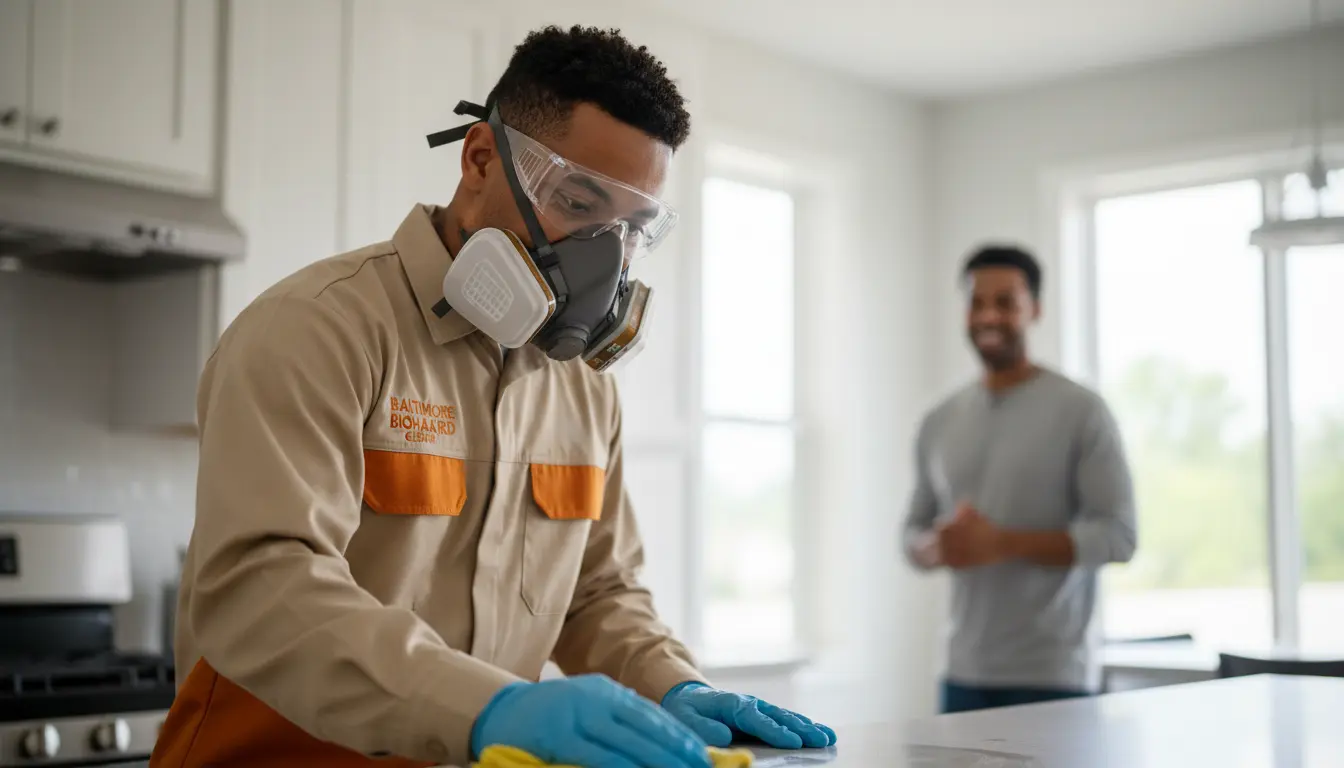
Trying to clean up a biohazard site in Baltimore with household bleach and a mop doesn’t just fail to eliminate pathogens — it actively spreads contamination, turning a contained incident into a property-wide health crisis that can cost homeowners tens of thousands in structural repairs and legal liability. Many property owners in Baltimore assume that any cleaning solution strong enough to remove visible stains is adequate, but biological hazards like blood, bodily fluids, or decomposing tissue require a level of decontamination that standard janitorial methods simply cannot achieve. The consequences of this mistake are severe: cross-contamination of HVAC systems, porous materials that harbor infectious agents for months, and the potential for regulatory fines from the Maryland Department of the Environment.
Understanding how does biohazard cleanup work in Baltimore, MD is not just a matter of curiosity — it is a critical step in protecting your property, your health, and your legal standing. Professional remediation follows strict protocols established by the IICRC S540 standard and OSHA’s Bloodborne Pathogens Standard, ensuring that every square inch of affected area is rendered safe. Baltimore Biohazard Cleanup brings decades of combined experience to every site, combining technical precision with the compassion needed when dealing with traumatic events. From a single-unit apartment in Federal Hill to a multi-story rowhome in Locust Point, the process remains methodical, scientific, and thorough.
The Step-by-Step Technical Process of Biohazard Remediation
Professional biohazard cleanup begins long before any cleaning agent touches a surface. The first phase is a comprehensive risk assessment conducted by a certified technician who evaluates the scope of contamination, identifies potential airborne hazards, and determines the necessary level of personal protective equipment (PPE). In Baltimore’s older housing stock, where shared walls and aging plumbing can allow fluids to seep into adjacent units, this assessment often includes thermal imaging and moisture meters to detect hidden saturation. The technician also notes any structural features that could complicate containment, such as porous brick or unsealed floorboards common in pre-war rowhomes.
Once the assessment is complete, the team establishes a containment zone using heavy-duty plastic sheeting and negative air pressure machines. These industrial-grade units create a vacuum inside the affected area, directing all airborne particles through HEPA filters before exhausting the air outside. This step is critical in Baltimore’s humid climate, where high moisture levels can accelerate the release of volatile organic compounds (VOCs) from decomposing matter. Without proper containment, these VOCs can migrate through ductwork and affect neighboring rooms or even adjacent properties in attached rowhomes.
Removal of Bulk Biohazardous Materials
With containment in place, the team removes all visibly contaminated materials — including blood-soaked carpet, saturated drywall, and any disposable items that cannot be effectively decontaminated. Each piece is placed into red biohazard bags that are sealed and labeled according to Maryland medical waste regulations. For trauma incidents involving large volumes of blood or tissue, the team may use specialized enzyme treatments that break down proteins at a molecular level, reducing the risk of odor and pathogen survival during transport. This phase is physically demanding and requires constant monitoring of PPE integrity to prevent exposure to bloodborne pathogens such as HIV, hepatitis B, and hepatitis C.
After bulk removal, the team addresses any porous materials that have absorbed biological fluids. In Baltimore’s historic districts, where original hardwood floors and plaster walls are common, the decision to restore versus replace depends on the depth of contamination. If fluids have soaked into the subfloor or penetrated the masonry, replacement is the only safe option. The team documents each decision with photographs and written notes to provide property owners and insurance adjusters with a clear record of the remediation process.
Chemical Sanitization and ATP Testing
Once all contaminated materials are removed, the team applies an EPA-registered hospital-grade disinfectant to every surface within the containment zone. This is not a simple wipe-down — the disinfectant must dwell on surfaces for a specific contact time (usually 10 to 15 minutes) to achieve the required log reduction in pathogens. For Baltimore properties that have experienced decomposition, the team may also use an enzyme-based odor neutralizer that targets the fatty acids responsible for the characteristic smell of decay. After the disinfectant has dried, the technician performs adenosine triphosphate (ATP) testing. ATP testing uses a bioluminescence swab to measure the presence of organic matter on a surface. A reading below a specific threshold indicates that the surface is biologically clean. If the reading is too high, the area is re-cleaned and tested again until it passes.
Finally, the team applies a structural encapsulant to any remaining porous surfaces, such as exposed wood or concrete. This sealant traps any residual microscopic contaminants and prevents future off-gassing. The entire process, from initial assessment to final testing, can take anywhere from a few hours for a small incident to several days for a large-scale trauma scene. Baltimore Biohazard Cleanup provides a detailed breakdown of the step-by-step workflow used after trauma incidents, which follows the same rigorous protocol.
Professional Biohazard Remediation vs. Standard Janitorial Cleaning
To illustrate the fundamental differences between professional remediation and ordinary cleaning, consider the comparison below. The data reflects standards from the IICRC S540 and OSHA guidelines.
| Feature / Metric | Professional Biohazard Remediation | Standard Residential Cleaning |
|---|---|---|
| Regulatory Compliance | OSHA 29 CFR 1910.1030, MDE medical waste regulations, IICRC S540 | None; no regulatory oversight for biohazards |
| Pathogen Elimination | EPA-registered hospital disinfectants with verified contact time; ATP testing for verification | Household bleach (often too dilute, short contact time, no verification) |
| Structural Assessment | Thermal imaging, moisture meters, professional evaluation of porous materials | Visual inspection only; hidden contamination missed |
| Containment | Negative air pressure, HEPA filtration, sealed plastic barriers | None; contaminants spread via air and foot traffic |
| Waste Disposal | Red biohazard bags, licensed medical waste transporter, incineration | Trash bags, curbside collection (illegal and dangerous) |
Expert Insights from a Certified Remediation Specialist
Drawing on years of field experience in Baltimore, here are three advanced diagnostic tips that separate professional remediation from amateur attempts. First, hidden biological seepage often follows the path of least resistance — along baseboards, under carpet tack strips, and into the gaps between floorboards. In Baltimore’s older homes, where original pine floors have shrunk over decades, blood can travel several feet away from the visible stain without leaving a surface mark. A trained technician uses a black light and moisture meter to detect these hidden reservoirs. Second, porous materials like unsealed grout, unfinished wood, and fabric-upholstered furniture cannot be fully decontaminated. The IICRC S540 standard explicitly states that porous items exposed to blood or other potentially infectious materials must be removed and replaced. Attempting to clean them only drives pathogens deeper into the material. Third, negative pressure is not optional — it is a requirement for any space where airborne pathogens may be present. In Baltimore’s humid summers, the combination of high humidity and biological decomposition produces a heavy concentration of aerosols that can settle in HVAC systems if not contained. Using negative air machines with HEPA filters prevents this cross-contamination.
Common mistakes property owners make include using household bleach on biological matter. Bleach is rapidly inactivated by organic material, meaning it fails to kill pathogens on blood-soaked surfaces. Another mistake is waiting for odor to dissipate naturally. By the time an odor is noticeable, microbial growth has already progressed to a point where airborne spores can cause respiratory issues. The third mistake is allowing untrained personnel — including family members or well-meaning neighbors — into the site. This exposes them to bloodborne pathogens and can create legal liability if they become ill. The risks of DIY biohazard cleanup are well documented and include both health consequences and financial costs.
Pricing for Biohazard Cleanup Services in Baltimore
The cost of professional biohazard remediation varies based on several factors, but understanding the pricing structure helps property owners plan accordingly. Typical charges include:
- Site mobilization fee: A flat fee covering travel, equipment setup, and initial assessment. In Baltimore, this ranges from $200 to $500 depending on the distance from the service hub and the urgency of the response (24/7 emergency calls may include a premium).
- Hourly remediation rate: Most professional companies charge between $150 and $300 per hour per technician. A standard trauma cleanup typically requires two to four technicians working for several hours, resulting in total labor costs of $1,000 to $5,000.
- Specialized disposal fees: Biohazardous waste must be transported by a licensed medical waste carrier and incinerated. Disposal costs can add $200 to $1,000 depending on the volume of waste (e.g., carpet, drywall, contaminated PPE).
Three primary factors influence the final price. First, the extent of structural material replacement: if the contamination has soaked into subflooring, drywall, or insulation, the cost of removal and replacement can double or triple the overall bill. Second, the volume of biohazardous waste: a small blood spill from a needle stick generates far less waste than a full decomposition scene, and disposal costs scale accordingly. Third, the need for specialized HVAC decontamination: if airborne contaminants have entered the ductwork, the cleaning and disinfection of the entire system can add $1,500 or more. For a comprehensive look at why professional services are worth the investment, read about the benefits of choosing expert remediation.
Safety Standards and Regulatory Compliance
Biohazard cleanup in Baltimore is governed by a web of federal, state, and local regulations designed to protect workers, occupants, and the environment. At the federal level, OSHA’s Bloodborne Pathogens Standard (29 CFR 1910.1030) mandates that all employees with occupational exposure receive training, hepatitis B vaccinations, and appropriate PPE. Every technician at Baltimore Biohazard Cleanup completes this training annually and carries proof of certification. The IICRC S540 standard provides a voluntary framework for trauma and crime scene cleanup, covering everything from containment protocols to documentation. Adherence to these standards is not just a mark of quality — it is a legal safeguard for property owners. If a property is later sold or rented, failure to properly remediate a biohazard site can lead to lawsuits, insurance claim denials, and even criminal charges for reckless endangerment.
In Maryland, the Department of the Environment regulates the disposal of medical waste, including blood-soaked materials and sharps. Professional remediation companies must hold a valid medical waste transporter permit and use only authorized disposal facilities. Baltimore City and Baltimore County also have specific ordinances regarding property maintenance and public health nuisances. By hiring a certified company, property owners ensure compliance with all applicable regulations. For more details on the legal landscape, refer to the guide on biohazard regulations for Maryland businesses.
Frequently Asked Questions About Biohazard Cleanup
How quickly should a biohazard site be cleaned after an incident?
Time is critical. Bloodborne pathogens can survive on surfaces for days or even weeks, and decomposition begins within hours of death, releasing hazardous gases and attracting insects. In Baltimore’s warm, humid climate, the onset of microbial growth can accelerate, leading to airborne spores that pose respiratory risks. Professional services should be contacted immediately, and the site should be sealed off until trained technicians arrive. Many companies, including Baltimore Biohazard Cleanup, offer 24/7 emergency response to mitigate these risks.
Is it safe to stay in the home during the cleanup?
Generally, no. The containment zone and the use of negative air pressure can create an uncomfortable and potentially hazardous environment for occupants. In cases where the contamination is confined to a single room and the rest of the home is unaffected, the family may be able to remain if the containment is properly sealed and HVAC systems are isolated. However, the safest course is to vacate the property until the remediation is complete and final ATP testing confirms the area is biologically clean. Your technician will advise based on the specific conditions of the site.
What happens to the removed biohazard waste?
All biohazardous materials are placed in red bags or rigid sharps containers, labeled with biohazard symbols, and stored in a locked, leak-proof container on the truck. A licensed medical waste transporter collects the waste and delivers it to an authorized treatment facility, typically an incinerator or autoclave that renders the material non-infectious before disposal. This process is documented with manifests that track the waste from the point of generation to final destruction, ensuring full chain of custody. For more on proper waste handling, see the essential tips for medical waste disposal in Maryland.
How do I know the cleanup is complete and safe?
Professional remediation companies use ATP bioluminescence testing to verify cleanliness. This test measures the amount of adenosine triphosphate (organic residue) on a surface. A reading below 10 relative light units (RLU) is generally considered clean for biohazard purposes. Additionally, the technician will conduct a visual inspection under ultraviolet light to check for any residual stains or fluorescence. A detailed report with photographs and test results is provided to the property owner and insurance company. This documentation is essential for closing insurance claims and for legal records.
Can I clean a small blood spill myself to save money?
While a tiny, fresh blood spill on a non-porous surface (like a tile floor) can be cleaned with a proper bleach solution (1:10 dilution) and appropriate PPE, the risks are high. Most homeowners do not have the correct disinfectant, do not use adequate contact time, and do not dispose of waste properly. Even a small spill can contain hepatitis viruses or HIV. For any spill larger than a few drops, or if the blood is on a porous surface, professional remediation is strongly recommended. The cost of a professional cleanup is far less than the medical bills from an infection or the legal liability from improper disposal.
Professional Biohazard Remediation in Baltimore
When a biohazard incident occurs — whether from a crime, accident, unattended death, or hoarding situation — the safest and most responsible course of action is to engage a certified remediation team. Baltimore Biohazard Cleanup combines technical expertise with a deep understanding of local conditions, from the structural challenges of historic rowhomes to the regulatory requirements of Maryland’s environmental agencies. Every job is treated with the discretion and compassion that the situation demands, and the goal is always the same: return the property to a safe, habitable condition.
If you are facing a biohazard situation in Baltimore or the surrounding areas, do not take unnecessary risks. Contact Baltimore Biohazard Cleanup for a confidential consultation. Our technicians are on call 24 hours a day, seven days a week, ready to respond with the equipment, training, and experience needed to handle even the most challenging scenarios. Your health and peace of mind are worth the investment in professional remediation.