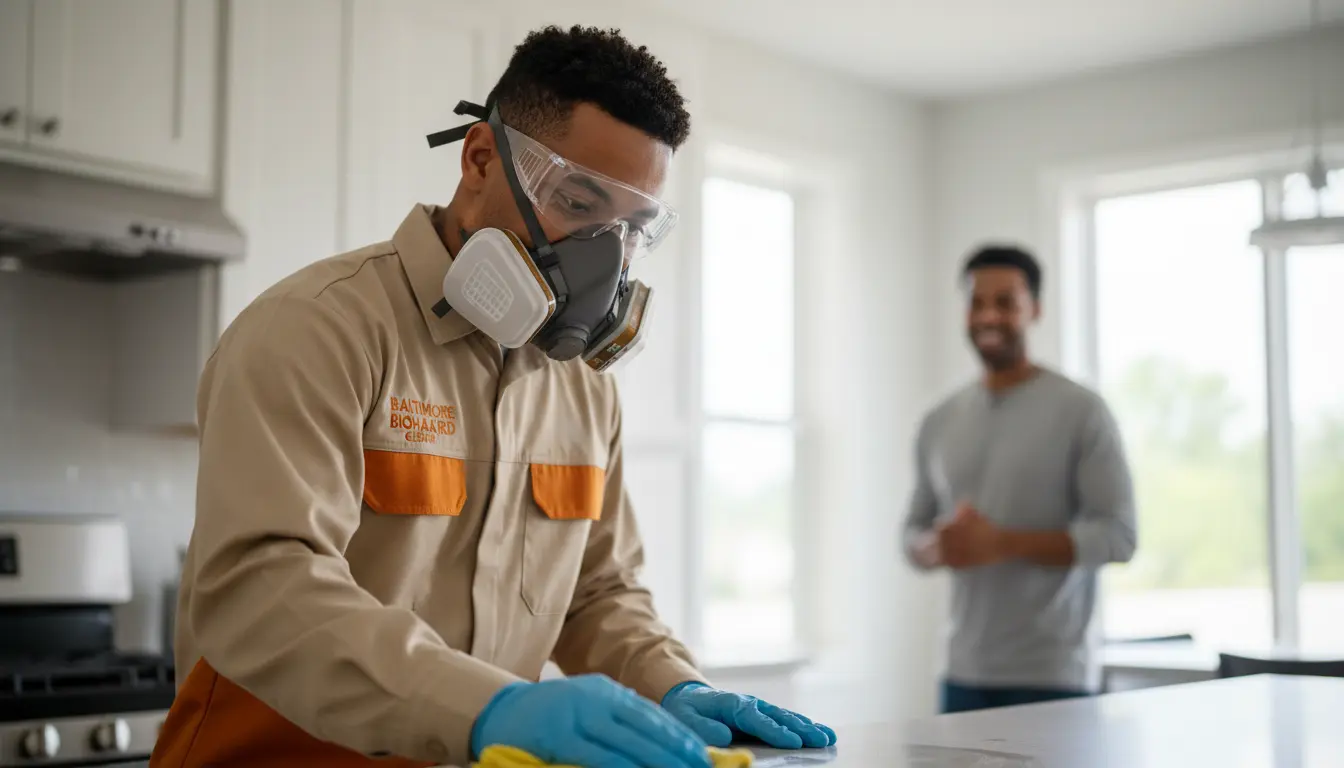
A professional biohazard cleanup service is a specialized remediation operation that removes, cleans, disinfects, and restores a site contaminated by biological hazards such as blood, bodily fluids, human remains, infectious diseases, or chemical agents. Unlike standard janitorial cleaning, which focuses on surface-level tidiness and general sanitation, biohazard remediation is governed by strict federal and state regulations, including OSHA’s Bloodborne Pathogens Standard (29 CFR 1910.1030) and the EPA’s guidelines for the disposal of regulated medical waste. The distinction is critical: a janitorial crew lacks the training, equipment, and legal authority to handle materials that can transmit hepatitis B, HIV, MRSA, or other pathogens. In a city like Baltimore, where historic rowhomes share common walls and ventilation systems, a breach in containment during a cleanup can expose entire neighborhoods to cross-contamination. Understanding exactly what is included in a professional biohazard cleanup service near you is not just a matter of convenience—it is a matter of public health and legal compliance.
Baltimore Biohazard Cleanup provides this level of service across Baltimore City and County, responding to everything from unattended death scenes and violent crime scenes to hoarding environments and infectious disease outbreaks. Our technicians hold current IICRC S540 certifications and undergo annual bloodborne pathogen refresher training. We operate under a strict chain-of-custody for biohazardous waste and use only EPA-registered hospital-grade disinfectants. When you hire us, you are not paying for a mop and a bucket—you are paying for a complete, regulated system of risk assessment, containment, removal, decontamination, verification, and restoration. The sections below break down exactly what that system entails, including the technical processes, the equipment, the safety protocols, and the pricing factors that influence the final cost.
The Core Process of Professional Biohazard Remediation
Every biohazard remediation project follows a standardized workflow that begins the moment a technician arrives on site. The first step is a thorough risk assessment. Our team evaluates the type and volume of biological material present, the porosity of affected surfaces, and the potential for airborne contamination. For example, in a Baltimore rowhome where an unattended death occurred during a humid August, decomposition fluids can seep through hardwood floorboards into the subfloor and even into the crawl space below the neighboring unit. The assessment also identifies any structural hazards such as compromised flooring, exposed electrical wiring, or the presence of sharps. Based on this evaluation, we establish an isolation perimeter using physical barriers and negative air pressure machines to prevent particulates from migrating to clean areas.
After the assessment, we initiate full personal protective equipment (PPE) protocols. Every technician wears Tyvek suits, N100 respirators or PAPRs, face shields, puncture-resistant gloves, and steel-toed boots. This gear is not optional—it is required by OSHA to protect workers from splashes, aerosols, and sharp objects. Once PPE is donned, physical removal begins. All gross biological material—blood, tissue, bodily fluids, saturated porous materials—is carefully collected using absorbent pads, scoop tools, and biohazard bags. Carpets, padding, drywall below the contamination line, and any other porous materials are cut out and bagged on site. The goal at this stage is to remove every trace of the hazard so that subsequent chemical disinfection can be fully effective.
Chemical Disinfection and ATP Verification
After gross removal, the site undergoes a multi-step chemical disinfection process. We apply EPA-registered hospital-grade disinfectants that are proven to inactivate a broad spectrum of pathogens, including enveloped viruses (like SARS-CoV-2 and HIV), non-enveloped viruses (like norovirus), bacteria (like Staphylococcus aureus), and fungal spores. The specific chemistry depends on the material: quaternary ammonium compounds are used on hard, non-porous surfaces, while hydrogen peroxide-based foams are used on semi-porous surfaces like unfinished wood. Every surface is saturated and left with a prescribed dwell time—usually 5 to 10 minutes—to ensure complete kill. We then proceed to a second pass with an enzyme-based cleaner that breaks down residual organic matter at a molecular level, eliminating the proteins that can still harbor pathogens and cause lingering odors.
Verification is where professional remediation diverges sharply from amateur cleaning. We use adenosine triphosphate (ATP) fluorescence testing to confirm that no biological residue remains. ATP is present in all living cells; a swab of a surface after cleaning should register below a threshold of 30 relative light units (RLUs) on our handheld luminometer. If the reading is higher, we re-clean and re-test until the surface passes. In cases where structural contamination is suspected—such as blood that has soaked into the subfloor of a Baltimore row home—we perform thermal imaging and moisture mapping to identify hidden seepage. Only after every surface passes ATP testing do we proceed to final restoration, which may include sealing the subfloor with an encapsulant, replacing removed drywall, and repainting the area to match the existing finish.
Professional Remediation vs. Standard Cleaning: A Data Comparison
| Feature / Metric | Professional Biohazard Remediation | Standard Residential Cleaning |
|---|---|---|
| Regulatory Compliance | OSHA 29 CFR 1910.1030, EPA RCRA, DOT 49 CFR for waste transport, IICRC S540 | None; general commercial cleaning standards only |
| Pathogen Elimination | ≥99.9999% (6-log reduction) verified by ATP testing | Unknown; no testing or verification performed |
| Structural Assessment | Moisture mapping, thermal imaging, porous material replacement | Visual inspection only; no detection of hidden contamination |
| Waste Disposal | Incineration at a licensed medical waste facility; chain-of-custody manifest | General trash or landfill; illegal for biohazard materials |
| Cross-Contamination Prevention | Negative air pressure, physical barriers, HEPA filtration | None; risk of spreading contaminants through building |
| Certification | IICRC S540, OSHA BBP, state-specific licensure | None required |
Source: IICRC S540 Trauma and Crime Scene Cleanup Standard
Expert Insights: Three Diagnostic Tips from a Certified Specialist
First, never trust your eyes alone when assessing a biohazard site. Blood and bodily fluids can migrate through cracks in hardwood, along the edges of baseboards, and even into the interior of walls through capillary action. We once responded to a suicide scene in a Baltimore Fells Point apartment where no visible contamination appeared on the laminate flooring. A thermal imaging camera revealed a large pool of fluid that had wicked under the floating floor and soaked into the concrete slab. If we had simply cleaned the visible area, the slab would have continued to harbor pathogens and produce a foul odor for months. Always perform thermal or moisture mapping on any surface below the contamination line.
Second, understand why porous materials almost always require removal rather than cleaning. Materials like drywall, carpet padding, upholstery, and unfinished wood have a spongelike structure. When biological fluid soaks in, it fills the microscopic pores and creates a microenvironment where pathogens can survive for weeks, even after surface disinfection. No amount of scrubbing or chemical spraying can reach deep enough to kill everything inside. The only safe approach is to cut out and replace all porous materials that came into contact with the hazard. This is why professional biohazard cleanup often involves more demolition than cleaning.
Third, negative pressure is your most powerful tool for cross-contamination prevention. In a Baltimore rowhome, the shared HVAC system can draw airborne particulates from the affected room into neighboring units within minutes. By setting up a negative air machine with a HEPA filter inside the containment zone, we ensure that all air flows into the contaminated area and is filtered before being exhausted outside or back into the building. Without this setup, even a careful cleaning can spread pathogens throughout the entire structure.
Common Mistakes Property Owners Make
The most frequent mistake is using household bleach on biological matter. Bleach is an effective disinfectant on hard, non-porous surfaces, but it is quickly inactivated by organic material like blood or tissue. When you pour bleach directly onto a blood spill, the proteins in the blood bind to the chlorine molecules before they can kill any pathogens, rendering the bleach useless. Worse, bleach can bleach fabrics, damage metals, and release toxic chlorine gas if mixed with other cleaners. Professionals use specialized hospital-grade disinfectants with a higher concentration of active ingredients and a buffer system that remains effective in the presence of organic soil.
A second common error is waiting for odors to dissipate naturally. Decomposition odors are caused by volatile organic compounds released as bacteria break down tissue. These compounds can permeate drywall, wood, and fabric, and they will not simply fade away. In fact, the odor often becomes stronger as the weeks go on because the biological material continues to decay. Waiting also allows the contamination to spread. A property owner in Baltimore’s Canton neighborhood once waited three weeks after an unattended death, hoping the smell would go away. By then, the fluids had soaked through the carpet and pad into the hardwood, requiring replacement of the entire floor system. Early response always reduces cost and complexity.
Third, allowing untrained personnel—friends, family, or general contractors—into a biohazard site puts everyone at risk. Without proper PPE, they can inhale airborne pathogens, get blood on their skin, or step on a contaminated needle. Exposure to bloodborne pathogens can lead to lifelong infections, and the site itself can become a legal liability if someone is injured. Professional remediation companies carry liability insurance and workers’ compensation specifically for this type of work. Never let anyone enter a known biohazard area without professional training and equipment.
Understanding Biohazard Cleanup Pricing
- Site mobilization fee: A standard charge for dispatching a certified crew, typically ranging from $250 to $500, which covers travel time, initial risk assessment, and setup of containment equipment. For Baltimore City locations, the fee may be slightly lower due to proximity, while rural areas of Baltimore County could be higher.
- Hourly remediation rates: Most professional biohazard companies charge between $150 and $300 per hour per technician. A typical two-technician crew for a small unattended death scene might require 4 to 8 hours, while a large trauma scene with extensive blood spatter could take 12 to 20 hours.
- Waste disposal costs: Biohazardous waste cannot go to a standard landfill. It must be transported by a licensed medical waste hauler to an incineration facility. Disposal fees are often $50 to $150 per 55-gallon drum, and a typical scene generates 2 to 6 drums.
- Structural replacement materials: If drywall, flooring, or cabinetry must be replaced, the cost of materials and installation is itemized separately. This can range from a few hundred dollars for a small patch to several thousand for a full room restoration.
Three primary factors influence the total cost. First, the extent of structural material replacement required. A blood spill on tile can often be cleaned completely with no replacement, while a decomposition event on a carpeted floor in a Baltimore row home may require removing the carpet, pad, hardwood, and subfloor across the entire room. Second, the total volume of biohazardous waste directly increases disposal fees and labor hours. Third, the necessity for specialized HVAC decontamination—if the building’s forced air system was running during the event, the ducts may need to be cleaned and disinfected, adding significant time and cost.
Safety Standards and Certifications
Every professional biohazard remediation company should hold certifications that demonstrate compliance with industry best practices. The most important is the IICRC S540 standard for trauma and crime scene cleanup, which sets the baseline for cleaning methods, containment, waste handling, and verification. Additionally, technicians must be trained under OSHA’s Bloodborne Pathogens Standard (29 CFR 1910.1030), which mandates annual training on hazard recognition, safe work practices, and post-exposure protocols. Our crew at Baltimore Biohazard Cleanup completes this training every year, and we also hold certifications in infectious disease decontamination and respiratory protection.
Another critical standard is the EPA’s guidelines for the use of disinfectants. We only use products listed on the EPA’s List N (for emerging viral pathogens) or List K (for tuberculosis). These products have been tested for efficacy against a specific panel of pathogens and must be used at the correct concentration and dwell time to be effective. Finally, all biohazardous waste must be disposed of in accordance with the Maryland Department of the Environment and the federal Resource Conservation and Recovery Act (RCRA). We maintain a complete chain-of-custody manifest for every pound of waste we generate, from the site to the incinerator. This protects property owners from future liability if the waste is ever found improperly disposed of.
Frequently Asked Questions
What types of biohazard situations do you handle in Baltimore?
Baltimore Biohazard Cleanup handles all scenarios that fall under the IICRC S540 classification: unattended death cleanup, suicide and homicide scene cleaning, blood spill cleanup, industrial accidents, hoarding environments with biological contamination, meth lab decontamination, and infectious disease outbreaks. We also respond to sewage backups and rodent infestation cleanup, which can introduce biohazards like hantavirus and E. coli. Each situation is assessed individually, and our technicians are cross-trained in multiple protocols to handle the specific hazards present.
How quickly can a professional crew arrive at my Baltimore property?
We offer 24/7 emergency response, and our standard arrival window for Baltimore City is within 90 minutes of the initial call. For Baltimore County locations, the window extends to 2 hours due to travel distances. In cases involving violent crime or unattended death, we coordinate directly with law enforcement and the medical examiner to ensure the scene is released to us before we begin work. Once on site, we can typically set up containment and begin gross removal within 30 minutes. Rapid response is critical because the longer biological material remains, the deeper it penetrates into porous surfaces and the more difficult—and expensive—the cleanup becomes.
Is professional biohazard cleanup covered by homeowners insurance?
In many cases, yes. Standard homeowners and property insurance policies often cover biohazard cleanup as part of the dwelling or personal property coverage, especially if the event is sudden and accidental—such as a violent crime or an accident inside the home. Unattended death cleanup may also be covered, though some policies have exclusions for deaths that occur without a qualifying accident. We recommend contacting your insurance agent directly to confirm coverage, but we can provide a detailed scope of work and line-item invoice to submit with your claim. Our team has experience working with insurance adjusters in the Baltimore area and can provide the documentation they require for reimbursement.
Why can’t I just clean a small blood spill myself?
Even a small blood spill can contain dangerous bloodborne pathogens like hepatitis B, hepatitis C, or HIV. These viruses can survive on surfaces for days or even weeks. Using household cleaners—including bleach—may kill some pathogens on the surface, but it will not remove invisible contamination that has seeped into grout, wood grain, or under floor tiles. Additionally, the act of wiping can aerosolize the blood, creating droplets that you can inhale or that can land on your skin. Without proper PPE, you are taking a significant health risk. Professional remediation includes ATP testing to verify that no biological residue remains, which is something no household cleaner can guarantee.
Professional Biohazard Remediation in Baltimore
Biohazard cleanup is not a task for amateurs. The physical, legal, and emotional stakes are too high. In Baltimore, where the built environment includes hundreds of aging rowhomes with shared walls and common ventilation, a single mishandled site can become a public health issue that affects multiple families. Professional remediation ensures that every trace of biological contamination is removed, that the waste is disposed of legally, and that the space is safe for reoccupation. The cost reflects the specialized training, equipment, insurance, and waste disposal permits required to do the job correctly.
Baltimore Biohazard Cleanup brings all of these capabilities to every job. Our technicians are certified, our protocols are verified, and our commitment to discretion and compassion is unwavering. Whether you are a property manager dealing with an unattended death, a landlord facing a meth lab cleanout, or a homeowner after a traumatic event, we are here to restore your space and your peace of mind. Contact us anytime for a confidential consultation and a detailed estimate tailored to your specific situation.