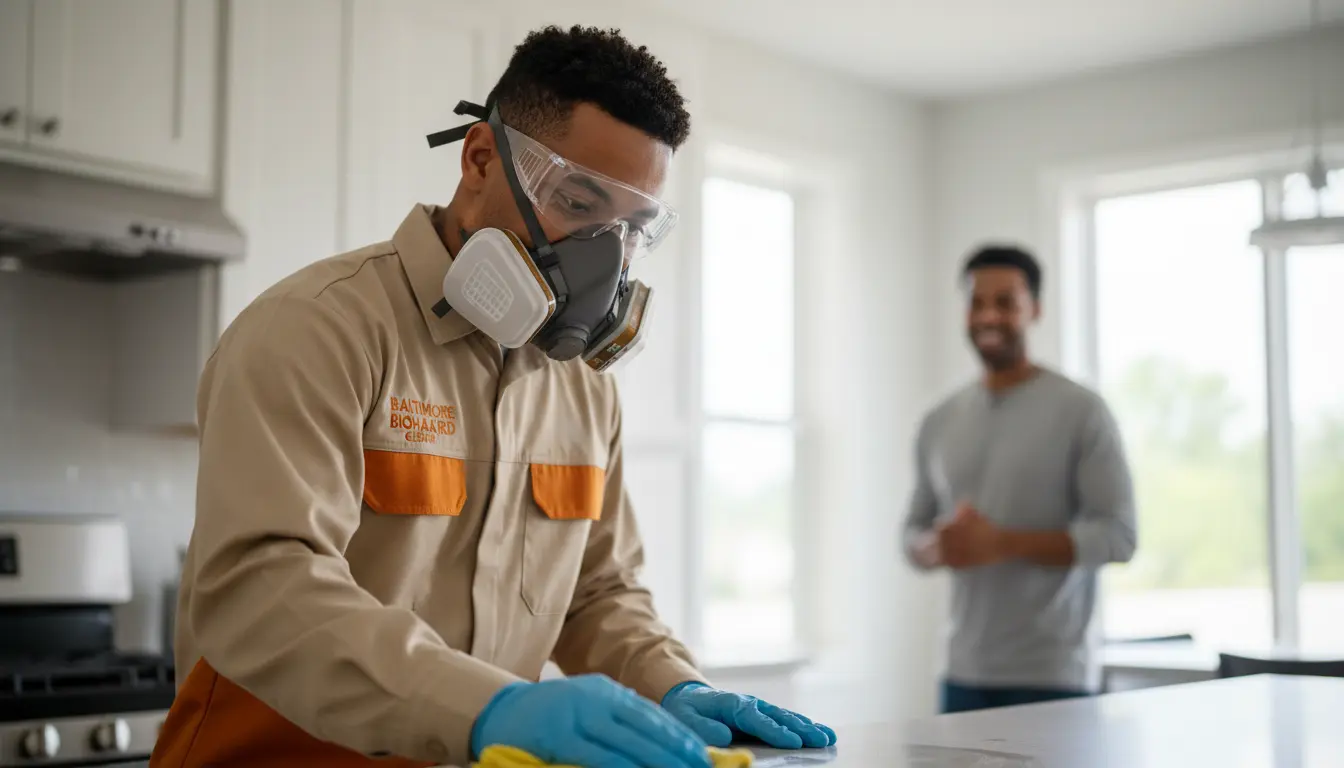
According to the International Institute of Textile and Forensic Restoration, trauma and biohazard remediation costs in the United States average between $2,500 and $10,000 per incident as of 2025, with Baltimore metropolitan area rates frequently landing at the higher end of that bracket due to the city’s unique architectural and regulatory demands. For property owners, facility managers, and families facing an unexpected biological contamination event, understanding the precise cost of professional remediation is not just a matter of budgeting; it is a critical step toward ensuring safety, legal compliance, and the long-term habitability of the property. The question of how much does biohazard cleanup cost in Baltimore in 2026 cannot be answered with a simple flat fee, because each site presents a distinct set of variables that professional remediation specialists must evaluate before any work begins.
What many Baltimore residents do not realize is that the price tag for biohazard cleanup reflects far more than just labor hours. It accounts for specialized equipment, waste disposal fees tied to Maryland’s strict environmental regulations, and the advanced training required to safely handle bloodborne pathogens, chemical residues, and microbial contaminants. For instance, a standard unattended death in a Fells Point rowhome will involve different logistical challenges—and therefore different costs—than a violent crime scene in a Dundalk apartment complex. Baltimore Biohazard Cleanup has built its reputation on navigating these complexities with precision, compassion, and full regulatory adherence.
Understanding the Scope of Biohazard Remediation
Biohazard cleanup encompasses a wide range of scenarios, each carrying its own risk profile and complexity. The most common calls in Baltimore involve unattended death scenes, homicide or suicide cleanup, industrial accidents, hoarding environments with biological waste, and methamphetamine lab decontamination. Every one of these situations demands a systematic approach that begins with a thorough risk assessment before any physical removal takes place.
Professional teams arrive on site with a detailed protocol that follows the IICRC S540 standard for trauma and crime scene cleanup. This standard mandates that all potentially infectious materials be treated as if they are known to contain bloodborne pathogens such as HIV, hepatitis B, or hepatitis C. The initial walkthrough allows the lead technician to identify the extent of contamination, document the scene for insurance purposes, and establish containment zones that prevent cross-contamination to unaffected areas of the property. Without this structured evaluation, the true cost of cleanup cannot be accurately estimated.
The Role of Structural Materials in Cost Estimation
Baltimore’s housing stock presents particular challenges for biohazard remediation. Many homes in historic districts like Bolton Hill or Charles Village feature original hardwood floors, horsehair plaster, and brick walls that are highly porous. When biological fluids seep into these materials, they become reservoirs for pathogens and odor-causing compounds. Unlike modern drywall, which can often be cut out and replaced, porous historic materials require specialized enzyme treatments or, in many cases, full removal and replacement.
This material-specific approach directly influences the final cost. A scene in a newer Columbia townhome with sheetrock and vinyl flooring will typically require less structural replacement than a similar incident in a 1920s Federal-style rowhome. Our technicians use adenosine triphosphate testing to detect residual biological matter that is invisible to the naked eye, ensuring that every contaminated surface is identified and treated. This scientific verification adds to the cost but is essential for achieving a truly safe environment.
Professional Remediation Workflow: A Step-by-Step Breakdown
When the question of how much does biohazard cleanup cost in Baltimore in 2026 arises, it helps to understand exactly what that investment buys. Every professional remediation project follows a rigorous sequence of steps designed to eliminate biological hazards, restore the structural integrity of the property, and prevent future health risks.
The process begins with site containment. Technicians establish negative air pressure using industrial-grade negative air machines fitted with HEPA filters. This prevents airborne pathogens from migrating into adjacent rooms or ventilation systems. Next, all visible biological matter is physically removed using hospital-grade disinfectants and specialized tools such as enzymatic cleaners that break down blood and tissue at a molecular level. After gross removal, the team applies EPA-registered antimicrobial and antiviral agents across every affected surface. The final verification stage involves ATP fluorescence testing to confirm that no organic material remains.
Addressing Baltimore’s Climate Challenges
Baltimore’s Mid-Atlantic climate introduces another variable that affects both the difficulty and the cost of biohazard cleanup. High summer humidity—often exceeding 70 percent—accelerates the decomposition of organic materials, leading to faster odor migration and deeper fluid penetration into porous surfaces. Winter conditions, while less humid, can slow decomposition but increase the risk of mold growth in areas where moisture is present.
Our protocols adjust for these seasonal factors. In warm months, we deploy additional negative air machines and dehumidifiers to control moisture levels. In colder weather, we extend drying times and apply anti-microbial sealants more aggressively. These climate-responsive measures are part of what differentiates professional remediation from standard cleaning services, and they contribute to the overall cost structure.
Professional Remediation vs. Standard Janitorial Cleaning
A common mistake property owners make is assuming that a standard cleaning crew can handle biohazard situations. To clarify why this assumption is dangerous—and costly in the long run—the table below compares the two approaches across key performance metrics.
| Feature/Metric | Professional Biohazard Remediation | Standard Residential Cleaning |
|---|---|---|
| Regulatory Compliance | Full adherence to OSHA 29 CFR 1910.1030, EPA waste disposal rules, and Maryland Department of the Environment guidelines | No occupational safety or environmental compliance requirements |
| Pathogen Elimination | EPA-registered hospital-grade disinfectants verified by ATP testing (99.99% reduction) | Household bleach or all-purpose cleaners with no verification testing |
| Structural Assessment | IICRC S540-compliant inspection of all porous materials with removal of contaminated sections | Surface cleaning only; no assessment of sub-surface contamination |
| Waste Disposal | Licensed transport to authorized medical waste treatment facilities with chain-of-custody documentation | Disposal in regular municipal trash, which is illegal in Maryland |
The table makes clear that standard cleaning is not a substitute for professional remediation. Property owners who attempt to cut costs by hiring a general cleaner often end up paying far more later when odor returns, structural damage worsens, or health issues arise among occupants.
Expert Insights: Three Diagnostic Tips from Practitioners
Experienced remediation specialists develop an eye for details that less trained individuals overlook. One of the most important diagnostic skills is detecting hidden biological seepage. Blood and other bodily fluids can travel along wall cavities, under baseboards, and through floor joists. A technician who relies solely on visual inspection may miss contamination that has migrated several feet from the original site. Using moisture meters and thermal imaging cameras, we locate these hidden reservoirs before they cause secondary contamination.
Another critical insight involves the decision to clean versus replace porous materials. Many property owners believe that thorough scrubbing can salvage items like upholstered furniture, carpets, or mattresses. In reality, once biological fluids penetrate the inner layers of porous materials, pathogens can survive for weeks. The only safe course is removal and disposal. This hard rule is non-negotiable under IICRC standards and is a major factor in how much does biohazard cleanup cost in Baltimore in 2026.
Common Mistakes That Drive Up Costs
One frequent error is using household bleach on biological matter. Bleach is a poor disinfectant in the presence of organic soil; it breaks down rapidly and can actually seal pathogens into surfaces. Professional-grade disinfectants, such as those containing hydrogen peroxide or quaternary ammonium compounds, are required for effective pathogen elimination. Another mistake is waiting for odor to dissipate naturally. Odor molecules from decomposition are often bound to structural materials and will not fade on their own; they require physical removal and chemical neutralization.
Perhaps the most serious mistake is allowing untrained personnel into the contaminated site. Every person who enters a biohazard zone without proper PPE becomes a potential vector for spreading contaminants. This increases both the health risk and the scope of cleanup, as additional surfaces must be decontaminated.
Pricing Breakdown for Baltimore Biohazard Cleanup
Because every site is unique, providers in Baltimore typically structure pricing around several flexible models. A standard site mobilization fee covers the arrival of the team, setup of containment barriers, and initial risk assessment. This fee usually ranges from $350 to $800, depending on the distance from the service center and the time of day. For emergency responses outside normal business hours, there is often a premium added.
- Hourly remediation rates for direct labor and equipment usage typically fall between $150 and $300 per hour. Larger teams or more complex scenes require more technician hours, which directly increases the total cost.
- Specialized disposal of biohazardous waste is charged separately. In Maryland, medical waste must be incinerated or treated at a licensed facility. Disposal fees range from $50 to $200 per container, and a single unattended death scene can generate multiple containers.
- Structural replacement—such as removing and reinstalling drywall, flooring, or cabinetry—adds significant cost. Expect to pay $500 to $3,000 for material replacement, depending on the square footage and the type of materials involved.
- HVAC decontamination is required when airborne pathogens may have entered the ductwork. This service costs between $400 and $1,200 and includes cleaning of registers, ducts, and filters.
Three primary factors influence the final price. The extent of structural material replacement needed is the largest variable; scenes involving porous historic materials almost always require more removal. The total volume of biohazardous waste determines both labor hours and disposal fees. Finally, the necessity for specialized HVAC decontamination adds a fixed cost that many property owners do not anticipate.
Safety Standards and Certifications
Professional biohazard remediation is governed by a strict framework of regulations. The OSHA Bloodborne Pathogens Standard 29 CFR 1910.1030 mandates that all employees who may come into contact with blood or other potentially infectious materials receive specific training, vaccinations, and access to personal protective equipment. Our technicians complete this training annually and carry documentation of their certification at every job site.
Beyond OSHA compliance, we adhere to the IICRC S540 standard for trauma and crime scene cleanup. This standard covers everything from initial assessment to final verification, including the chain-of-custody documentation for disposed waste. For property owners in Baltimore, working with a company that follows these standards ensures that the site is legally and medically safe for reoccupation. It also protects them from liability if a future tenant or buyer discovers contamination.
Maryland’s Department of the Environment also imposes strict rules on the transport and disposal of medical waste. Only licensed waste transporters can handle these materials, and they must provide a manifest that traces the waste from collection to final treatment. Companies that cut corners on disposal risk fines and legal action, which is why professional providers like ours invest heavily in compliant waste management.
Frequently Asked Questions About Biohazard Cleanup in Baltimore
What is the average cost of cleaning an unattended death scene in a Baltimore rowhome?
The average cost for an unattended death scene in Baltimore ranges from $2,500 to $7,500, with the final figure depending on the time elapsed before discovery, the condition of the property’s structural materials, and the extent of odor migration. Scenes discovered within 24 hours typically require less structural removal than those left for days or weeks, where decomposition fluids have deeply saturated porous surfaces. An initial assessment by a certified technician provides a firm estimate before any work begins.
Does homeowners insurance cover biohazard cleanup costs in Maryland?
Many standard homeowners insurance policies cover biohazard cleanup as part of their dwelling protection or liability provisions, particularly when the incident results from a covered peril such as a crime, accident, or sudden illness. However, coverage limits vary widely, and some policies exclude unattended death or suicide cleanup. Policyholders should review their specific terms and contact their insurance agent immediately after an incident. Our team works directly with insurance adjusters to provide detailed documentation that supports claims.
Can I perform biohazard cleanup myself to save money?
Attempting do-it-yourself biohazard cleanup is strongly discouraged for several reasons. First, without proper PPE and training, you risk exposure to bloodborne pathogens that can cause lifelong infections. Second, improper disposal of biological waste in Baltimore City is illegal and subject to fines. Third, household cleaning products do not achieve the pathogen reduction required for a safe environment. The top risks of DIY biohazard cleanup include legal liability, health complications, and hidden contamination that can lead to odor and mold issues later. Professional remediation is both safer and more cost-effective in the long run.
How long does the remediation process typically take for a single room?
A single-room biohazard cleanup in Baltimore usually takes between four and eight hours for gross removal, disinfection, and verification. However, if structural replacement is required—such as removing saturated drywall or flooring—the timeline extends to one to three days. Factors like the need for HVAC decontamination or the complexity of sealing porous historic materials can add additional time. Our team provides a time estimate during the initial assessment and keeps property owners informed throughout the process.
Professional Biohazard Remediation in Baltimore
Understanding how much does biohazard cleanup cost in Baltimore in 2026 requires looking beyond a simple number and recognizing the depth of service that professional remediation provides. The cost reflects not just labor and materials, but the expertise to navigate Baltimore’s unique architectural landscape, the training to comply with Maryland’s strict regulations, and the compassion to handle sensitive situations with discretion. When you choose Baltimore Biohazard Cleanup, you are selecting a team that treats every site with the same technical rigor and respect, whether it is a historic home in Mount Vernon or a modern apartment in Canton. Our commitment is to restore your property to a safe, habitable state while providing clear communication and transparent pricing every step of the way.