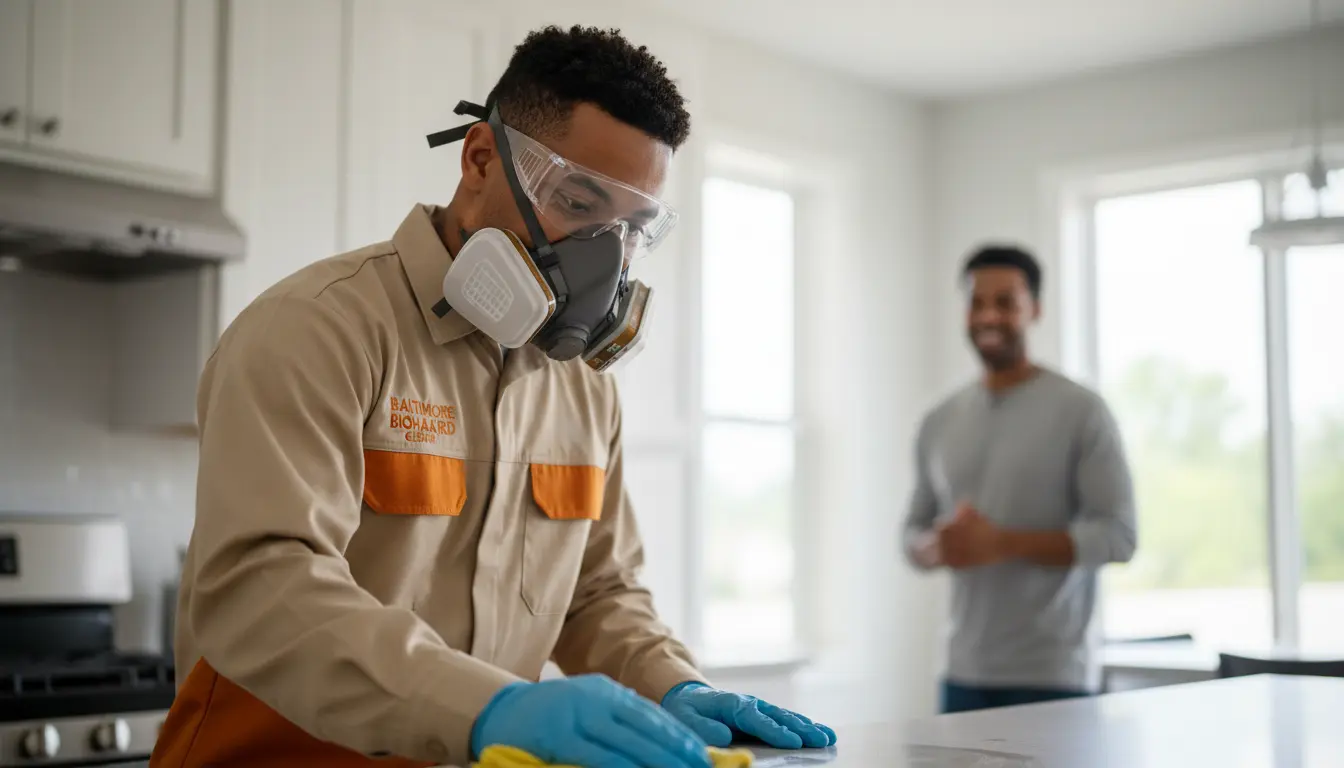
Most people assume that a thorough scrub with bleach is enough to sanitize a crime scene, trauma site, or unattended death location in Baltimore. In reality, household bleach fails to eliminate bloodborne pathogens and can actually spread contamination if not applied correctly. This misconception often leads property owners in Federal Hill and surrounding neighborhoods to attempt cleanup themselves, exposing themselves to hepatitis B, HIV, and other infectious agents. The truth is that biohazard remediation requires specialized training, equipment, and EPA-registered disinfectants that are simply not available to the public.
When a traumatic event occurs in a residential or commercial property, the aftermath is not just emotionally devastating—it is biologically hazardous. Blood, bodily fluids, and other potentially infectious materials (OPIM) can seep into porous surfaces like historic rowhome brick, hardwood floors, and plaster walls. In Baltimore’s humid Mid-Atlantic climate, decomposition accelerates, and odors migrate through shared walls in attached homes. Professional biohazard cleanup services near Federal Hill and surrounding neighborhoods are essential for restoring safety, preventing disease transmission, and preserving property value.
Baltimore Biohazard Cleanup is the premier provider of discreet, technically rigorous trauma scene remediation in the area. Our team holds IICRC S540 certifications and follows OSHA’s Bloodborne Pathogens Standard (29 CFR 1910.1030) to ensure every site is fully decontaminated and safe for reoccupation. We understand the unique challenges of Baltimore’s historic architecture and dense urban environment, and we respond with compassion, speed, and scientific precision.
The Technical Remediation Process: Step-by-Step
Professional biohazard cleanup follows a strict workflow designed to eliminate all biological hazards and prevent cross-contamination. The process begins with a thorough risk assessment, where our technicians evaluate the scene, identify all affected materials, and determine the appropriate level of personal protective equipment (PPE). This includes Tyvek suits, N95 respirators, face shields, and puncture-resistant gloves.
Once the site is secured with caution tape and signage, we set up negative air machines to create a pressure differential that prevents airborne pathogens from escaping the work area. These HEPA-filtered units capture microscopic particles, including viral aerosols and fungal spores, which are especially problematic in Baltimore’s humid climate where mold can develop rapidly after a moisture event. Next, we physically remove all visible biohazardous materials, including blood-soaked carpet, padding, drywall, and insulation, using specialized tools like forensic-grade scrapers and absorbent pads.
After gross removal, we apply EPA-registered hospital-grade disinfectants with verified kill claims against bloodborne pathogens. These are not household cleaners—they are chemical sterilants that must remain in contact with surfaces for a specified dwell time (often 10 minutes) to achieve viral inactivation. We then perform adenosine triphosphate (ATP) fluorescence testing to verify that no organic matter remains. ATP testing uses bioluminescence to detect residual biological contamination invisible to the naked eye. If the sample exceeds the threshold, we repeat the cleaning process until the site passes.
Finally, we conduct structural decontamination of all porous and non-porous surfaces, including HVAC systems, ductwork, and shared walls in Federal Hill rowhomes. This step often involves applying antimicrobial sealants to encapsulate any remaining biohazards. The entire process is documented with photographs, chain-of-custody forms for waste disposal, and a final clearance report that meets insurance and regulatory requirements.
Professional Remediation vs. Standard Cleaning: A Data Comparison
Many property owners mistakenly believe that a janitorial service can handle a biohazard scene. The differences are stark, as shown in the table below.
| Feature / Metric | Professional Biohazard Remediation | Standard Residential Cleaning |
|---|---|---|
| Regulatory Compliance | OSHA 29 CFR 1910.1030, EPA, DOT, IICRC S540 | None (no bloodborne pathogen training) |
| Pathogen Elimination | EPA-registered hospital-grade disinfectants, ATP verification | Household bleach or multipurpose cleaners (ineffective against hepatitis B, HIV) |
| Structural Assessment | Full assessment of porous materials, HVAC, and hidden seepage | Surface cleaning only; no assessment of hidden contamination |
| Waste Disposal | Licensed biohazard waste transport and incineration | Improper disposal in regular trash (illegal in Maryland) |
| Odor Removal | Industrial ozone machines, hydroxyl generators, enzyme treatments | Air fresheners (masking only) |
| Liability Coverage | Full insurance and bond for property owner protection | No coverage for biohazard incidents |
Expert Insights: Advanced Diagnostic Tips for Property Owners
Detecting Hidden Biological Seepage
Blood and bodily fluids can travel through subflooring, behind baseboards, and into the gaps between historic bricks. In Federal Hill’s older rowhomes, the absence of a vapor barrier allows fluids to wick into adjacent units. Professional technicians use moisture meters, thermal imaging cameras, and ATP swabs to locate contamination that is not visible. If you smell a sweet, musty odor or see discoloration on walls, biological material is likely present in hidden cavities.
Why Porous Materials Require Replacement, Not Cleaning
No amount of scrubbing can fully remove bloodborne pathogens from porous materials like unsealed wood, drywall, carpet, or upholstery. The IICRC S540 standard mandates removal and disposal of any porous item that has been saturated with blood or OPIM. Attempting to clean these materials leaves behind enough viral load to cause infection years later, especially in Baltimore’s humid environment where decomposition accelerates.
The Importance of Negative Pressure
Without negative air pressure, airborne pathogens can travel through HVAC ducts and doorways, contaminating the entire building. Professional remediation always sets up containment zones with negative pressure to ensure that no hazardous particles escape. This is critical in attached rowhomes where air leaks between units are common.
Common Mistakes Property Owners Make
One of the most dangerous errors is using household bleach on biological matter. Bleach corrodes surfaces, creates toxic fumes when mixed with ammonia (often present in cleaning products), and loses efficacy quickly in organic soil. Another mistake is waiting for odor to dissipate naturally. Odor from decomposition is caused by volatile organic compounds (VOCs) that indicate ongoing microbial activity—the smell will only get worse. Finally, allowing untrained personnel—including family members or well-meaning neighbors—into the scene exposes them to hepatitis B, hepatitis C, and other pathogens. The consequences include chronic illness, legal liability for improper waste disposal, and voided insurance claims.
Pricing for Biohazard Cleanup Services
Pricing for professional biohazard remediation near Federal Hill varies based on the scope of work. Typical costs include:
- Site mobilization fee: $150–$500 to dispatch a certified crew and equipment to the property.
- Hourly remediation rates: $150–$300 per hour per technician, depending on the complexity of the scene and the level of PPE required.
- Biohazard waste disposal: $50–$200 per 55-gallon drum, as regulated by Maryland Department of the Environment for incineration.
- Structural material replacement: $1,000–$5,000+ for removal and replacement of drywall, flooring, and insulation.
- HVAC decontamination: $500–$2,000 for duct cleaning, coil disinfection, and HEPA filter replacement.
Several factors influence the final cost. The extent of structural material replacement required is the largest driver—if fluids have soaked through to subflooring or into shared walls, more demolition is needed. The total volume of biohazardous waste also matters; larger scenes require more drums and higher disposal fees. Additionally, the necessity for specialized HVAC decontamination can add significant cost, especially if the air handler has been contaminated.
Safety Standards and Certifications
Baltimore Biohazard Cleanup adheres to the highest industry standards. Our technicians are certified under the IICRC S540 standard for Trauma and Crime Scene Cleanup, which provides a comprehensive framework for biohazard removal, structure restoration, and final clearance. We also comply with OSHA’s Bloodborne Pathogens Standard (29 CFR 1910.1030), which requires annual training, hepatitis B vaccination, and the use of appropriate PPE. For waste disposal, we partner with licensed medical waste transporters that follow DOT and EPA regulations for packing, labeling, and incineration.
These standards are not bureaucratic red tape—they are life-saving protocols. In Baltimore, where households often include children, elderly individuals, or immunocompromised residents, the risk of infection from biohazards is real. Proper certification ensures that every cleaning step is documented, every surface is tested, and every waste item is handled legally. Without these safeguards, property owners assume liability for any future health issues that arise from incomplete remediation.
Frequently Asked Questions About Biohazard Cleanup
Can I clean up a small blood spill myself?
Even a small blood spill can contain pathogens like hepatitis B, which can survive on surfaces for up to seven days. The CDC recommends using a 1:10 dilution of bleach for non-porous surfaces, but this mixture must be freshly made and applied with a 10-minute dwell time. Most people do not have the proper PPE, ventilation, or disposal methods. For spills in porous materials or areas that children or pets may access, professional remediation is the only safe option.
How long does biohazard cleanup take?
Timeline depends on the size of the affected area. A typical single-room trauma scene in a Federal Hill rowhome takes 4–8 hours of on-site work, plus additional time for drying and clearance testing. Larger scenes involving multiple rooms, HVAC contamination, or structural demolition can take 1–3 days. Our team provides 24/7 emergency response so that cleanup begins immediately after the scene is released by authorities.
What happens to the waste after removal?
All biohazardous waste—including blood-soaked materials, PPE, and disposable tools—is double-bagged in red biohazard bags, labeled with the universal biohazard symbol, and transported in leak-proof containers to a licensed medical waste incinerator in compliance with Maryland Department of the Environment regulations. We provide a chain-of-custody document for your records.
Will my insurance cover biohazard cleanup?
Many homeowners and property insurance policies include coverage for biohazard and trauma scene cleanup under the “additional living expenses” or “special loss” provisions. We work directly with insurance adjusters to provide detailed documentation and estimates, making the process smooth for property owners. We recommend checking your policy or contacting your agent to confirm coverage.
Is odor removal included in the service?
Yes, odor elimination is a standard part of our process. We use industrial ozone generators, hydroxyl radical machines, and enzyme-based odor neutralizers to break down volatile organic compounds at the molecular level. For severe cases, we may apply thermal fogging to penetrate porous materials. Masking with air fresheners is never acceptable—we eliminate the source.
Professional Biohazard Remediation in Baltimore
When a traumatic event strikes your property in Federal Hill or the surrounding neighborhoods, you need a response that is both technically excellent and compassionate. Baltimore Biohazard Cleanup delivers both. Our team arrives discreetly, works efficiently, and leaves no trace of the incident—literally and biologically. We restore your space to a safe, habitable condition so you can begin the healing process without worrying about hidden health risks.
From blood spill cleanup to unattended death remediation, we handle every type of biohazard situation with the same rigorous standards. We are proud to serve the Federal Hill community and all of Baltimore, and we are available 24/7 for emergency calls. Trust the experts who understand the science, the regulations, and the local environment. Contact Baltimore Biohazard Cleanup today for a confidential consultation and immediate response.