Dealing with the aftermath of a crime scene is one of the most distressing situations anyone can face. In Baltimore, where urban challenges can sometimes lead to tragic incidents, the need for professional crime scene cleanup is all too real. As a trusted local provider, Baltimore Biohazard Cleanup specializes in restoring safety and peace of mind after traumatic events. This comprehensive guide will walk you through everything you need to know about safe crime scene cleanup in Maryland, from understanding the risks to hiring the right experts. Whether you’re a homeowner in Canton or a property manager in Federal Hill, this resource is designed to empower you with knowledge and actionable steps.
Understanding Crime Scene Cleanup: What It Entails
Crime scene cleanup isn’t just about tidying up—it’s a specialized process that involves handling biohazardous materials with extreme caution. In Maryland, these scenes often include blood, bodily fluids, and other contaminants that pose serious health risks if not properly managed.
The Dangers of Biohazards in Baltimore Homes and Businesses
Biohazards from crime scenes can spread diseases like hepatitis, HIV, and even more severe pathogens. Baltimore’s dense neighborhoods, such as those in Timonium, mean that contamination can quickly affect adjacent areas if not contained. According to health guidelines from the Maryland Department of Health, improper handling can lead to long-term environmental hazards. That’s why it’s crucial to leave this to professionals trained in trauma scene remediation.
Practical Tip: Never attempt DIY cleanup. Even with gloves and masks, the risk of exposure is high. Instead, secure the area and contact experts immediately to prevent further contamination.
Step-by-Step Process for Safe Crime Scene Cleanup
At Baltimore Biohazard Cleanup, we follow a meticulous, industry-standard protocol to ensure every cleanup is thorough and safe. Here’s a breakdown of the process:
1. Initial Assessment and Scene Securing
The first step is arriving at the scene—often in Baltimore’s bustling areas like Lutherville—and conducting a detailed assessment. Our team evaluates the extent of biohazards, identifies potential risks, and secures the perimeter to keep unauthorized individuals out. This prevents secondary exposure and complies with local regulations.
Actionable Advice: If you’re the first on the scene, document the area with photos (without disturbing anything) and call (410) 709-0617 for a rapid response. Time is critical in minimizing health risks.
2. Personal Protective Equipment (PPE) and Safety Protocols
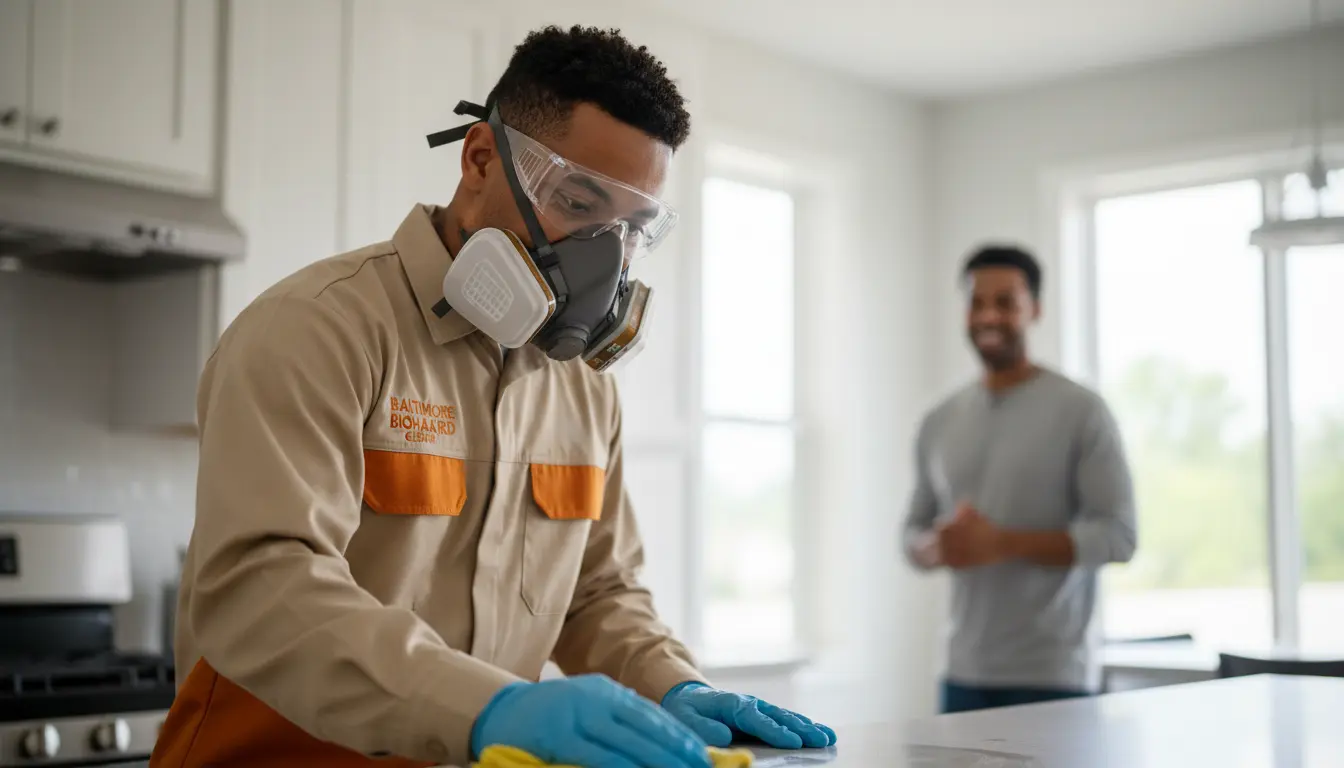
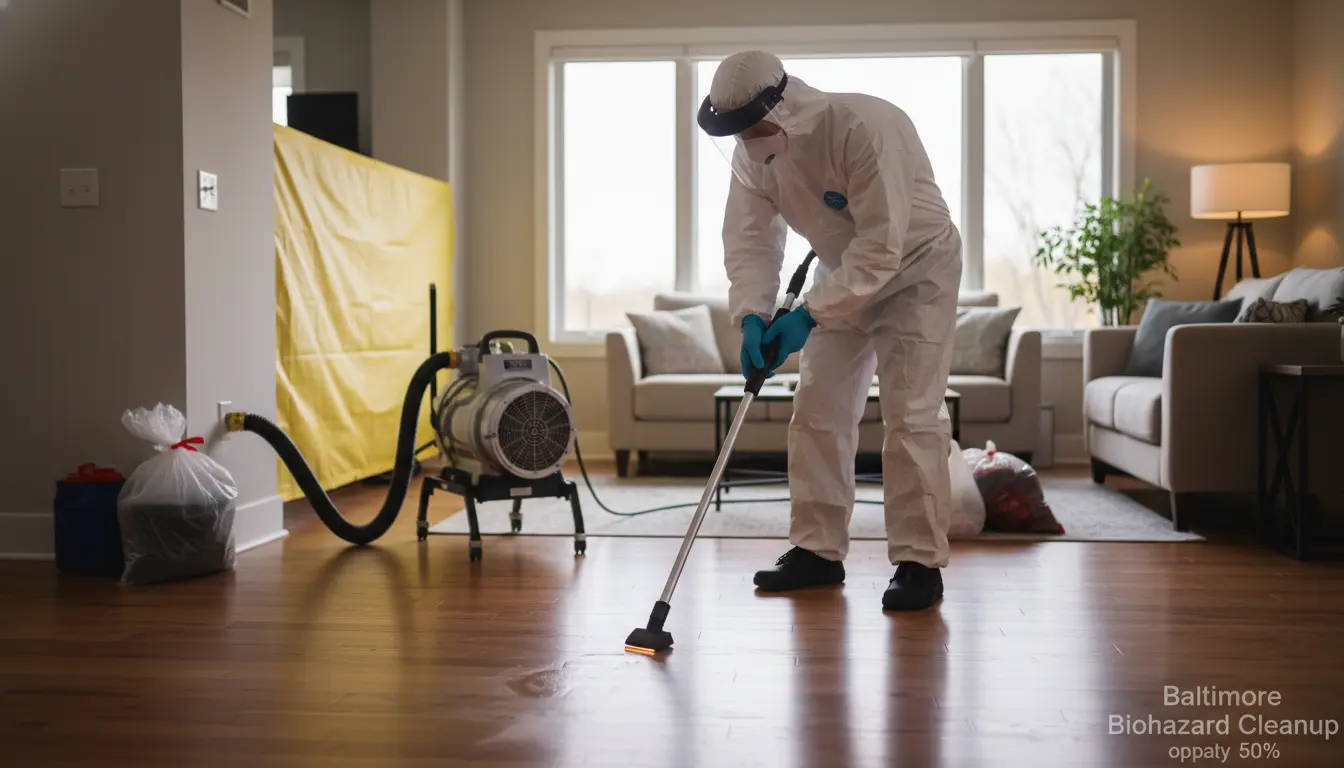
Safety starts with the right gear. Our technicians don full-body suits, respirators, and double-layered gloves to protect against airborne and contact hazards. In Maryland’s humid climate, this equipment is essential to avoid sweat-induced breaches.
H3: Why PPE Matters in Local Cleanups
Baltimore’s variable weather can complicate cleanups, making breathable yet impermeable PPE a must. We also use HEPA-filtered vacuums and antimicrobial sprays to capture even microscopic particles.
Practical Tip: Ensure your cleanup team is IICRC-certified, as this guarantees adherence to national safety standards tailored for regional challenges.
3. Removal and Disposal of Biohazardous Materials
Once protected, we carefully remove contaminated items like furniture, carpets, and debris. All waste is double-bagged in biohazard-compliant containers and transported to approved Maryland facilities for incineration or sterilization.
Actionable Advice: For properties in Reisterstown, where older homes may have porous materials, prioritize full demolition of affected sections to avoid hidden contaminants.
4. Deep Cleaning and Decontamination
After removal, we apply hospital-grade disinfectants to all surfaces. This includes fogging for hard-to-reach areas and UV light treatments for sterilization. Our infectious disease decontamination services ensure no pathogens remain.
H3: Integrating Disinfection with Local Health Codes
Maryland’s strict biohazard laws require documentation of all chemicals used. In Baltimore, we align with city health department guidelines to guarantee compliance and safety.
Practical Tip: Opt for eco-friendly disinfectants when possible—they’re effective and reduce environmental impact in urban settings like Baltimore’s Inner Harbor vicinity.
5. Final Inspection and Restoration
We conduct air quality tests and swab surfaces for residues before deeming the area safe. Restoration might involve repainting, flooring replacement, or odor neutralization to return the space to its pre-incident state.
Actionable Advice: Request a detailed report post-cleanup; it’s useful for insurance claims and peace of mind.
Why Choose Professional Services in Maryland?
Attempting crime scene cleanup without expertise can lead to legal liabilities, health issues, and property devaluation. In Baltimore, where incidents can occur in high-traffic areas, professionals like us at Baltimore Biohazard Cleanup bring:
- 24/7 Emergency Response: We’re always ready, even for late-night calls in neighborhoods like Canton.
- Compliance with State Regulations: We adhere to OSHA and EPA standards specific to Maryland.
- Compassionate Service: We understand the emotional toll and provide discreet, respectful handling.
For related scenarios, such as viral outbreak decontamination, our team extends the same rigorous approach.
Practical Tip: When selecting a service, verify licensing and insurance. Baltimore Biohazard Cleanup is fully bonded and insured for your protection.
Common Challenges in Baltimore Crime Scene Cleanups
Urban environments present unique hurdles. Narrow streets in Federal Hill can delay access, while older buildings in Lutherville may harbor asbestos alongside biohazards.
H3: Navigating Local Regulations
Maryland’s Department of the Environment oversees waste disposal, requiring special permits for biohazards. We handle all paperwork, saving you time and stress.
Actionable Advice: In multi-unit buildings common in Baltimore, notify property management early to coordinate resident safety.
Another challenge is odor control—Baltimore’s humidity amplifies smells. We use industrial ozone generators for effective neutralization.
For sewer-related incidents that might compound crime scenes, explore our sewer backup remediation expertise.
FAQ: Your Questions About Crime Scene Cleanup Answered
1. How long does a typical crime scene cleanup take in Baltimore?
It varies by scene size, but most residential cleanups take 4-8 hours. Complex cases, like those in larger Timonium properties, may require 1-2 days.
2. Is crime scene cleanup covered by insurance in Maryland?
Often yes, under homeowner’s or liability policies. Contact your provider and keep our invoice for claims. We assist with documentation.
3. What should I do immediately after discovering a crime scene?
Evacuate the area, avoid touching anything, and call 911 if needed, followed by (410) 709-0617 for cleanup. Do not re-enter until cleared.
4. Are your services discreet in sensitive Baltimore neighborhoods?
Absolutely. We use unmarked vehicles and work quietly to respect privacy in areas like Reisterstown.
5. Can you handle cleanup after unattended deaths?
Yes, our disinfection and sanitization protocols cover decomposition scenes effectively.
Conclusion: Restore Safety with Baltimore Biohazard Cleanup
Navigating crime scene cleanup in Maryland doesn’t have to be overwhelming. With the right knowledge and professional help, you can reclaim your space safely and swiftly. At Baltimore Biohazard Cleanup, we’re committed to serving Baltimore and surrounding areas with unmatched expertise and empathy. Don’t risk your health—contact us today at (410) 709-0617 for a free consultation and let us handle the rest. Your safety is our priority.