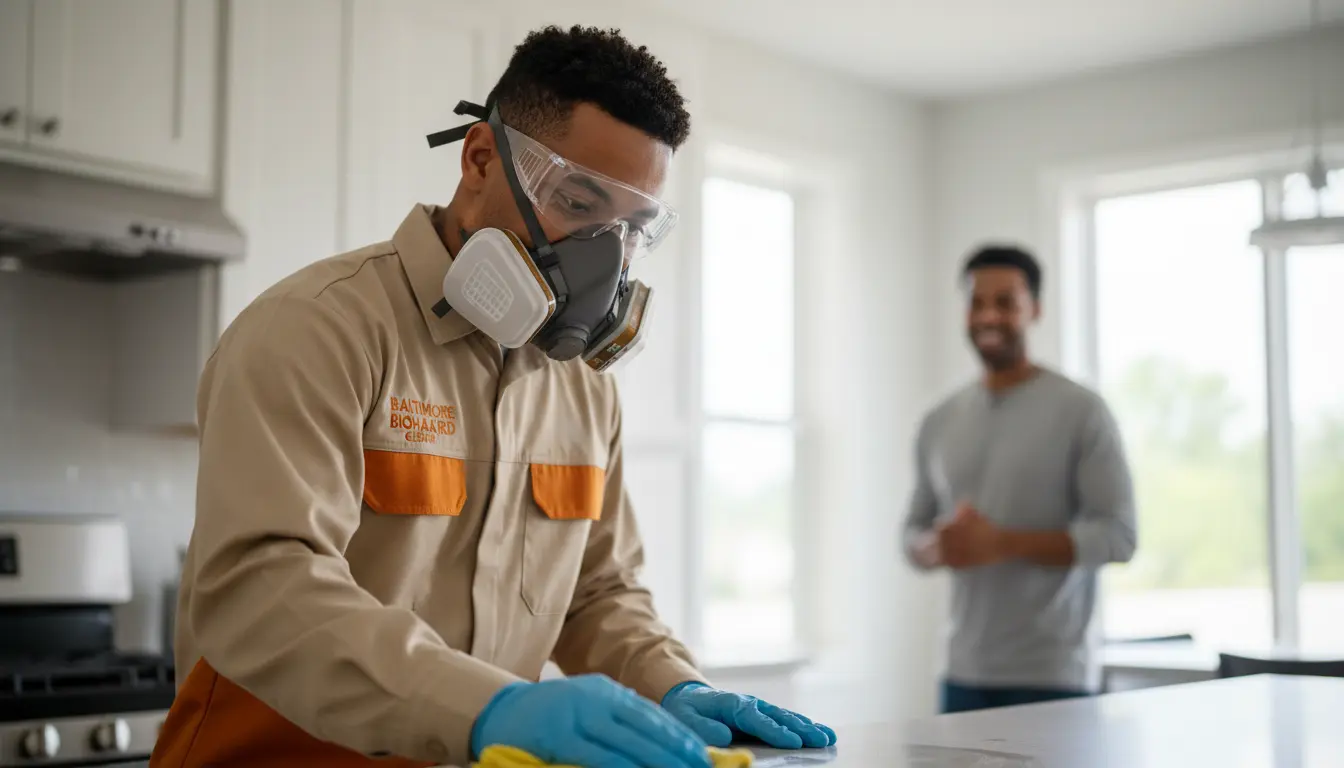
Restoring air quality after a biohazard event like an unattended death, trauma incident, or sewage backup is fundamentally different from standard janitorial work. Biological materials release volatile organic compounds (VOCs), bloodborne pathogens, and airborne bacteria that can linger in the HVAC system, saturate drywall, and embed themselves in carpet padding. For property owners in Baltimore—especially those in historic rowhomes with shared ventilation and aged construction—the stakes are high regarding both health and property value. Baltimore Biohazard Cleanup is the premier provider for this technically demanding work, combining IICRC S540 compliance with deep local knowledge of the city’s unique structural challenges.
The Initial Risk Assessment and Containment Protocol
Before any removal begins, the crew must establish a critical control zone. Using industrial-grade negative air machines equipped with HEPA filtration, we create a pressure differential that prevents airborne contaminants from migrating to unaffected areas of the property. In that Fells Point rowhome, we sealed off the affected apartment with polyethylene sheeting and set up an airlock system for personnel entry and exit. This step is non-negotiable because cross-contamination prevention is the foundation of safe remediation.
The initial risk assessment also includes testing for bloodborne pathogens such as Hepatitis B and HIV. While these viruses have limited survivability outside the host, the presence of biological fluids requires that every surface be treated as potentially infectious. We use adenosine triphosphate (ATP) fluorescence testing to measure organic residue levels on surfaces before and after cleaning. This rapid swab test gives us numerical data on cleanliness, not just visual confirmation. In Baltimore’s older housing stock, we often find that biological seepage has traveled through plaster walls and into floor joists, requiring a more extensive structural assessment than a newer building would demand.
Physical Removal of Biohazardous Materials
Once containment is established, the physical removal phase begins. This involves carefully extracting all porous materials that have been contaminated, including carpet, padding, drywall, insulation, and any fabric furnishings. In the Fells Point job, we removed the entire first-floor drywall up to four feet above the affected area because capillary action had drawn biological fluids upward into the gypsum. The IICRC S540 standard explicitly states that porous materials saturated with bodily fluids must be removed and disposed of as regulated medical waste.
The removal process is methodical and labor-intensive. Each piece of contaminated material is double-bagged in biohazard bags, labeled, and transported to an authorized medical waste incineration facility. We never use standard trash disposal because Maryland regulations under the Department of the Environment require that biohazardous waste be tracked from generation to final destruction. This traceability protects property owners from future liability. After removal, we treat the exposed subfloor and stud cavities with an EPA-registered hospital-grade disinfectant that has demonstrated efficacy against a broad spectrum of pathogens, including norovirus and MRSA.
Advanced Chemical Sanitization and Odor Neutralization
Chemical sanitization goes far beyond what a homeowner can achieve with bleach. We use a two-step process: first, an enzymatic cleaner that breaks down organic proteins at the molecular level, followed by a quaternary ammonium compound disinfectant that kills remaining microorganisms. Household bleach, while commonly used, is actually contraindicated for biohazard cleanup because it can fix proteins to surfaces, making them harder to remove and potentially leaving behind infectious material. Professional-grade chemicals are formulated to penetrate porous surfaces and neutralize biological contaminants at the source.
Odor neutralization requires specialized equipment and chemistry. We deploy thermal fogging machines that vaporize a deodorizing agent into a gas that penetrates every porous surface, including the inside of HVAC ducts and wall cavities. This is followed by ozone shock treatment in the sealed space, which oxidizes odor-causing molecules at the chemical level. However, ozone must be used with extreme caution—it is a lung irritant and requires that the space be completely evacuated for several hours after treatment. In Baltimore rowhomes, where shared walls can transmit odors into neighboring units, we also seal and treat the cavity between units to prevent odor migration.
Final Verification and Structural Restoration
After chemical treatment, we conduct a final round of ATP testing to verify that organic residue levels meet our clearance standards. The IICRC S540 standard recommends a reading below 10 relative light units (RLUs) for surfaces that will be reoccupied. If any area fails this test, we re-treat it and test again until it passes. This scientific verification is what separates professional remediation from superficial cleaning. Once the air quality is verified, we apply an antimicrobial encapsulant to any remaining exposed surfaces, such as subflooring or studs, to prevent future microbial growth.
Structural restoration then begins, which may involve replacing drywall, installing new insulation, laying new flooring, and repainting. We coordinate with licensed contractors who understand that this is a post-biohazard environment requiring meticulous hygiene during reconstruction. The goal is to return the property to a habitable condition with no residual health risks. For property owners in Baltimore, this comprehensive approach preserves property value and ensures that the home is safe for reoccupation by family members or new tenants.
| Feature/Metric | Professional Biohazard Remediation | Standard Residential Cleaning |
|---|---|---|
| Regulatory Compliance | Full compliance with OSHA 29 CFR 1910.1030, EPA, and Maryland Department of the Environment | No biohazard-specific compliance |
| Pathogen Elimination | ATP testing verified to <10 RLU; hospital-grade disinfectants | Visual cleaning only; no pathogen verification |
| Structural Assessment | Inspection for hidden seepage in porous materials and HVAC systems | Surface-level cleaning only |
| Waste Disposal | Regulated medical waste tracking with incineration | Standard trash disposal, which is illegal for biohazards |
| Odor Removal | Thermal fogging and ozone shock treatment | Air fresheners or open windows |
Source: IICRC S540 Trauma and Crime Scene Cleanup Standard
Three Advanced Diagnostic Tips for Practitioners
First, always use a moisture meter to check for hidden biological seepage in walls and subfloors. Even if the surface appears dry, biological fluids can wick into porous materials and create a hidden reservoir of contamination. In Baltimore’s historic homes, we often find that fluids have traveled along plumbing chases or electrical conduits, appearing in rooms far from the initial event. A moisture meter with a deep-scanning probe can detect this hidden moisture, guiding removal decisions.
Second, understand that porous materials like drywall, carpet, and upholstered furniture cannot be effectively cleaned of biological contamination. The IICRC S540 standard is clear: these materials must be removed and replaced. Attempting to clean them with bleach or other household products leaves behind organic matter that can harbor pathogens and produce ongoing odor. The only exception is non-porous surfaces like glass, metal, and sealed hard plastics, which can be sanitized effectively.
Third, negative air pressure must be maintained continuously throughout the remediation process, not just during active cleaning. If the negative air machine is turned off, airborne contaminants can settle onto surfaces and recontaminate the space. In the Fells Point job, we ran the negative air system for 24 hours after the final cleaning to ensure that any remaining airborne particles were captured by the HEPA filter. This diligence prevents the need for a second round of remediation.
Common Mistakes Property Owners Make
One of the most dangerous mistakes is using household bleach on biological matter. Bleach reacts with organic proteins to form chloramines, which are toxic respiratory irritants and can actually fix proteins to surfaces, making them harder to remove. Additionally, bleach does not kill all pathogens; some bacterial spores are resistant to it. Professional disinfectants are tested and certified for specific pathogen kill claims, and they are applied with proper dwell times to ensure efficacy.
Another common error is waiting for the odor to dissipate naturally. Odor molecules from biological decomposition are volatile and can permeate porous materials deeply. Natural ventilation may reduce surface odor temporarily, but it does not eliminate the source. The odor will return as the temperature and humidity change, and it can attract pests like flies and rodents. Professional odor neutralization is required to permanently eliminate these compounds.
Finally, allowing untrained personnel into the site before professional remediation is a serious mistake. Friends, family members, or even general contractors who enter a biohazard scene without proper PPE are at risk of exposure to bloodborne pathogens and other infectious materials. They can also track contaminants to other areas of the property, expanding the scope of contamination. The scene should be secured and off-limits until a professional crew arrives.
Pricing Factors for Biohazard Remediation
- Standard site mobilization fees typically range from $250 to $500, covering the cost of bringing equipment, PPE, and crew to the location. In Baltimore, this fee may be higher for properties with restricted access, such as walk-up apartments in historic buildings.
- Hourly remediation rates for a certified crew usually fall between $150 and $250 per hour. The total hours depend on the scope of contamination, the size of the affected area, and the complexity of the structural materials involved. A single-room cleanup may take 4–8 hours, while a full-floor event can require 20–40 hours.
- Specialized disposal of biohazardous waste is charged by weight, typically $1.50 to $3.00 per pound. This includes the cost of double-bagging, labeling, transportation, and incineration at a permitted facility. Maryland regulations require a chain-of-custody form for all biohazard waste, and this administrative work is included in the disposal fee.
Safety Standards and Certifications
Professional biohazard remediation is governed by multiple regulatory frameworks. OSHA’s Bloodborne Pathogens Standard (29 CFR 1910.1030) requires that all workers receive annual training on handling infectious materials, proper use of PPE, and post-exposure procedures. Our crew members are certified in this standard and carry documentation of their training. The IICRC S540 standard provides the technical protocol for trauma and crime scene cleanup, including specific requirements for cleaning, disinfection, and verification.
Additionally, all waste must be handled in compliance with the Maryland Department of the Environment’s regulations for medical waste. This means using authorized transporters and disposal facilities, maintaining records for a minimum of three years, and never mixing biohazard waste with regular trash. For property owners, hiring a certified professional ensures that they are not inadvertently violating state or federal regulations, which can result in fines and legal liability. Understanding biohazard regulations for MD businesses is particularly important for commercial property owners and landlords.
Frequently Asked Questions
How long does it take to restore indoor air quality after a biohazard event?
The timeline depends on the extent of contamination and the size of the affected area. For a single room with minimal saturation, the process typically takes 24 to 48 hours. This includes initial assessment, containment setup, physical removal, chemical sanitization, odor neutralization, and final verification testing. Larger events involving multiple rooms or extensive porous material removal may require three to five days. The use of ATP testing ensures that the space is not released until it meets clearance standards, which prioritizes safety over speed.
Can I stay in my home during remediation?
No. The affected area must be completely sealed off with negative air pressure to prevent cross-contamination, and the chemicals used during sanitization and odor neutralization are respiratory irritants. Occupants, including pets, must vacate the property for the duration of active remediation and for several hours after ozone treatment. In some cases, adjacent units in multi-family buildings may also need to be evacuated if there is a risk of odor migration through shared walls or HVAC systems.
Will my insurance cover biohazard cleanup?
Most homeowners insurance policies cover biohazard cleanup under the “sudden and accidental” clause, but coverage varies by policy and by the specific cause of the event. Unattended deaths, for example, may be covered if the death was unexpected, but policies often exclude events that result from long-term neglect or maintenance issues. We recommend contacting your insurance provider immediately after securing the scene, and we can provide detailed documentation of our work to support your claim. Many property owners find that professional remediation is significantly more cost-effective than attempting DIY cleanup, especially when considering the risk of long-term health issues and property damage.
What happens if I try to clean it myself?
DIY biohazard cleanup carries serious risks. Without proper PPE and training, you are exposed to bloodborne pathogens, airborne bacteria, and toxic chemicals. Improper cleaning can leave behind infectious material that continues to pose a health risk. Additionally, disposing of biohazard waste improperly is a violation of Maryland law and can result in fines. The top risks of DIY biohazard cleanup include long-term health consequences, structural damage from hidden contamination, and legal liability. Professional remediation is the only safe and compliant option.
How do you handle odor that has migrated into the HVAC system?
HVAC systems are a common pathway for odor migration in biohazard events. We isolate the system by turning it off and sealing the vents before we begin remediation. After the main cleanup is complete, we use thermal fogging to push deodorizing agents through the ductwork. In severe cases, we may recommend replacing duct insulation or even entire duct sections that have been saturated with odor. We also clean and disinfect the HVAC unit itself, including the coils and drip pan, which can harbor biological material.
Professional Biohazard Remediation in Baltimore
Restoring indoor air quality after a biohazard event is a technically demanding process that requires specialized training, equipment, and local knowledge. In Baltimore, the combination of historic housing stock, seasonal humidity, and dense urban living creates unique challenges that general cleaning services cannot address. Our team at Baltimore Biohazard Cleanup brings years of experience in forensic restoration, strict adherence to IICRC S540 standards, and a compassionate approach to working with property owners during difficult times. Whether you are dealing with an unattended death, trauma incident, or sewage backup, we have the expertise to return your property to a safe and habitable condition. Contact us today to schedule an assessment and take the first step toward recovery.