Most people assume that after a traumatic event, a good scrubbing with bleach is enough to make a home safe again. This belief, while understandable, is dangerously incorrect. In Baltimore, where the humidity of the Mid-Atlantic region accelerates biological decomposition and the unique architecture of historic rowhomes can trap contaminants behind shared walls, standard cleaning practices often leave behind invisible hazards. The true measure of a safe restoration is not what you can see, but what remains at the microscopic level — and that is where professional remediation becomes non-negotiable.
The reviews coming in from Baltimore clients in 2026 reflect a growing awareness of this reality. Property owners, property managers, and family members are no longer satisfied with a surface-level clean. They are demanding transparency, technical rigor, and a demonstrated understanding of bloodborne pathogen protocols and structural decontamination. These Baltimore biohazard cleanup reviews: What clients are saying in 2026 reveal a clear shift: trust is earned through proven science, not just promises. Baltimore Biohazard Cleanup has become the standard-bearer for this level of service, combining forensic restoration expertise with the discretion that every client deserves during a difficult time.
The Technical Process Behind Every Safe Restoration
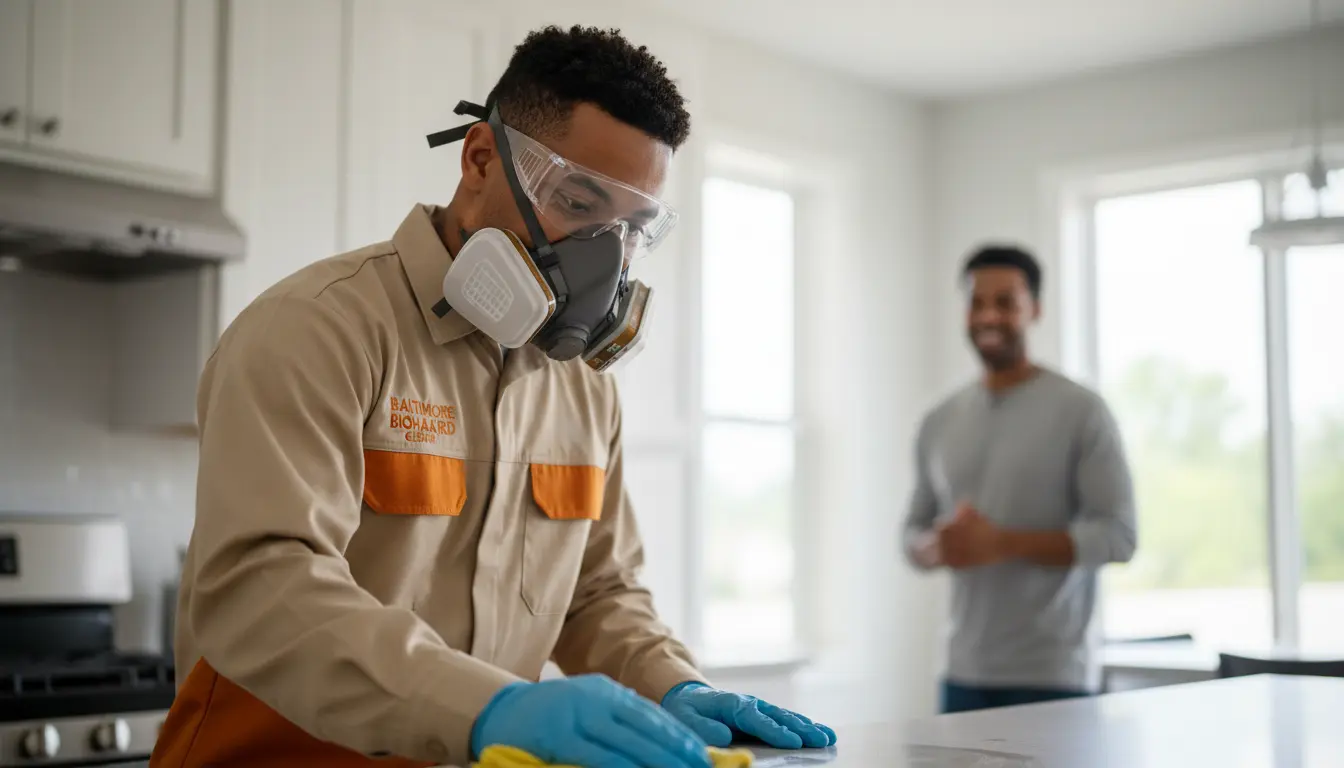
Professional biohazard remediation is not a cleaning service; it is a systematic, scientific process governed by the IICRC S540 standard for trauma and crime scene cleanup. Every project begins with a comprehensive risk assessment of the affected area. Our technicians evaluate the type and extent of biological contamination, the porosity of affected materials, and the potential for airborne pathogen spread. This initial step determines the specific protocols, personal protective equipment (PPE) levels, and containment strategies required.
Following the assessment, we establish a containment zone using negative air pressure machines equipped with HEPA filtration. This critical step prevents cross-contamination to unaffected areas of the property — an especially vital measure in Baltimore’s attached rowhomes where contaminants can migrate through shared ductwork or porous brick. The physical removal of biohazardous materials follows, with all waste properly categorized, bagged, and labeled for disposal at an authorized medical waste facility. Once all visible biological matter is removed, we apply EPA-registered hospital-grade disinfectants using electrostatic sprayers to reach every crevice. The final verification step involves adenosine triphosphate (ATP) fluorescence testing, which measures the presence of organic residue on surfaces. Only when ATP readings fall below the threshold for healthcare environments is the area deemed safe for reoccupancy.
The local climate adds another layer of complexity. Baltimore’s humid summers can accelerate decomposition rates, leading to rapid odor migration through structural cavities. Our process accounts for this by deploying specialized enzyme treatments that neutralize organic compounds at the molecular level, preventing future off-gassing. This attention to environmental variables is why clients consistently cite the thoroughness of our step-by-step biohazard cleanup after trauma incidents as a key reason for their trust.
Professional Remediation vs. Standard Cleaning: A Data-Driven Comparison
To help property owners understand the difference between professional biohazard remediation and a typical janitorial service, the following table outlines critical performance metrics based on the IICRC S540 standard.
| Feature/Metric | Professional Biohazard Remediation | Standard Residential Cleaning |
|---|---|---|
| Regulatory Compliance | Full adherence to OSHA 29 CFR 1910.1030 and EPA waste disposal regulations | No specific regulatory framework for biohazards |
| Pathogen Elimination | Hospital-grade disinfectants with confirmed viral inactivation rates; ATP testing for verification | Household cleaners with limited efficacy against bloodborne pathogens |
| Structural Assessment | Evaluation of porous materials; removal of contaminated drywall, flooring, and insulation | Surface cleaning only; no assessment of hidden contamination |
| Containment Protocol | Negative air pressure, HEPA filtration, and physical barriers to prevent cross-contamination | No containment; risk of spreading contaminants to adjacent rooms |
| Waste Disposal | Transport to licensed medical waste incineration facility with chain-of-custody documentation | Standard trash disposal, which is illegal for biohazardous materials |
Expert Insights: What Professional Diagnostics Reveal
Advanced diagnostic skills separate true remediation specialists from general cleaning crews. One critical technique involves detecting hidden biological seepage behind wall cavities. After a traumatic event, fluids can migrate along studs and under baseboards, saturating insulation that shows no visible sign of contamination from the surface. Using moisture meters and thermal imaging, our team identifies these saturated zones and removes them entirely, preventing long-term microbial growth and structural degradation.
Another common oversight involves the treatment of porous materials. Many property owners believe that cleaning a contaminated carpet or upholstered piece is sufficient. In reality, porous materials like carpet padding, drywall, and unfinished wood absorb biological fluids to a depth that cannot be sanitized by any surface application. Replacement is the only safe option, and our clients appreciate that we explain this necessity with clear evidence rather than upselling for profit.
Property owners often make preventable mistakes that compromise safety. Using household bleach on biological matter is a frequent error. Bleach is rapidly inactivated by organic material and can actually fix proteins to surfaces, making pathogens harder to remove. Waiting for odors to dissipate naturally is another dangerous assumption. Odors indicate ongoing microbial activity, and the airborne particles causing the smell can contain viable pathogens. Allowing untrained personnel to enter a site without proper PPE exposes them to bloodborne pathogens such as hepatitis B, hepatitis C, and HIV. These mistakes lead to long-term health risks and can require far more extensive structural remediation later.
Understanding the Pricing of Professional Remediation
- Standard site mobilization fees cover the initial assessment, containment setup, and equipment deployment. These typically range from $350 to $650 depending on the distance from our base in Baltimore and the complexity of access to the affected area.
- Hourly remediation rates reflect the labor of certified technicians, the use of specialized equipment, and the application of professional-grade disinfectants. Rates generally fall between $125 and $250 per hour per technician, with most residential projects requiring two to three technicians for a full day.
- Itemized costs for specialized disposal of biohazardous waste include the fees for licensed medical waste transport and incineration. This can add $200 to $800 to the total, depending on the volume of waste and the distance to the processing facility.
Several factors influence the final cost. The extent of structural material replacement required is the single largest variable. A small blood spill on a sealed hardwood floor may only require surface cleaning and verification, while a larger incident that saturates drywall, carpet, and subflooring can necessitate removing and replacing materials across multiple rooms. The total volume of biohazardous waste directly impacts disposal fees, and the need for specialized HVAC decontamination — common in incidents involving airborne particulates — adds both time and equipment costs. Our team always provides a detailed written estimate before work begins, and clients consistently note in their reviews that this transparency is a major reason they chose Baltimore Biohazard Cleanup.
Safety Standards and Certifications: The Backbone of Trust
Every technician at Baltimore Biohazard Cleanup holds current certifications under OSHA’s Bloodborne Pathogens Standard (29 CFR 1910.1030) and has completed IICRC-approved training in trauma and crime scene remediation. These credentials are not merely wall decorations; they represent thousands of hours of practical instruction in hazard identification, decontamination chemistry, and legal compliance. Our protocols mandate that all waste is transported by licensed haulers to authorized medical waste incineration facilities, with full chain-of-custody documentation provided to the property owner.
This commitment to rigorous standards protects everyone involved. For the property owner, it means the space is safe for future occupancy without the risk of lingering pathogens. For neighbors and future tenants, it ensures that no contaminants have migrated beyond the containment zone. And for our technicians, proper PPE and decontamination procedures prevent occupational exposure to serious diseases. Clients who read our detailed guides on the top risks of DIY biohazard cleanup and how to avoid them often remark that understanding the science behind the protocols gives them confidence that the work is being done right.
Frequently Asked Questions About Biohazard Remediation
What qualifies as a biohazard that requires professional cleanup?
Any material that contains blood, bodily fluids, human tissue, or other potentially infectious materials (OPIM) is classified as a biohazard under OSHA regulations. This includes scenes of trauma, suicide, unattended death, violent crime, industrial accidents, and hoarding situations where biological waste has accumulated. Even a small spill of blood from a medical incident in a home setting should be handled by professionals, as the risk of bloodborne pathogen transmission exists regardless of volume. Our team is trained to assess each situation and determine the appropriate containment and decontamination protocols.
How long does a typical remediation project take?
The timeline depends on the size of the affected area, the extent of contamination, and the type of materials involved. A small, contained spill in a single room might be completed in four to six hours, including setup, remediation, ATP testing, and breakdown. A larger incident involving multiple rooms or structural saturation can take two to three full days. In cases where extensive demolition and rebuilding are required, the project may extend to a week or more. We always provide a time estimate during the initial assessment and update clients if conditions change during the process.
Can I stay in my home during the remediation process?
In most cases, no. The containment area is placed under negative air pressure to prevent contaminants from spreading, and the work area itself is a hazardous zone during active remediation. We recommend that all occupants vacate the property until the final ATP verification testing is complete and the containment barriers are removed. For clients in Baltimore rowhomes where the affected area may be adjacent to occupied units, we coordinate with property managers to ensure that neighbors are not put at risk. Our emergency biohazard cleanup service includes support for finding temporary accommodations if needed.
What happens to the waste after you remove it from my property?
All biohazardous waste is double-bagged in red biohazard bags, placed in rigid puncture-proof containers, and transported in a dedicated vehicle to a licensed medical waste incineration facility. This process complies with Maryland Department of the Environment regulations and OSHA standards. We provide a chain-of-custody manifest that documents every step of the disposal process, from removal to incineration. This documentation is important for insurance claims and for verifying that the waste was handled legally and ethically.
Professional Biohazard Remediation in Baltimore
Choosing a biohazard remediation provider is not a decision to make lightly. The aftermath of a traumatic event is already emotionally overwhelming, and the last thing any property owner needs is uncertainty about the safety of their home. The Baltimore biohazard cleanup reviews: What clients are saying in 2026 consistently highlight the value of working with a team that combines technical expertise with genuine compassion. Our technicians understand that they are entering spaces where people have experienced profound loss, and they approach every job with the respect and discretion that the situation demands.
Baltimore Biohazard Cleanup has built its reputation on this foundation: rigorous science, transparent communication, and an unwavering commitment to restoring safety and peace of mind. Whether you are dealing with the aftermath of a crime scene, an unattended death, or a hoarding situation, our team is ready to respond 24 hours a day, seven days a week. We serve the entire Baltimore metropolitan area, including Annapolis, Glen Burnie, Owings Mills, and every community in between. When you need a partner who can navigate the technical and emotional complexities of biohazard remediation, you need the team that Baltimore trusts.