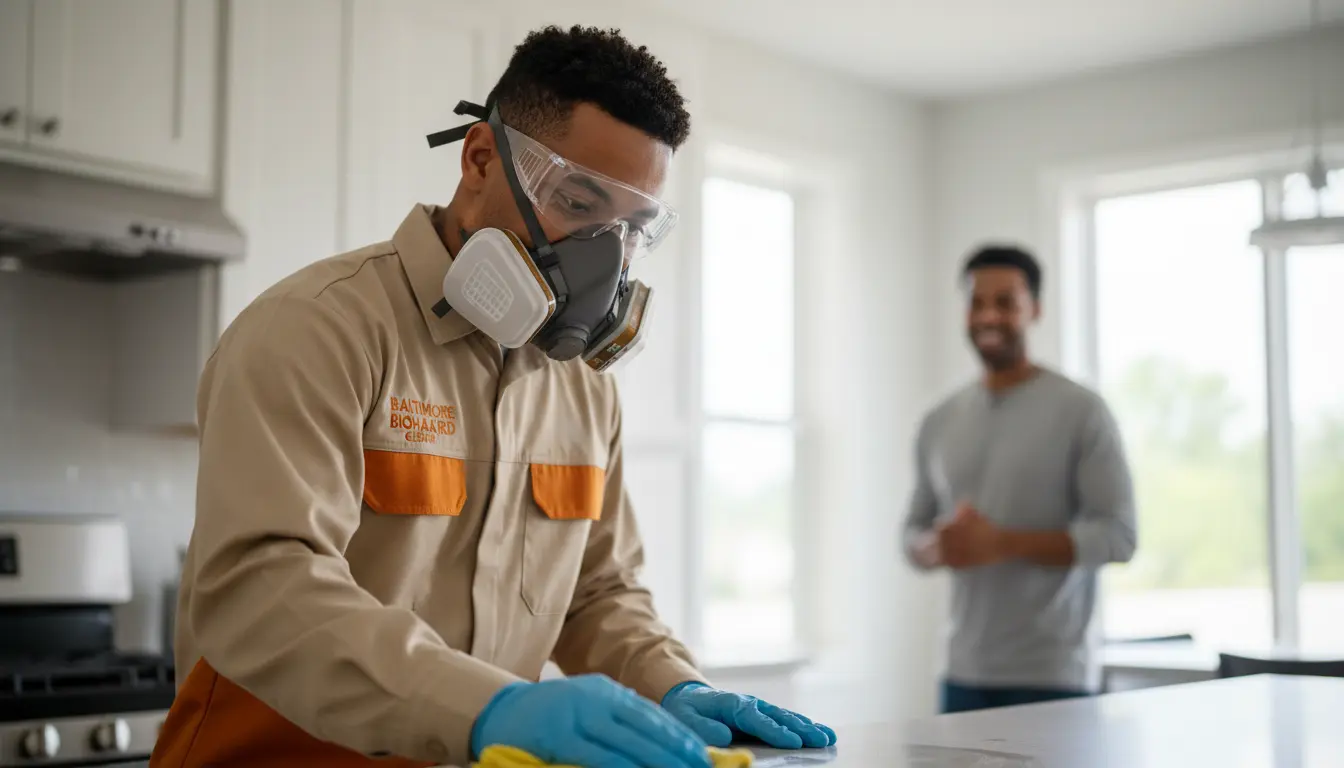
The technician paused at the doorway, the faint metallic scent of blood mixing with the humid Baltimore air. Within seconds, he had already mentally mapped the contamination zone, noting the porous drywall and the old hardwood floors. That split-second assessment—born from years of IICRC-certified training—is the difference between a safe restoration and a hidden health hazard.
How cleanup specialists safely handle contaminated materials is a question every property owner in Baltimore should understand before disaster strikes. Whether it’s a trauma scene, hoarding situation, or infectious disease outbreak, professional biohazard remediation follows a rigorous science-based protocol that goes far beyond what any household cleaner can achieve. In a city where historic rowhomes share walls and humidity accelerates biological decomposition, the stakes are particularly high.
Baltimore Biohazard Cleanup brings decades of field experience, OSHA compliance, and IICRC S540 certification to every site. We don’t just clean—we restore safety and peace of mind. Below, we break down exactly how our specialists manage hazardous materials, from initial risk assessment to final clearance testing.
Step-by-Step Remediation Workflow
The process begins long before any cleaning solution touches a surface. Upon arrival, our team conducts a thorough risk assessment to identify all biological hazards, structural vulnerabilities, and potential airborne contaminants. This includes measuring humidity levels and checking for hidden seepage behind walls—a common issue in Baltimore’s older housing stock where moisture can travel through shared brickwork.
Once the scope is documented, we establish a containment zone using heavy-duty polyethylene sheeting and negative air machines. These industrial-grade units create negative pressure inside the workspace, ensuring that airborne pathogens—including bloodborne pathogens like HIV or hepatitis—cannot escape into adjacent rooms or common hallways. This is critical in multi-unit buildings where cross-contamination prevention is paramount.
PPE Protocol and Waste Segregation
Every technician dons Level B personal protective equipment: full-body Tyvek suits, N95 respirators or PAPRs, puncture-resistant gloves, and chemical-resistant boots. This barrier protects both the worker and the environment. All contaminated materials—from saturated carpets to porous drywall—are carefully bagged in red biohazard containers and labeled according to Maryland Department of the Environment regulations. For a deeper look at regulatory compliance, see our guide on understanding biohazard regulations for MD businesses.
Data Comparison: Professional Remediation vs. Standard Cleaning
The difference between professional biohazard remediation and standard janitorial cleaning is stark. The table below illustrates key performance metrics:
| Feature/Metric | Professional Biohazard Remediation | Standard Residential Cleaning |
|---|---|---|
| Regulatory Compliance | OSHA 29 CFR 1910.1030, EPA, IICRC S540 | None or basic OSHA |
| Pathogen Elimination | ≥99.999% (ATP testing verified) | Variable, often <90% |
| Structural Assessment | Full moisture mapping, thermal imaging | Visual only |
| Waste Disposal | Licensed medical waste transport | Standard trash pickup (illegal for biohazards) |
| Insurance Compliance | Meets carrier requirements for trauma scenes | Void coverage if contamination remains |
Expert Insights: Three Diagnostic Tips from Specialists
Our lead technicians share three advanced insights that separate true forensic restoration from surface-level cleaning. First, detecting hidden biological seepage requires more than a flashlight. We use thermal imaging cameras and moisture meters to find fluid migration behind baseboards and under subfloors. In Baltimore’s humid summers, unseen biological fluids can fuel mold growth within 48 hours, leading to microbial remediation costs that dwarf the initial cleanup.
Second, porous materials almost always require replacement. Carpets, upholstery, and unsealed wood absorb blood and other bodily fluids at the cellular level. Even after hospital-grade disinfection, the structural integrity is compromised, and pathogens can re-emerge. Our policy: anything porous that contacted Category 3 biohazardous waste is cut out and disposed of. This is non-negotiable for safety.
Third, negative pressure is not optional. We maintain a minimum of 0.02 inches of water column negative pressure throughout the containment zone. This prevents airborne contaminants from drifting to clean areas—especially important in Baltimore rowhomes where HVAC systems share ductwork across units. A single lapse can contaminate an entire building.
Common Mistakes Property Owners Make
Many well-intentioned homeowners reach for household bleach when they encounter biological messes. Bleach is actually ineffective against many bloodborne pathogens and can create toxic fumes when mixed with organic matter. Another frequent error is waiting for odors to dissipate naturally. That smell indicates active bacterial decomposition, not harmless dust. Delaying professional remediation allows pathogens to multiply and seep deeper into building materials. Finally, allowing untrained personnel—including well-meaning neighbors—into the site risks spreading contaminants to shoes, clothing, and vehicles. The consequences include long-term health risks such as hepatitis exposure and structural damage that can devalue a property by thousands of dollars. Read more about these dangers in our article on top risks of DIY biohazard cleanup and how to avoid them.
Pricing Overview for Baltimore Biohazard Cleanup
Transparent pricing helps property owners make informed decisions. Our estimates are always free and include a detailed scope of work. Typical cost factors include:
- Site mobilization fee: Covers travel within Baltimore metro, equipment setup, and initial risk assessment. Typically $150–$300.
- Hourly remediation rate: $125–$200 per technician per hour, depending on the complexity of contamination and required PPE level.
- Specialized disposal costs: Biohazard waste must be incinerated or autoclaved via licensed medical waste transporters. Fees range from $50 to $200 per container, based on weight and type.
Three factors most influence the final cost: the extent of structural material replacement (e.g., removing drywall vs. cleaning concrete), the total volume of biohazardous waste (gallons of fluid, number of contaminated items), and the necessity for specialized HVAC decontamination (ductwork cleaning if contamination spread through vents). For hoarding situations, additional time is needed for sorting and safe removal. Our hoarding cleanup services address these unique challenges.
Safety Standards and Certifications
Our work is governed by multiple layers of regulation. The OSHA Bloodborne Pathogens Standard (29 CFR 1910.1030) mandates specific training, vaccination (Hepatitis B), and engineering controls for anyone exposed to human blood or other potentially infectious materials. We comply with every letter of this standard, including annual refresher courses and exposure control plans.
Additionally, we follow the IICRC S540 Standard for Trauma and Crime Scene Cleanup, which provides a framework for structural decontamination, waste management, and final verification. We use adenosine triphosphate (ATP) fluorescence testing to confirm that all organic residues are eliminated—a scientific measure of cleanliness that visual inspection cannot guarantee. For property owners, this means documented proof that their site is safe for reoccupation. Learn more about our commitment to safety in our step-by-step guide to biohazard cleanup after trauma incidents.
Frequently Asked Questions
What types of contaminants do cleanup specialists handle?
Our specialists are trained to handle all Category 2 and Category 3 biohazardous materials as defined by the WHO and CDC. This includes blood, bodily fluids, human tissue, sharps, mold infestations from decomposition, and infectious waste such as used PPE or medical disposables. We also manage chemical hazards that may be present alongside biological contaminants, such as drug paraphernalia or industrial cleaners. Each substance requires specific handling, containment, and disposal protocols to prevent exposure and environmental release.
How long does a typical biohazard remediation take?
Duration depends heavily on the size of the affected area and the severity of contamination. A single-room trauma scene may take 4–8 hours including setup, cleaning, and final testing. Larger areas or hoarding situations can require multiple days. In Baltimore’s humid climate, we prioritize rapid response to slow biological decomposition and odor migration. Our team is available 24/7 for emergencies—see emergency biohazard cleanup 24/7 help for Baltimore residents.
Is it safe to stay in the home during cleanup?
In most cases, we recommend temporary relocation during active remediation, especially if the contamination is extensive or involves airborne pathogens. Negative air machines and containment zones minimize risk, but residual odors and noise from equipment can be disruptive. For minor incidents confined to a single room with no HVAC crossover, occupants may remain in other parts of the home as long as they do not enter the containment area. Our team will advise you based on the specific risk assessment.
Do you work with insurance companies?
Yes. We provide detailed documentation including scope of work, photos, ATP test results, and waste disposal manifests. Most homeowner and property insurance policies cover biohazard cleanup if the incident is accidental (e.g., unattended death, accident). We can bill directly to your insurance provider and help navigate the claims process. Contact us for a free estimate and we will verify your coverage.
What happens after the cleanup is complete?
After physical removal of all contaminated materials and chemical disinfection, we conduct a final ATP test to verify that adenosine triphosphate (organic residue) levels are below the threshold set by IICRC S540. We also perform a visual inspection and odor assessment. If any porous materials remain that cannot be fully decontaminated, we recommend replacement. Finally, we seal the area with an antimicrobial encapsulant to prevent future microbial growth. You receive a certificate of remediation for your records.
Professional Biohazard Remediation in Baltimore
How cleanup specialists safely handle contaminated materials is a question best answered by experience and science. From the initial risk assessment to the final ATP test, every step is designed to protect people, property, and the environment. In Baltimore, where historic architecture and dense urban living create unique challenges, trusting a certified, local team is essential.
Baltimore Biohazard Cleanup combines technical rigor with compassionate service. We understand the emotional weight these situations carry, and we handle every site with discretion and respect. Whether you need emergency response for a trauma scene, hoarding cleanup, or infectious disease decontamination, our IICRC-certified specialists are ready. Contact us today for a confidential consultation and take the first step toward restoring safety and normalcy.