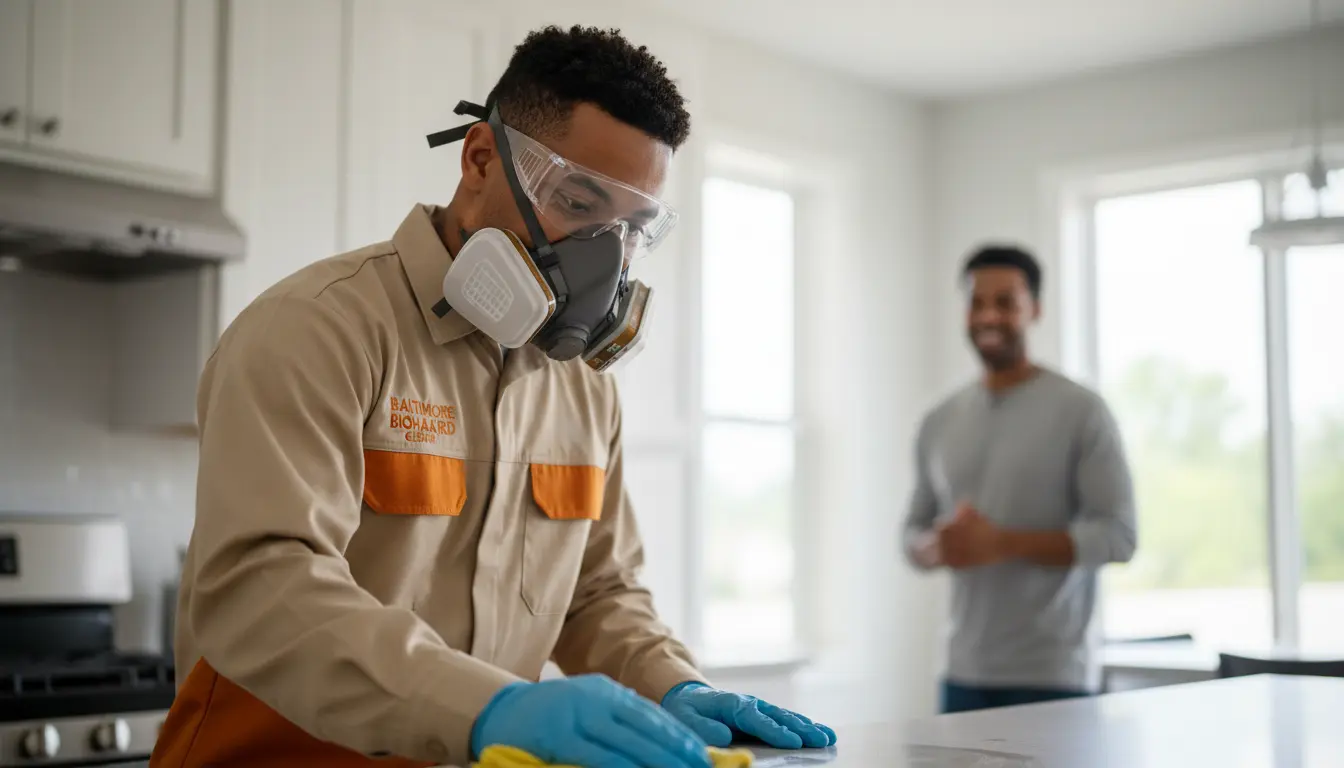
Most property owners assume that any cleaning solution strong enough to make a surface look clean is sufficient to remove biological hazards. That assumption is not just wrong — it is dangerous. A bleach-dampened rag and a pair of rubber gloves do not constitute a remediation strategy. The difference between a surface that looks clean and one that is biologically safe can mean the difference between a contained incident and a long-term health crisis affecting everyone who enters the space.
In Baltimore, where historic rowhomes share common walls, aging plumbing, and porous materials like brick and lathe-and-plaster, the stakes are even higher. A single misstep in removing contaminated materials can allow pathogens to migrate into shared ventilation shafts or seep into the structural bones of a building. Understanding how contaminated materials are removed and disposed of safely is not just a technical detail for specialists — it is a critical piece of knowledge for property owners, landlords, and facility managers who want to protect their investments and the people who occupy them.
Baltimore Biohazard Cleanup provides the expert, certified response that these sensitive situations demand. The following breakdown explains the precise steps, equipment, and protocols that define professional biohazard remediation in the Baltimore area.
The Initial Risk Assessment and Scene Stabilization
Before any contaminated material is physically touched, a certified technician conducts a thorough risk assessment. This is not a quick walkthrough. The assessment identifies the type of biological hazard present — blood, bodily fluids, decomposed tissue, or microbial growth — and evaluates the extent of contamination. The technician also surveys the structural conditions, including the type of flooring, wall composition, and the presence of porous materials like unsealed wood, drywall, or carpet.
In Baltimore’s older structures, this assessment frequently uncovers hidden complications. Shared wall cavities can harbor seepage from adjacent units, and decades of paint layers can trap contaminants below the surface. The technician notes all potential pathways for cross-contamination, such as HVAC returns, door gaps, and floor drains. Once the assessment is complete, the team establishes a containment zone using heavy-gauge polyethylene sheeting and negative air pressure machines to prevent airborne pathogens from escaping into unaffected areas.
PPE Protocol Initiation
Every team member dons personal protective equipment that meets or exceeds OSHA Bloodborne Pathogens Standard 29 CFR 1910.1030. This includes fluid-resistant Tyvek suits, double-gloved hands with cut-resistant inner liners, full-face respirators with P100 filters, and chemical-resistant boot covers. The PPE is donned in a specific order to avoid cross-contamination during the dressing process, and a trained safety officer verifies each seal before anyone enters the containment zone.
The importance of this protocol cannot be overstated. Bloodborne pathogens such as hepatitis B, hepatitis C, and HIV can remain viable in dried blood for days or even weeks. Improper PPE use in Baltimore’s humid summer conditions can lead to suit breaches, exposing technicians to direct contact with infectious materials. Professional remediation teams never compromise on this step.
The Removal Phase: Physical Extraction and Sorting
With the scene stabilized, the physical removal of contaminated materials begins. This is the most labor-intensive phase and requires a systematic approach. Technicians start at the furthest point of contamination and work outward toward the exit, ensuring that no area is missed. All contaminated items are removed in their entirety — not simply wiped down.
Porous materials such as carpet, padding, drywall, insulation, and unsealed wood are cut out and removed. Non-porous items like metal fixtures, glass, and sealed concrete may be cleaned and disinfected, but only if they pass a rigorous inspection. Any item that cannot be fully decontaminated is treated as biohazardous waste. In Baltimore’s rowhomes, this often means removing sections of lath-and-plaster walls that have absorbed biological fluids, a process that requires precision to avoid destabilizing shared structural elements.
Industrial-Grade Equipment in Action
The removal process relies on specialized tools that standard cleaning crews do not carry. Industrial-grade HEPA vacuums capture microscopic particles during demolition. Negative air machines create a pressure differential that pulls contaminated air out of the work area and through a filtration system before exhausting it safely outside. Hospital-grade disinfectants with verified kill claims against a broad spectrum of pathogens are applied using electrostatic sprayers, which ensure even coverage on complex surfaces.
In Baltimore’s humid climate, enzyme-based cleaners are often used to break down organic matter that has begun to decompose. These treatments accelerate the breakdown of proteins and fats, making subsequent disinfection more effective. The combination of mechanical removal, chemical treatment, and air scrubbing creates a layered defense against residual contamination.
Data Comparison: Professional Remediation vs. Standard Cleaning
The following table illustrates key differences between professional biohazard remediation and standard residential cleaning services:
| Feature/Metric | Professional Biohazard Remediation | Standard Residential Cleaning |
|---|---|---|
| Regulatory Compliance | Full adherence to OSHA 1910.1030, EPA waste disposal, and IICRC S540 standards | No regulatory framework for biological hazards |
| Pathogen Elimination | EPA-registered hospital-grade disinfectants with verified kill claims; ATP testing for verification | Household cleaners or bleach solutions with limited efficacy |
| Structural Assessment | Evaluation of porous materials, hidden seepage, and shared wall cavities | Surface-level cleaning only |
| Containment Protocols | Negative air pressure, sealed containment zones, HEPA filtration | No containment; risk of cross-contamination |
| Waste Disposal | Licensed medical waste transporter; incineration or autoclaving per state regulations | Regular trash pickup; illegal and hazardous |
Expert Insights: Diagnostic Tips from the Field
Experienced remediation specialists develop a diagnostic eye that goes beyond surface appearances. Here are three advanced tips that separate a thorough job from a superficial one.
Detecting Hidden Biological Seepage. Biological fluids are not always visible. They can wick into the back side of drywall, travel along baseboards, or pool beneath floorboards. Technicians use moisture meters and thermal imaging cameras to detect hidden saturation. In Baltimore’s older homes, where subfloors are often laid directly on brick or stone, this seepage can travel horizontally for several feet before becoming visible. A professional team will always check adjacent rooms and the floor below.
Porous Material Replacement Is Non-Negotiable. Many property owners ask if carpet or drywall can simply be steam-cleaned or painted over. The answer is no. Porous materials trap biological material within their fibers or matrix. Once absorbed, no amount of cleaning can guarantee removal at a microscopic level. The only safe option is complete removal and replacement. Attempting to clean porous materials is a gamble that often results in lingering odors, microbial growth, and eventual structural damage.
Negative Pressure Prevents Cross-Contamination. Without negative air pressure, airborne particles from the contaminated zone can drift into hallways, adjacent rooms, and even neighboring units. In Baltimore’s attached rowhomes, this is a critical concern. A single open door during the removal process can allow pathogens to enter a shared stairwell or HVAC system. Professional teams establish a negative pressure gradient before any work begins and monitor it continuously with digital pressure gauges.
Common Mistakes Property Owners Make
One of the most frequent errors is using household bleach on biological matter. Bleach is inactivated by organic material, meaning that a pool of blood or vomit will neutralize the bleach before it can kill pathogens. The result is a surface that looks clean but remains contaminated. Another mistake is waiting for odors to dissipate naturally. Odors from decomposition are caused by volatile organic compounds that indicate ongoing microbial activity. Waiting only allows the contamination to spread deeper into porous materials. Finally, allowing untrained personnel — including well-meaning family members or general contractors — into the site before professional remediation is complete risks spreading contaminants and exposing individuals to serious health hazards.
Pricing Structures for Biohazard Remediation
- Standard site mobilization fees typically range from $250 to $500 and cover the transportation of equipment, containment materials, and initial safety setup.
- Hourly remediation rates for certified technicians in the Baltimore area generally fall between $150 and $300 per hour, depending on the complexity of the scene and the number of team members required.
- Specialized disposal of biohazardous waste is charged by weight, with costs averaging $200 to $500 per drum. This covers the licensed transport, autoclaving, and incineration required by Maryland regulations.
Three primary factors influence the total cost of a remediation project. The first is the extent of structural material replacement. Removing and replacing drywall, flooring, and cabinetry adds labor and material costs that can escalate quickly. The second factor is the total volume of biohazardous waste. Larger scenes require more drums, more disposal fees, and more time. The third factor is the necessity for specialized HVAC decontamination. If biological material has entered ductwork, the entire system may need to be sealed, cleaned, and tested, which adds significant time and expense.
Safety Standards and Certifications
Professional biohazard remediation is governed by a strict framework of standards and certifications. Every technician operating in Maryland must be trained in OSHA Bloodborne Pathogens Standard 29 CFR 1910.1030, which covers exposure control plans, universal precautions, and post-exposure procedures. Beyond that, IICRC certification in trauma and crime scene cleanup (S540) provides a standardized methodology for handling biological hazards. Baltimore Biohazard Cleanup technicians hold these certifications and apply them to every job.
These standards matter in practical, real-world scenarios. Compliance with OSHA regulations ensures that technicians are protected from needle-stick injuries, airborne pathogens, and chemical exposure. Adherence to EPA guidelines for waste disposal ensures that contaminated materials are not simply dumped in a landfill, where they could leach into groundwater or expose sanitation workers. For property owners, working with a certified, compliant company provides legal protection and peace of mind. Future tenants, buyers, or insurers will have confidence that the space was restored to a safe, habitable condition.
Frequently Asked Questions About Biohazard Remediation
How long does it take to remediate a contaminated scene?
Timelines vary depending on the size of the affected area and the severity of contamination. A small, contained incident — such as a single room with blood spatter — may take one to two days. Larger scenes involving decomposition or widespread contamination can require three to five days or more. The timeline also includes the drying and curing period for antimicrobial sealants applied to exposed surfaces.
Can I stay in my home during the remediation process?
In most cases, occupants should vacate the property during active remediation. The containment zone is sealed, and negative air machines are running, but the risk of accidental exposure or cross-contamination is too high to allow non-essential personnel inside. The remediation team will advise on when it is safe to return, typically after final air quality testing confirms that pathogen levels are within normal limits.
What happens to the removed waste?
All biohazardous waste is placed in red, labeled bags that meet OSHA and DOT standards for infectious substance transport. The bags are sealed, placed in rigid containers, and transported by a licensed medical waste hauler to an authorized treatment facility. There, the waste is autoclaved — subjected to high-pressure steam — or incinerated at temperatures exceeding 1,800 degrees Fahrenheit, rendering it biologically inert before final disposal.
Is biohazard remediation covered by insurance?
Many homeowners’ insurance policies cover biohazard remediation as part of their property damage or liability provisions. Coverage depends on the specific policy language and the cause of the contamination. For example, a death occurring on the property may be covered under accidental death or crime scene cleanup endorsements. Baltimore Biohazard Cleanup works directly with insurance adjusters and can provide itemized documentation for claims processing.
Professional Biohazard Remediation in Baltimore
Removing and disposing of contaminated materials safely is not a task that allows for shortcuts or guesswork. The science behind pathogen elimination, the engineering behind containment, and the regulations governing waste disposal all point to one conclusion: this work must be performed by trained, certified professionals. Baltimore Biohazard Cleanup brings decades of combined experience, IICRC S540 certification, and a deep understanding of local conditions — from the humidity that accelerates decomposition in summer months to the structural quirks of historic rowhomes — to every project.
When you need a space restored to a safe, habitable condition, you need a team that treats every job with the technical rigor and compassionate discretion it deserves. Baltimore Biohazard Cleanup is that team. Contact us today to discuss your situation and learn how we can help you move forward with confidence.