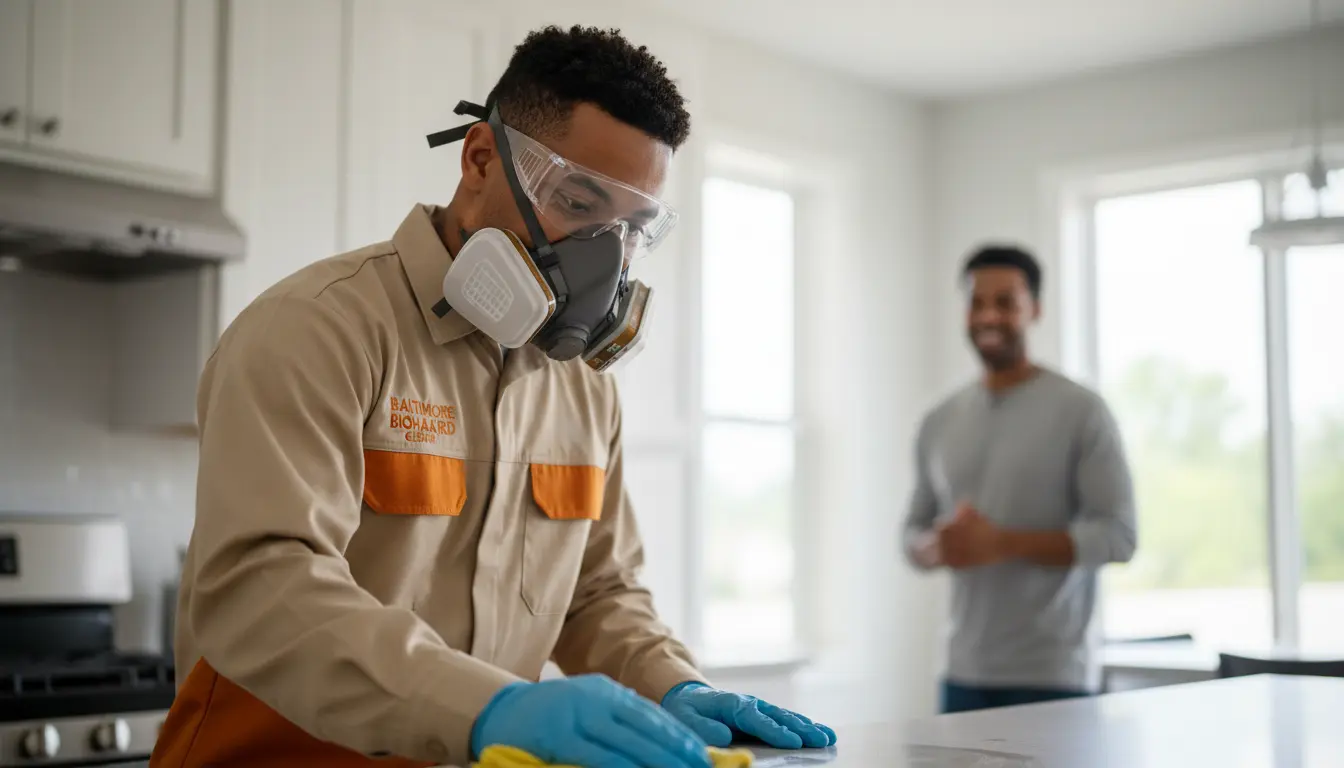
Standard bleach and a mop might be the go-to solution for most household spills, but in the world of biological hazards, that approach is not just insufficient—it is actively dangerous. The common belief that any cleaning agent can neutralize a biohazard overlooks the complex chemistry and physics at play when bloodborne pathogens, bodily fluids, or microbial contaminants are present. In Baltimore, where the dense housing stock of historic rowhomes and the humidity of the Mid-Atlantic create unique challenges for site restoration, the gap between a standard mop and specialized remediation equipment can mean the difference between a safe environment and a long-term health crisis.
This is not about over-engineering a simple task; it is about recognizing that biohazardous materials operate on a microscopic level that household tools cannot address. Without the right equipment, you risk cross-contaminating clean surfaces, aerosolizing dangerous particles, and leaving behind invisible residues that can cause illness months or even years later. Understanding why specialized equipment is necessary for biohazard remediation is the first step toward protecting property value, public health, and the emotional well-being of everyone involved.
Baltimore Biohazard Cleanup approaches every site with the technical rigor of a forensic restoration specialist, using tools and protocols that go far beyond what any general cleaning service can provide. From the initial walkthrough to the final clearance test, every piece of equipment plays a specific role in ensuring that the property is structurally decontaminated, not just visually clean.
The Technical Reality of Pathogen Elimination
When a biological spill occurs, whether from a trauma incident, sewage backup, or unattended death, the immediate threat is not the visible stain but the microorganisms it harbors. Bloodborne pathogens like Hepatitis B, Hepatitis C, and HIV can survive on dry surfaces for days or even weeks. Bacteria such as MRSA and C. diff form resilient spores that resist common disinfectants. Standard household cleaning equipment—rags, spray bottles, and mops—simply cannot deliver the contact time, chemical concentration, or physical force required to break down these microbial communities.
Professional remediation equipment is engineered to address this challenge systematically. Industrial-grade negative air machines, for example, create a pressure differential that prevents airborne contaminants from migrating to unaffected areas of the property. This is particularly critical in Baltimore rowhomes, where shared walls and common ventilation systems can quickly turn a localized incident into a building-wide exposure risk. Without this equipment, you are not cleaning—you are redistributing the hazard.
Another essential tool is the hospital-grade fogger or electrostatic sprayer. Unlike a spray bottle that saturates only the surface it directly hits, an electrostatic sprayer charges disinfectant particles so they wrap around surfaces and reach hidden crevices. According to the IICRC S540 Standard for Trauma and Crime Scene Cleanup, this method achieves a 99.99% reduction in microbial load on complex surfaces, a result that standard wiping cannot replicate.
Step-by-Step Professional Remediation Workflow
Initial Risk Assessment and Containment
Every remediation project begins with a thorough assessment that goes beyond visual inspection. The technician uses a thermal imaging camera to detect moisture pockets that may indicate biological seepage behind walls, as well as an adenosine triphosphate (ATP) meter to measure organic load on surfaces. In Baltimore, where older homes often have porous brick and unsealed mortar, this step is crucial for identifying hidden contamination that would otherwise be missed.
Once the scope is established, the team sets up containment barriers using heavy-gauge polyethylene sheeting and negative air pressure units. This prevents cross-contamination to adjacent rooms and ensures that any disturbed particles are captured by HEPA filtration before the air is exhausted outside.
Physical Removal and Chemical Sanitization
All visible biohazardous material is physically removed using disposable tools—single-use wipers, scoops, and vacuum attachments that are immediately bagged and labeled for regulated medical waste disposal. The team then applies an EPA-registered hospital-grade disinfectant with a dwell time verified by the manufacturer to inactivate specific pathogens. For surfaces that have been deeply saturated, such as unsealed wood or drywall, the material is cut out and replaced rather than cleaned, a practice that prevents future microbial growth.
After the initial sanitization, a second round of ATP testing confirms that the organic load has been reduced to safe levels. If the reading exceeds the threshold, the process is repeated. This loop continues until the site meets the same cleanliness standard required for a hospital operating room.
Final Structural Encapsulation
For properties that have suffered extensive biological damage, the final step involves applying a polymeric sealant to exposed surfaces. This encapsulation layer locks in any residual microscopic contamination and provides a moisture barrier that discourages mold growth. In Baltimore’s humid climate, where relative humidity regularly exceeds 70% during the summer months, this step is especially important for preventing future microbial remediation issues.
Data Comparison: Professional Remediation vs. Standard Cleaning
| Feature / Metric | Professional Biohazard Remediation | Standard Residential Cleaning |
|---|---|---|
| Regulatory Compliance | Full adherence to OSHA 29 CFR 1910.1030, EPA waste disposal regulations, and state medical waste laws | No regulatory framework; generic cleaning solutions only |
| Pathogen Elimination Rate | 99.99% reduction verified by ATP testing and surface swab analysis | Variable; household bleach may achieve ~99% on smooth surfaces but fails on porous materials |
| Structural Assessment | Thermal imaging and moisture mapping to identify hidden contamination | Visual inspection only; no detection of sub-surface seepage |
| Cross-Contamination Prevention | Negative air pressure, HEPA filtration, and physical containment barriers | None; cleaning tools often spread contaminants to adjacent areas |
| Waste Disposal | Regulated medical waste stream with tracked manifest and incineration | Trash bag and standard municipal collection |
Expert Diagnostic Insights from a Certified Specialist
Over years of working on complex sites across Baltimore, several diagnostic patterns have emerged that every property owner should understand. First, hidden biological seepage is far more common than most people assume. In cases of unattended death, for example, bodily fluids can migrate through hardwood floor seams, baseboard gaps, and even into the subfloor. A handheld moisture meter with a deep-penetration probe is the only reliable way to confirm the extent of this migration before it begins to generate odors.
Second, porous materials such as unsealed concrete, unpainted drywall, and natural stone cannot be fully decontaminated by cleaning alone. The microscopic pores trap organic matter, creating a reservoir for bacterial growth that a surface wipe cannot reach. The industry standard is to remove and replace any porous material that has been soaked with biological fluid, a step that is often omitted by general contractors unfamiliar with biohazard protocols.
Third, negative pressure is not optional—it is a critical safety measure. Without it, the air pressure inside the work area remains equal to the surrounding rooms, allowing airborne particles to drift through door gaps, HVAC returns, and even electrical outlets. A single colony-forming unit of a pathogen can cause illness if inhaled by someone with a compromised immune system. In Baltimore’s older buildings, where air sealing is often inconsistent, maintaining a steady negative pressure of 0.02 inches of water column is essential for containment.
Common Mistakes Property Owners Make
One of the most frequent errors is using household bleach on biological matter. While bleach is an effective disinfectant on clean, non-porous surfaces, it is rapidly inactivated by the organic load present in blood, feces, or tissue. The result is a surface that appears clean but still harbors active pathogens. Additionally, bleach can damage porous materials and create toxic fumes when mixed with other chemicals.
Another mistake is waiting for odors to dissipate naturally. The human nose can detect the volatile organic compounds produced by decomposition, but the absence of odor does not mean the absence of danger. Many pathogens produce no detectable smell at all. Relying on sensory cues rather than objective testing often leads to incomplete remediation and future health complaints.
Finally, allowing untrained personnel onto the site—whether concerned family members, well-meaning neighbors, or general contractors—introduces a significant liability. Without proper personal protective equipment (PPE) and training in bloodborne pathogen handling, these individuals risk exposure and can track contaminants to other parts of the building or to their own vehicles and homes.
Understanding Remediation Costs
Pricing for biohazard remediation varies based on the complexity of the situation, but the investment reflects the specialized equipment, rigorous training, and regulatory compliance required.
- Standard site mobilization fee: $350–$750, covering the deployment of containment barriers, negative air machines, and initial assessment tools.
- Hourly remediation rate: $150–$300 per technician, depending on the level of contamination and the number of personnel needed to complete the work within a safe timeframe.
- Specialized disposal costs: $0.50–$2.00 per pound for regulated medical waste, including incineration fees and the tracking manifest required by Maryland law.
Three primary factors drive the final cost. First, the extent of structural material replacement required—such as cutting out saturated drywall or removing contaminated carpet—adds both labor and disposal expenses. Second, the total volume of biohazardous waste directly affects disposal costs, as each pound must be processed through a licensed facility. Third, the need for specialized HVAC decontamination, which involves cleaning or replacing ductwork and installing temporary filtration units, significantly increases both time and material costs.
Safety Standards and Certifications
Professional remediation is governed by a framework of standards that ensure both worker safety and thorough decontamination. The Occupational Safety and Health Administration (OSHA) Bloodborne Pathogens Standard, 29 CFR 1910.1030, requires employers to implement an exposure control plan, provide appropriate PPE, and offer hepatitis B vaccination to at-risk employees. Every technician from Baltimore Biohazard Cleanup carries documentation of this training and is equipped with full-body Tyvek suits, N100 respirators, and puncture-resistant gloves.
The IICRC S540 Standard for Trauma and Crime Scene Cleanup provides the procedural benchmark for the industry. It covers everything from initial site assessment to final clearance testing, including specific protocols for blood, bodily fluids, and tissue removal. Adherence to this standard is not just a best practice—it is a legal and ethical obligation that protects property owners from liability if future health issues arise.
Additionally, all biohazardous waste must be transported and disposed of by a permitted medical waste hauler, with a chain-of-custody document that tracks the material from the site to the incinerator. This process is regulated by the Maryland Department of the Environment and requires detailed record-keeping that standard janitorial services do not provide.
Frequently Asked Questions About Biohazard Remediation
Can I clean a blood spill with household bleach?
Household bleach is not reliable for cleaning blood spills because the organic material in blood rapidly neutralizes the free chlorine that makes bleach effective. In laboratory tests, a 10% bleach solution must contact a clean surface for at least 10 minutes to achieve a 99.9% reduction in Hepatitis B. When applied to a blood spill, the organic load depletes the chlorine before it can inactivate the virus. Professional remediation uses EPA-registered hospital disinfectants that are formulated to maintain efficacy in the presence of organic soil, and these are applied with electrostatic sprayers that ensure uniform coverage.
How long does a full biohazard remediation take?
The timeline depends on the severity of the contamination and the size of the affected area. A small trauma scene in a single room can typically be remediated within four to six hours, including setup, cleaning, verification testing, and waste packaging. A larger site involving multiple rooms, sewage backup, or decomposition fluid migration can take one to three days. Factors that extend the timeline include the need for structural material removal, the complexity of the HVAC system, and the time required for ATP testing between cleaning rounds. Baltimore Biohazard Cleanup provides a detailed timeline during the initial assessment and works efficiently to restore the property as quickly as safety allows.
What happens if I try to clean a hoarding site myself?
Hoarding sites often contain a combination of biological hazards—feces, urine, mold, insect infestations, and possibly blood or decomposition fluids. Attempting to clean such a site without proper PPE and containment equipment can lead to respiratory infections, skin irritation, and exposure to bloodborne pathogens. Additionally, improper disposal of contaminated materials can result in fines from the Maryland Department of the Environment. Professional teams use negative air machines, HEPA vacuums, and regulated waste bags to contain and remove hazards safely, while also coordinating with local waste authorities for proper disposal.
Is it safe to stay in the home during remediation?
Occupants should not remain in the affected area during active remediation. The use of negative air machines, chemical disinfectants, and physical agitation of contaminated surfaces can release airborne pathogens and chemical vapors. For trauma scenes or sites with sewage contamination, the entire affected zone should be evacuated until clearance testing confirms that the area is safe. In many cases, Baltimore Biohazard Cleanup coordinates with local hotels or temporary housing to minimize disruption while ensuring the safety of all occupants.
Professional Biohazard Remediation in Baltimore
Restoring a property after a biological incident is not a task that can be handled with household supplies and good intentions. The specialized equipment used in professional remediation—from negative air machines to ATP meters—exists because the science of pathogen elimination demands it. In Baltimore, where the climate, building stock, and regulatory environment add layers of complexity, relying on trained specialists is the only way to achieve a truly safe and compliant outcome.
Baltimore Biohazard Cleanup brings years of field experience, IICRC certification, and a deep understanding of local conditions to every project. Whether the situation involves a trauma scene, a sewage backup, or an unattended death, the team approaches each site with the technical discipline required to protect health, property, and peace of mind. When you choose professionals who understand why specialized equipment is necessary for biohazard remediation, you are investing in a thorough, lasting solution—not just a temporary fix.