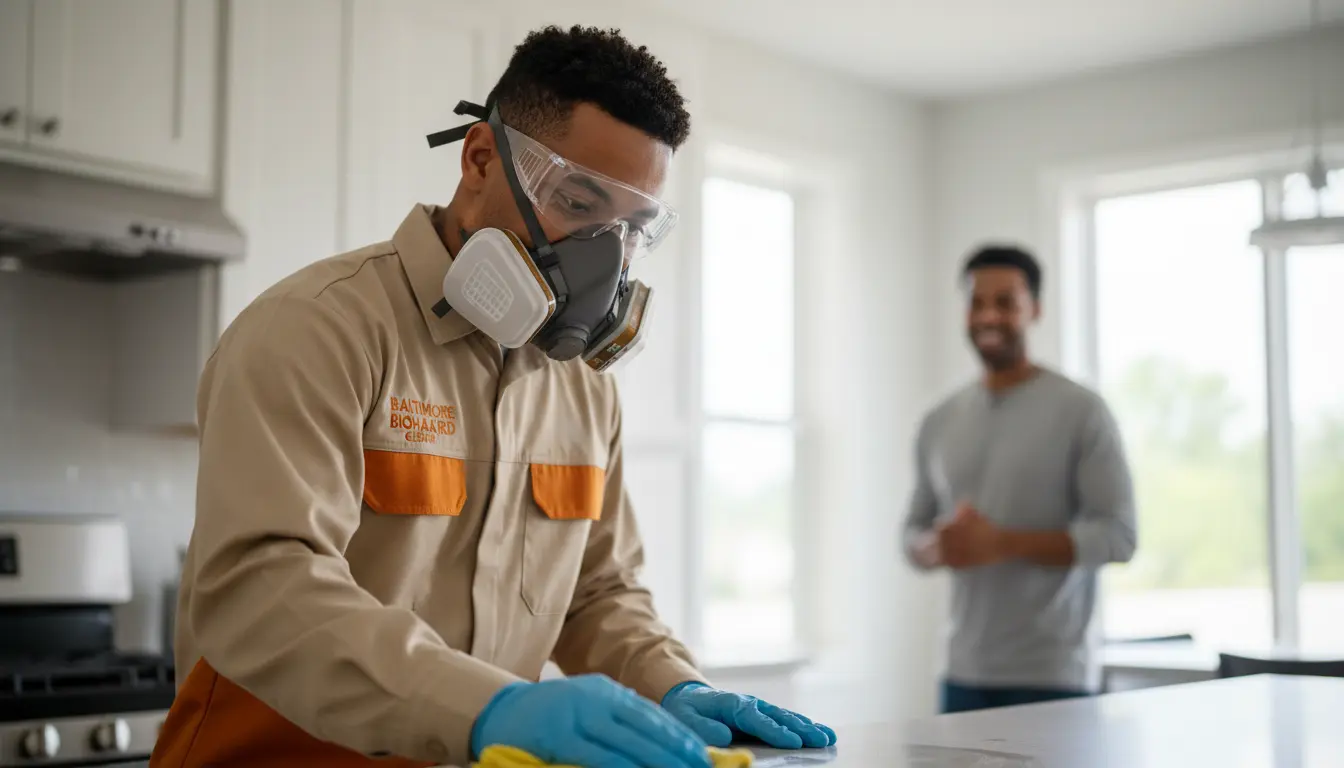
According to data from the Baltimore City Health Department, over 1,200 biohazard-related incidents require professional remediation in the city each year, yet fewer than 30% of affected properties are restored within the critical 48-hour window that prevents permanent structural damage. This statistic underscores a harsh reality: when a traumatic event, chemical spill, or infectious waste incident occurs inside a Baltimore home or business, time is not just a convenience—it is a decisive factor in whether the building can be fully salvaged. The combination of Mid-Atlantic humidity, aging rowhome construction, and dense urban layouts means that biological materials, bloodborne pathogens, and odor-causing microbes can migrate rapidly through porous surfaces and shared walls, turning a contained problem into a citywide health hazard.
Professional biohazard remediation specialists are trained to intervene before that happens. Their work goes far beyond standard cleaning; it involves forensic restoration, microbial remediation, and structural decontamination that meets or exceeds IICRC S540 standards. For property owners in Baltimore, understanding how these experts restore affected properties is essential not only for peace of mind but also for protecting the long-term value of their real estate. In this article, we will walk through the technical process, the safety protocols, and the local nuances that make professional biohazard cleanup a non-negotiable service in the Baltimore metropolitan area.
The Technical Process of Professional Biohazard Remediation
Initial Risk Assessment and Site Containment
Every remediation begins with a multi-point risk assessment that evaluates the type of biohazard present—whether it is blood, bodily fluids, chemical waste, or hoarding debris—and the extent of contamination. Technicians use moisture meters, thermal imaging cameras, and adenosine triphosphate (ATP) swab tests to map hidden contamination zones. In Baltimore’s historic rowhomes, where balloon framing and shared brick walls are common, the assessment must also check for seepage into adjacent units. Once the scope is defined, the team establishes negative air pressure using industrial-grade negative air machines equipped with HEPA filtration. This prevents airborne pathogens from traveling through HVAC systems or open doorways, a critical step in cross-contamination prevention.
Personal Protective Equipment and Decontamination Protocol
Before any physical removal begins, the crew dons full personal protective equipment: Tyvek suits, N100 respirators, face shields, and chemical-resistant gloves. This is not optional—it is mandated by OSHA’s Bloodborne Pathogens Standard (29 CFR 1910.1030) and is essential for protecting workers from hepatitis B, HIV, and other infectious agents. The PPE protocol is double-layered in areas with high fluid saturation, such as trauma scenes or hoarding sites with biohazard exposure. After the protective gear is verified, the team proceeds to remove all visible biological material using specialized enzyme treatments that break down organic matter at the molecular level, rather than just bleaching the surface. This step is particularly important in Baltimore’s humid climate, where decomposition accelerates and odors can become embedded in plaster and lath walls.
Structural Decontamination and ATP Testing
Once the gross contamination is removed, the focus shifts to structural decontamination. Technicians apply hospital-grade disinfectants—often quaternary ammonium compounds or chlorine dioxide solutions—using electrostatic sprayers that ensure every nook and cranny is coated. After a prescribed dwell time, the surface is rinsed and dried. Then comes the verification step: ATP fluorescence testing. A handheld luminometer measures the relative light units (RLUs) on a swabbed surface. If the RLU reading exceeds the industry threshold (typically below 10 RLU for medical-grade cleanliness), the area is re-treated. This scientific approach ensures that pathogens are not just visually gone but biologically eliminated. In Baltimore, where older properties often have uneven surfaces and porous materials like unsealed brick, achieving that threshold may require multiple rounds of treatment and even the replacement of drywall, insulation, or flooring.
Professional Remediation vs. Standard Janitorial Cleaning: A Data Comparison
| Feature/Metric | Professional Biohazard Remediation | Standard Residential Cleaning |
|---|---|---|
| Regulatory Compliance | OSHA 29 CFR 1910.1030, EPA waste disposal, IICRC S540 | No specific biohazard regulations |
| Pathogen Elimination | ATP testing to <10 RLU; hospital-grade disinfectants | Household bleach or general cleaners (not validated) |
| Structural Assessment | Moisture mapping, thermal imaging, hidden contamination probes | Visual inspection only |
| Waste Disposal | Licensed medical waste transporter, incineration or autoclave | Standard trash collection (illegal for biohazard) |
| Odor Removal | Ozone treatment, hydroxyl generators, enzyme odor neutralizers | Air fresheners or slight ventilation |
| Insurance Documentation | Detailed chain-of-custody logs, photos, lab reports | Receipt of cleaning service only |
Source: IICRC S540 Trauma and Crime Scene Cleanup Standard
Expert Insights: Advanced Diagnostic Tips for Property Owners
Detecting Hidden Biological Seepage
One of the most overlooked aspects of biohazard remediation is the lateral migration of fluids. In Baltimore rowhomes, blood or bodily fluids can seep through floorboards and travel along joists, saturating insulation in the crawlspace or basement. Professional technicians use borescopes and moisture meters to detect this hidden seepage. If left untreated, it can lead to microbial remediation issues that require full structural encapsulation. Property owners should never assume that a dried stain means the area is safe; always request ATP testing before reconstruction begins.
Why Porous Materials Require Replacement, Not Cleaning
Many homeowners believe that a thorough scrubbing with bleach can sanitize a porous surface like unsealed concrete, brick, or old wood. In reality, bleach does not penetrate porous materials; it merely kills surface bacteria, leaving the interior matrix contaminated. Over time, moisture and heat can draw those pathogens back to the surface, causing recurrent odors and health risks. The IICRC standard dictates that any porous material saturated with biohazardous fluid must be removed and replaced. In Baltimore’s historic homes, this often means cutting out sections of lath and plaster or replacing wide-plank flooring.
The Importance of Negative Pressure in Multi-Unit Buildings
When a biohazard event occurs in a rowhome or apartment building, the risk of cross-contamination prevention extends beyond the affected unit. Technicians set up negative air pressure barriers in the hallway and stairwell to ensure that no airborne particles drift into neighboring units. This is especially critical in Baltimore’s attached dwellings, where shared walls and common HVAC systems can quickly turn a single incident into a building-wide problem. Property owners should insist on seeing a pressure differential gauge reading before work begins.
Common Mistakes Property Owners Make After a Biohazard Incident
One of the most dangerous mistakes is attempting to clean up using household bleach. While bleach is a disinfectant, it is not effective against all bloodborne pathogens, and it can produce toxic fumes when mixed with other cleaning agents. In a real Baltimore case, a homeowner used bleach on a large blood spill, sealing the surface but failing to decontaminate the porous grout underneath. Months later, the odor returned, and the grout had to be removed entirely, costing thousands more than professional remediation would have initially.
Another frequent error is waiting for odor to dissipate naturally. Biological decomposition releases volatile organic compounds that can penetrate deep into building materials. By the time an odor is noticeable, the contamination has often spread to the subfloor and wall cavities. Professional forensic restoration teams use ozone generators and hydroxyl machines to oxidize odor molecules at the source, a process that cannot be replicated by simply opening windows.
Finally, allowing untrained personnel—friends, family, or even general contractors—into the site is a serious liability. Without proper training in bloodborne pathogens and the use of PPE, these individuals risk exposure to hepatitis, HIV, and other diseases. Moreover, they may inadvertently spread contamination to other areas of the property. Always secure the site and contact a certified biohazard cleanup service immediately after an incident.
Pricing Structure for Biohazard Remediation in Baltimore
The cost of professional biohazard cleanup varies based on several factors, but understanding the typical pricing components can help property owners plan accordingly:
- Standard site mobilization fee: Most companies charge a flat fee for the initial response, which includes the risk assessment, setup of containment barriers, and PPE. This typically ranges from $350 to $750 depending on the time of day and urgency.
- Hourly remediation rates: Once the scope is defined, work is billed at an hourly rate of $150 to $250 per technician. A typical trauma scene may require 4 to 8 hours of labor, while a hoarding cleanup can take 20 to 40 hours.
- Specialized disposal of biohazardous waste: Medical waste must be transported by a licensed carrier and disposed of through incineration or autoclaving. Disposal fees range from $50 to $200 per 55-gallon drum, and the number of drums depends on the volume of contaminated materials.
Three key factors that influence the final price are the extent of structural material replacement (e.g., removing drywall, flooring, and insulation), the total volume of biohazardous waste, and the necessity for specialized HVAC decontamination. In Baltimore, homes with forced-air systems often require duct cleaning and disinfection if the contamination reached the vents, adding $500 to $1,500 to the total.
Safety Standards and Certifications That Protect You
Professional biohazard remediation companies in Baltimore adhere to strict safety standards that are not optional. The most important is OSHA’s Bloodborne Pathogens Standard (29 CFR 1910.1030), which mandates a written exposure control plan, proper use of PPE, and annual training for all employees. Additionally, the IICRC S540 standard for trauma and crime scene cleanup provides a framework for the entire remediation process, from initial assessment to final verification. Companies that are IICRC certified demonstrate a commitment to ongoing education and best practices.
On the waste disposal side, the Environmental Protection Agency (EPA) and the Maryland Department of the Environment require that all biohazardous waste be transported by a registered medical waste hauler and disposed of at an approved facility. Using a professional service ensures that your property complies with these regulations, protecting you from fines and legal liability. For businesses in Baltimore, especially those in healthcare, hospitality, or food service, compliance with Maryland biohazard regulations for businesses is critical to maintaining operating licenses.
Frequently Asked Questions About Biohazard Remediation
What is the difference between biohazard cleanup and ordinary cleaning?
Ordinary cleaning focuses on removing visible dirt and general germs. Biohazard cleanup, by contrast, targets bloodborne pathogens, chemical hazards, and infectious materials that pose serious health risks. The process involves structural decontamination, ATP testing, and disposal of regulated medical waste. Ordinary cleaning lacks the training, equipment, and regulatory compliance required for biohazard remediation.
How long does a professional biohazard cleanup take?
The duration depends on the severity of the contamination. A small trauma scene may be completed in a few hours, while a hoarding cleanup or a property with extensive biological seepage can take several days. The initial assessment, containment setup, and final ATP verification are non-negotiable steps that add time but ensure thoroughness. In Baltimore, where humidity can slow drying times, the process may take longer than in arid climates.
Is it safe to stay in the home during cleanup?
In most cases, it is not safe. The use of negative air machines, chemical disinfectants, and the potential for airborne pathogens mean that occupants should relocate until the area is declared biologically safe. Professional technicians will advise on the safest course of action, and many companies offer temporary relocation assistance as part of their service.
What should I do immediately after a biohazard incident?
Evacuate the area and do not allow anyone else to enter. Do not attempt to clean up or disturb the scene. Contact a certified biohazard remediation company immediately. If there is a risk of fire or chemical exposure, call 911 first. Then, secure the property to prevent unauthorized access. For immediate assistance, 24/7 emergency biohazard cleanup services in Baltimore are available to respond within 60 minutes.
Does homeowners insurance cover biohazard cleanup?
Many homeowners insurance policies cover biohazard remediation if it results from a covered peril, such as a burglary, accident, or sudden illness. It is important to review your policy and contact your agent. The cleanup company can provide detailed documentation and chain-of-custody logs that insurance companies require for reimbursement. In Baltimore, working with a provider experienced in insurance claims can streamline the process.
Professional Biohazard Remediation in Baltimore
Restoring a property affected by biohazards is not a task for amateurs. It requires technical expertise, specialized equipment, and a deep understanding of local regulations and building conditions. In Baltimore, where historic architecture, dense neighborhoods, and a humid climate compound the challenges, relying on a certified professional is the only way to ensure that a property is not only visually clean but also biologically safe and structurally sound. From the initial ATP testing to the final structural encapsulation, every step is designed to protect both the occupants and the long-term value of the building.
Baltimore Biohazard Cleanup is the leading provider of forensic restoration, microbial remediation, and biohazard elimination in the region. Our team holds IICRC certifications, OSHA compliance, and years of hands-on experience with Baltimore’s unique properties. We combine technical rigor with compassionate service, ensuring that property owners feel supported during a difficult time. If you are facing a biohazard incident, do not wait. Contact us today to schedule a discreet, thorough assessment and begin the process of restoring your property with confidence.