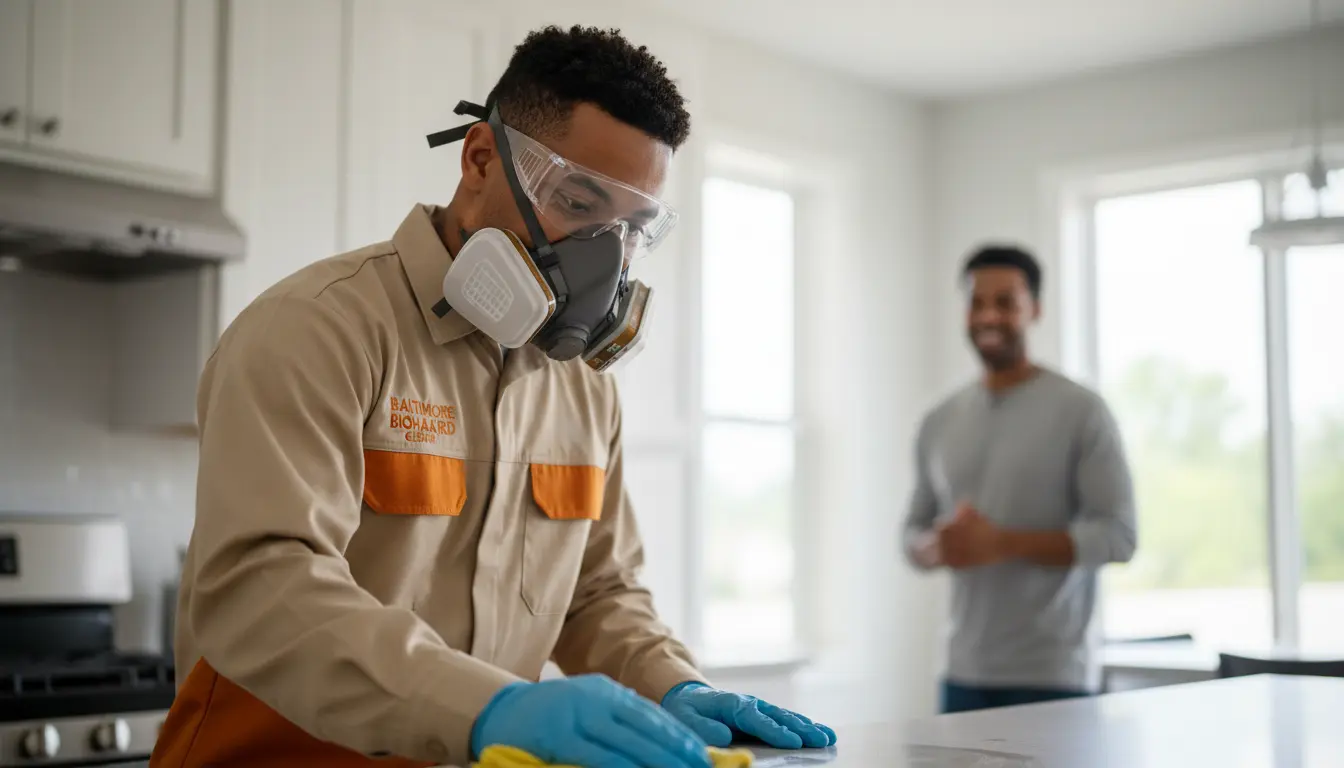
The technician knelt in the narrow hallway of a Baltimore rowhome, the air thick with the unmistakable scent of biological decay. He had been on site for just over an hour, and the initial assessment already revealed that the unattended death had occurred nearly a week prior. The summer humidity had accelerated the decomposition process, forcing the biohazard team to work quickly and methodically to prevent cross-contamination and structural damage. This moment—part of a routine call for Baltimore Biohazard Cleanup—raises a question that many property owners, facility managers, and family members ask: How long does a typical biohazard cleanup project take?
Understanding the timeline of a professional biohazard remediation project is critical for property owners in Baltimore, where the city’s dense urban layout, older housing stock, and Mid-Atlantic climate create unique challenges. Whether you are dealing with a trauma scene, a hoarding situation, or a chemical spill, the duration of the cleanup depends on a complex interplay of factors including the type of biohazard, the extent of contamination, and the specific conditions of the property. At Baltimore Biohazard Cleanup, we follow rigorous protocols based on OSHA, EPA, and IICRC S540 standards to ensure that every site is restored safely, thoroughly, and in compliance with local regulations. In this article, we will break down the typical timeline for biohazard cleanup projects, explain the factors that influence duration, and provide expert insights to help you navigate this challenging process.
The Initial Response: How Quickly Can a Biohazard Cleanup Team Arrive?
Time is a critical factor in biohazard remediation. The sooner a professional team arrives on site, the lower the risk of further contamination, odor migration, and structural damage. For emergency situations such as unattended deaths, violent crimes, or industrial accidents, Baltimore Biohazard Cleanup offers 24/7 emergency response. Our team can typically be on site within 60 to 90 minutes of the initial call, depending on traffic and location within the Baltimore metropolitan area. This rapid response is essential because biological materials—blood, bodily fluids, and tissue—begin to break down immediately, releasing pathogens and volatile organic compounds that can penetrate porous surfaces like drywall, hardwood flooring, and insulation.
Once the team arrives, the first hour is dedicated to a comprehensive risk assessment. This includes evaluating the scope of contamination, identifying potential hazards such as sharps or chemical residues, and establishing containment zones. The technician’s initial observations, like the one described earlier, set the stage for the entire project timeline. For example, if the site involves a large volume of blood or decomposition fluids, the cleanup will require more extensive removal and decontamination. Similarly, if the property is a historic rowhome with shared walls, the team must take extra precautions to prevent cross-contamination into adjacent units. This initial assessment typically takes 30 to 45 minutes, after which the team can provide a realistic estimate of the project duration.
Step-by-Step Breakdown of the Biohazard Remediation Process
Every biohazard cleanup project follows a structured workflow designed to ensure safety, thoroughness, and compliance with industry standards. The total duration of a project can range from a few hours for a small, contained incident to several days for a large-scale trauma scene or hoarding cleanup. Below is a detailed breakdown of the typical steps involved in a professional biohazard remediation project, along with the time each step generally requires.
1. Site Assessment and Containment (1–2 Hours)
After the initial walkthrough, the team sets up containment barriers using plastic sheeting and negative air pressure machines. This step is crucial to prevent airborne contaminants from spreading to unaffected areas of the property. In Baltimore’s humid climate, negative air pressure also helps control moisture levels, which can otherwise accelerate microbial growth. The team establishes a decontamination corridor for workers to enter and exit the contained area, and all personnel must don appropriate personal protective equipment (PPE), including Tyvek suits, respirators, and gloves. This phase typically takes one to two hours, depending on the size of the property and the complexity of the containment setup.
2. Physical Removal of Biohazardous Materials (2–8 Hours)
This is the most labor-intensive part of the process. The team removes all contaminated materials, including blood-soaked carpets, padding, drywall, insulation, and any porous items that cannot be effectively decontaminated. In cases of decomposition, the team may also need to remove subflooring and treat the underlying structure. The time required for this step depends on the volume of biohazardous waste and the accessibility of the contaminated areas. For example, a single room with a small blood spill may take only two hours, while a multi-room trauma scene or a hoarding situation with years of accumulated waste can take eight hours or more. The team uses specialized tools such as hospital-grade disinfectants, enzyme treatments, and forensic cleaning agents to break down biological matter at the molecular level.
3. Chemical Decontamination and ATP Testing (2–4 Hours)
After all visible biohazards are removed, the team applies EPA-registered disinfectants to all surfaces, including walls, ceilings, and floors. The disinfectants are left to dwell for a specific period—typically 10 to 15 minutes—to ensure pathogen inactivation. Following this, the team uses adenosine triphosphate (ATP) testing to verify that the site is free of biological contamination. ATP testing measures the presence of organic material on surfaces; a reading below a certain threshold indicates that the area is safe for reoccupation. This step takes two to four hours for a typical room, but larger areas may require multiple rounds of disinfection and testing.
4. Structural Decontamination and Odor Removal (1–3 Days)
In cases where odors have penetrated deep into building materials, the team may need to use ozone generators, hydroxyl machines, or thermal fogging to neutralize volatile organic compounds. This is especially common in Baltimore’s older rowhomes, where porous materials like plaster and lathe can trap odors for weeks. The deodorization process can take anywhere from one to three days, depending on the severity of the odor and the size of the property. The team also performs a final visual inspection and may recommend additional repairs, such as replacing insulation or treating HVAC systems to prevent future contamination. This phase is critical for ensuring that the property is not only clean but also safe for occupants.
5. Waste Disposal and Final Documentation (1–2 Hours)
All biohazardous waste is placed in specialized red bags and containers, labeled according to regulatory requirements, and transported to a licensed medical waste disposal facility. The team also prepares a detailed report of the remediation process, including ATP test results, photographs, and a chain of custody for the waste. This documentation is essential for insurance claims and legal compliance. The final step typically takes one to two hours, but the overall timeline for a typical project can range from a single day to a week or more, depending on the factors discussed below.
Factors That Influence the Duration of a Biohazard Cleanup Project
No two biohazard cleanup projects are exactly the same, and several variables can significantly affect how long the job takes. Understanding these factors can help property owners set realistic expectations and plan accordingly. Below are the most common factors that influence project duration in the Baltimore area.
Type and Severity of Biohazard
Unattended death scenes, where decomposition has occurred over several days or weeks, require more extensive remediation than a fresh blood spill. The enzymes and fluids released during decomposition can soak into subflooring, drywall, and even structural framing, necessitating the removal and replacement of these materials. In contrast, a small biohazard incident such as a needlestick or a minor blood spill may be resolved in a few hours. Similarly, hoarding cleanup projects often involve the removal of large quantities of waste, contaminated belongings, and potential pest infestations, which can extend the timeline to several days or even weeks.
Property Size and Layout
A small apartment in a Baltimore high-rise will require less time than a multi-story rowhome with multiple affected rooms. The layout of the property also matters: older rowhomes often have shared walls and narrow hallways that make it difficult to move equipment and waste, slowing down the process. Additionally, if the contamination has spread to multiple floors or into the HVAC system, the cleanup will take longer and may require coordination with other contractors, such as HVAC specialists or structural engineers.
Environmental Conditions: Baltimore’s Climate
Baltimore’s humid subtropical climate plays a significant role in biohazard remediation. High humidity accelerates microbial growth and decomposition, meaning that a site that has been exposed to moisture for several days may require more intensive treatment. Conversely, during the winter months, lower humidity can slow down the decomposition process, but it may also cause odors to become trapped indoors. The team must adjust their decontamination protocols accordingly, which can affect the overall timeline. For example, if mold has begun to grow on contaminated surfaces, the team will need to perform additional microbial remediation, adding several hours to the project.
Regulatory Requirements and Insurance
In Maryland, biohazard cleanup must comply with state and local regulations, including the Maryland Department of the Environment’s waste disposal rules and OSHA’s bloodborne pathogens standard. Properties in Baltimore City may also be subject to specific health department regulations, especially if the incident involves a public health risk. The cleanup team must document every step of the process to satisfy insurance requirements, which can add administrative time. In some cases, insurance adjusters may need to inspect the site before work begins, causing a delay of a day or two.
Data Comparison: Professional Biohazard Remediation vs. Standard Janitorial Cleaning
It is important to understand that biohazard remediation is fundamentally different from standard cleaning. The table below highlights key differences that affect both the timeline and the effectiveness of the process.
| Feature/Metric | Professional Biohazard Remediation | Standard Residential Cleaning |
|---|---|---|
| Regulatory Compliance | Follows OSHA, EPA, IICRC S540, and Maryland state regulations | No regulatory oversight for biohazards |
| Pathogen Elimination | Uses EPA-registered disinfectants and ATP testing to verify kill rates | Household cleaners may not kill bloodborne pathogens |
| Structural Assessment | Identifies hidden contamination in porous materials; recommends removal of affected drywall, insulation, etc. | Only cleans visible surfaces; does not address underlying contamination |
| Odor Removal | Employs ozone generators, hydroxyl machines, and thermal fogging | Air fresheners or open windows may mask odors but not eliminate them |
| Waste Disposal | Transports to licensed medical waste facilities; provides chain-of-custody documentation | Disposal in regular trash is illegal and dangerous |
| Time Required | 1–5 days depending on scope | 1–4 hours for superficial cleaning |
Source: IICRC S540 Trauma and Crime Scene Cleanup Standard
Expert Insights: Advanced Diagnostic Tips for Biohazard Remediation
As a certified senior biohazard remediation specialist, I have seen many property owners make critical mistakes that prolong the cleanup process and increase costs. Here are three advanced diagnostic tips that help our team at Baltimore Biohazard Cleanup work efficiently and effectively.
1. Detecting Hidden Biological Seepage
One of the most common challenges in biohazard remediation is identifying biological fluids that have seeped into subflooring or behind walls. A simple visual inspection is not enough. We use moisture meters and thermal imaging cameras to detect areas of high moisture content that may indicate hidden contamination. In Baltimore rowhomes, where floors are often built with tongue-and-groove hardwood, biological fluids can travel along the gaps between planks, contaminating a larger area than what is visible. By using advanced diagnostic tools, we can pinpoint the exact extent of the contamination and avoid unnecessary removal of unaffected materials, saving time and money.
2. Why Porous Materials Require Replacement, Not Cleaning
Many property owners assume that a strong disinfectant can clean any surface. However, porous materials such as drywall, carpet, padding, and insulation cannot be fully decontaminated because pathogens can penetrate deep into the material. Even after thorough cleaning, the risk of regrowth and odor remains. The IICRC S540 standard explicitly states that any porous material that has been contaminated with blood or bodily fluids must be removed and replaced. Attempting to clean these materials only prolongs the project and increases the risk of future health problems. Our team always performs a thorough assessment and, if necessary, recommends removal to ensure the site is safe for reoccupation.
3. The Importance of Negative Pressure to Prevent Cross-Contamination
During a biohazard cleanup, airborne particles can travel through HVAC systems and open doors, spreading contamination to other parts of the property. To prevent this, we set up negative air pressure within the containment zone using industrial-grade HEPA-filtered air scrubbers. This creates a vacuum effect that ensures all air from the contaminated area is filtered before being released into the environment. In Baltimore’s dense urban neighborhoods, where multi-unit buildings are common, this is especially important to protect neighboring residents. Without negative pressure, the cleanup timeline can be extended because the team must also decontaminate unaffected areas that have been inadvertently exposed.
Common Mistakes Property Owners Make
Even with the best intentions, property owners often make mistakes that complicate the biohazard cleanup process. Here are three of the most common errors we see in Baltimore.
Using Household Bleach on Biological Matter
Bleach is a common household cleaner, but it is not effective for biohazard remediation. Bleach can actually fix proteins to surfaces, making them harder to remove and potentially leaving behind pathogens. Moreover, bleach can react with bodily fluids to create toxic chlorine gas. Professional biohazard cleaners use EPA-registered hospital-grade disinfectants that are specifically formulated to break down organic matter and kill bloodborne pathogens. Using household bleach can delay the cleanup because the team must first neutralize the bleach residue before applying proper disinfectants, adding hours to the project.
Waiting for Odor to Dissipate Naturally
After a traumatic event, many property owners assume that airing out the property will eliminate the smell. This is a dangerous misconception. The odor is caused by volatile organic compounds released during decomposition, which can penetrate porous materials and persist for weeks or months. Waiting for the odor to disappear naturally allows the contamination to spread further and can cause health problems for anyone entering the property. Professional odor removal using ozone generators or hydroxyl machines is essential, and the longer you wait, the more extensive the remediation becomes.
Allowing Untrained Personnel into the Site
Family members, friends, or even well-meaning neighbors may want to help clean up after a trauma. However, entering a biohazard site without proper PPE and training exposes them to bloodborne pathogens, airborne pathogens, and chemical hazards. In Baltimore, we have seen cases where well-intentioned individuals became ill after attempting to clean up a small spill. The cost of medical treatment and potential lawsuits can far exceed the cost of professional remediation. Additionally, untrained personnel may inadvertently spread contaminants, increasing the scope of the cleanup and extending the timeline by days.
Pricing Factors for Biohazard Cleanup in Baltimore
While the primary focus of this article is timelines, it is important to understand how pricing relates to the duration of a project. The cost of biohazard cleanup is influenced by the same factors that affect the timeline, and our team at Baltimore Biohazard Cleanup provides transparent pricing based on a thorough assessment. Below are the key pricing factors, presented as bullet points for clarity.
- Site mobilization fee: A standard fee covers the arrival of the team, setup of containment, and initial assessment. This fee is typically between $200 and $500, depending on the distance and time of day (emergency calls after hours may incur a surcharge).
- Hourly remediation rates: Most biohazard cleanup companies charge an hourly rate for the actual work, which ranges from $150 to $300 per hour per technician. The number of technicians needed depends on the size of the job. A typical project may require two to four technicians, and the total hours can range from 4 to 40 or more.
- Specialized disposal fees: Biohazardous waste must be disposed of at licensed medical waste facilities. Disposal costs are typically itemized and can range from $50 to $200 per container, depending on the volume and type of waste. Larger projects with multiple containers will have higher disposal fees.
- Structural material replacement: If porous materials like drywall, flooring, or insulation need to be removed and replaced, the cost of materials and labor for reconstruction will be added. This can range from a few hundred dollars for a small patch to several thousand dollars for a full room restoration.
- Additional services: If the project requires HVAC decontamination, microbial remediation, or specialized odor removal, these services are billed separately. For example, ozone treatment for a single room may cost $200 to $400, while whole-house thermal fogging may cost $500 to $1,000.
It is important to note that attempting to save money by using a standard cleaning service or DIY methods often leads to higher costs in the long run due to incomplete remediation, health risks, and property damage. Professional biohazard cleanup is an investment in safety and peace of mind.
Safety and Standards: Why Compliance Matters
Biohazard cleanup is not a task that can be performed safely without rigorous adherence to industry standards. At Baltimore Biohazard Cleanup, we are certified in the IICRC S540 standard for trauma and crime scene cleanup, and all our technicians undergo annual training on OSHA’s Bloodborne Pathogens Standard (29 CFR 1910.1030). This training covers proper PPE use, handling of sharps, decontamination procedures, and emergency response protocols. Compliance with these standards is not just a matter of regulation—it is essential for protecting the health of our team, the property owners, and future occupants.
One of the most critical aspects of safety is the use of authorized waste management services. In Maryland, biohazardous waste must be transported and disposed of in accordance with state and federal laws. Improper disposal can result in fines, legal liability, and public health risks. Our team provides a complete chain of custody for all waste, ensuring that every step is documented and traceable. Additionally, we follow strict protocols for disinfection, including the use of ATP testing to verify that surfaces are free of organic material. This level of rigor is what sets professional biohazard remediation apart from standard cleaning and ensures that the property is truly safe for reoccupation.
Frequently Asked Questions About Biohazard Cleanup Timelines
How long does it take to clean up a typical unattended death scene?
The duration of an unattended death cleanup depends on the degree of decomposition, the size of the affected area, and the type of surfaces involved. In most cases, a single room can be fully remediated in one to two days. However, if the decomposition has been extensive and the fluids have penetrated subflooring or walls, the project may take three to five days. The team must remove all contaminated materials, disinfect the area, and perform odor removal. Factors such as the time of year and the humidity level in Baltimore can also affect the timeline. An initial assessment by a professional team like Baltimore Biohazard Cleanup will provide a more accurate estimate.
Can a biohazard cleanup be completed in a single day?
Yes, but only for very small, contained incidents. For example, a minor blood spill on a non-porous surface, such as a tile floor, can be cleaned and disinfected in a few hours. However, most biohazard scenarios—including trauma scenes, hoarding situations, and chemical spills—require more than one day because of the need for structural removal, multiple rounds of disinfection, and odor abatement. Attempting to rush the process can lead to incomplete remediation and health risks. Our team always prioritizes thoroughness over speed to ensure the property is safe.
What is the most time-consuming part of the biohazard cleanup process?
The most time-consuming part is typically the physical removal of contaminated materials, especially if the contamination has spread to porous materials like drywall, insulation, or carpet padding. This step requires careful cutting, bagging, and disposal of waste, which can take several hours to a full day. Additionally, odor removal using ozone generators or hydroxyl machines can take 24 to 48 hours of continuous operation, depending on the severity of the odor. In some cases, the team may need to return the following day to complete the final inspection and ATP testing.
How does the cleanup timeline differ for a hoarding situation versus a trauma scene?
Hoarding cleanup projects often take longer than trauma scenes because they involve the removal of large quantities of accumulated waste, personal belongings, and sometimes structural debris. A hoarding situation may also require coordination with social services, pest control, and waste disposal companies. Depending on the size of the property and the severity of the hoarding, the cleanup can take anywhere from several days to a few weeks. In contrast, a trauma scene is typically confined to a specific area and can be resolved in one to three days, provided that the contamination has not spread extensively. Both types of projects require a compassionate, professional approach to handle the sensitive nature of the work.
Will the cleanup timeline be affected by weather or seasonal conditions?
Yes, particularly in Baltimore’s humid climate. High humidity during the summer months can accelerate bacterial growth and decomposition, making the cleanup more intensive. Conversely, cold weather can slow down the decomposition process but may cause odors to become trapped indoors. Rain or snow can also affect the team’s ability to set up containment outdoors or transport waste safely. Our team adjusts our protocols based on weather conditions, and we always communicate any potential delays to the property owner. For example, if a thunderstorm is forecast, we may need to postpone the final ozone treatment to avoid moisture damage.
Professional Biohazard Remediation in Baltimore
When you are faced with the aftermath of a traumatic event, the last thing you need is uncertainty about the cleanup process. The question of how long a typical biohazard cleanup project takes is not a simple one, but with the right team, you can expect a clear, transparent timeline based on a thorough assessment of your property. At Baltimore Biohazard Cleanup, we combine technical expertise, compassionate service, and a deep understanding of local conditions to restore your property safely and efficiently. Whether you are dealing with an unattended death, a violent crime, a hoarding situation, or a chemical spill, our certified technicians are available 24/7 to provide the professional remediation you need.
We invite you to contact us for a confidential consultation. Our team will walk you through the process, answer your questions, and provide a detailed estimate based on the specific circumstances of your property. With our commitment to the highest standards of safety and compliance, you can trust that your property will be restored to a safe, habitable condition. Let us help you take the first step toward recovery.