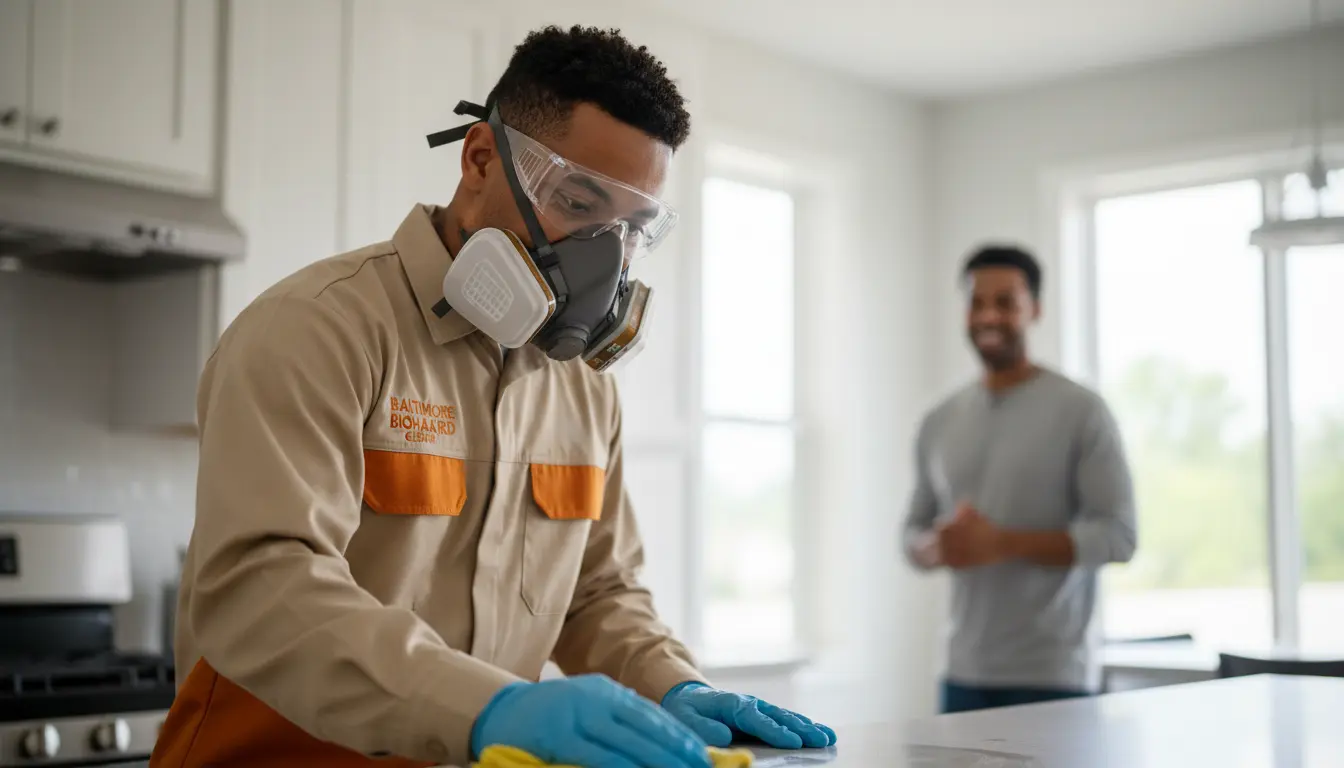
The first thing you notice is the silence. Then the smell hits you—a heavy, sweet-rotten wave that clings to the back of your throat. For a Baltimore homeowner standing in the doorway of a rental property after a three-week vacancy, that odor isn’t just unpleasant; it’s a clinical sign. Inside, a single occupant had passed away unnoticed, and the biological fluids had seeped through the hardwood floorboards into the subfloor. The property manager had already called three cleaning crews who refused the job. Now, as a certified biohazard remediation specialist, I’m kneeling in the living room, running an ATP swab across the baseboard. The reading is off the charts. This is where real odor removal and sanitization begin.
In Baltimore, where historic rowhomes share walls and airflow, biological contamination doesn’t stay contained. The Mid-Atlantic humidity accelerates decomposition, driving volatile organic compounds deep into porous materials like plaster, brick, and old-growth timber. Standard janitorial cleaning can’t touch that. Professional remediation follows a forensic approach: locate the source, neutralize the pathogens, and eliminate the odor at a molecular level. This is not a mop-and-bucket job. It’s a science-driven process governed by OSHA, EPA, and IICRC standards, and it’s exactly what the team at Baltimore Biohazard Cleanup performs every day.
The Technical Process of Odor Removal and Sanitization
Effective remediation begins before any cleaning agent touches a surface. The first step is a thorough risk assessment, which includes identifying the type of biohazard (blood, bodily fluids, decomposition matter), measuring the extent of contamination with an ATP fluorescence meter, and mapping the air currents using smoke tubes. In a Baltimore rowhome, we also check for shared HVAC ducts and cavity walls that can carry odor into adjacent units. Once the scope is clear, the crew establishes a containment zone using heavy-duty polyethylene sheeting and negative air machines set to at least 12 air changes per hour. This prevents cross-contamination and keeps airborne pathogens from spreading to the rest of the property.
Physical removal comes next. All visible biological matter is carefully lifted using hospital-grade absorbents and disposed of in red biohazard bags. Carpets, padding, and any porous materials with deep penetration are removed and replaced. For hardwood floors, we use a combination of enzyme-based cleaners and mechanical abrading to extract fluid from the wood grain. The goal is to eliminate the organic substrate that feeds bacteria and mold. After the gross removal, we apply an EPA-registered disinfectant with a contact time of at least ten minutes. This kills bloodborne pathogens such as hepatitis B, HIV, and MRSA. We then rinse with a neutralizer to prepare the surface for the final step: structural encapsulation. A specialized sealant locks in any residual odor and prevents future microbial growth.
Baltimore’s climate adds urgency. The humid summers can reduce the time between death and discovery from weeks to days, meaning the contamination has less time to dry out and become airborne. Our Odor Elimination Services use hydroxyl generators and ozone machines to break down the volatile molecules that create the smell. Ozone is effective but requires the space to be evacuated and sealed for several hours. Hydroxyl radicals, by contrast, can be used in occupied areas and are safer for sensitive materials. Both methods are deployed based on the specific situation, and we always follow up with a final ATP test to confirm that the site meets the same cleanliness standards as a hospital operating room.
Data Comparison: Professional Remediation vs. Standard Janitorial Cleaning
| Feature/Metric | Professional Biohazard Remediation | Standard Residential Cleaning |
|---|---|---|
| Regulatory Compliance | Follows OSHA 29 CFR 1910.1030, EPA, and IICRC S540 standards | No biohazard-specific regulations |
| Pathogen Elimination | Kills 99.99% of bacteria, viruses, and fungi using EPA-registered hospital-grade disinfectants | Less than 90% reduction with household cleaners |
| Structural Assessment | ATP swab testing to identify hidden contamination; porous materials replaced or encapsulated | Visual inspection only; deep seepage often missed |
| Odor Removal | Hydroxyl generators, ozone, and enzyme treatments target molecular-level odors | Air fresheners mask odors temporarily |
| Cross-Contamination Prevention | Negative air pressure, HEPA filtration, full PPE protocols | No containment measures |
| Waste Disposal | Licensed medical waste transport to approved incineration facilities | Regular trash pickup (illegal for biohazard waste) |
Expert Insights from the Field
After hundreds of trauma scenes in Baltimore, I’ve learned that the most deceptive contamination is the one you can’t see. Here are three diagnostic tips that separate a thorough remediation from a superficial one. First, always check the subfloor with a moisture meter and an ATP swab. Biological fluids wick downward through porous materials, and the surface may look clean while the pad and subfloor are saturated. Second, pay attention to the type of odor. A sweet, cloying smell indicates decomposition byproducts that have bonded with materials. That requires heat, enzyme treatment, or replacement. A musty, damp smell often points to mold or mildew that developed after the initial incident. Third, never underestimate the importance of negative pressure. Without it, you’re effectively spreading airborne contaminants through the entire building, including into neighboring units in attached Baltimore rowhomes.
Common mistakes property owners make include using household bleach on biological matter. Bleach is corrosive, fails to fully disinfect on porous surfaces, and can actually seal the biological material deeper into the surface. Waiting for odor to dissipate naturally is another error. The odor may fade after a few weeks, but the pathogens remain viable for months, especially in the humid Baltimore climate. The third mistake is allowing untrained personnel—even family members—into the site before remediation. This exposes them to bloodborne pathogens and can lead to dangerous cross-contamination of their clothing and vehicles. The consequences include long-term health risks like chronic respiratory issues and hepatitis infection, not to mention structural damage that reduces property value by thousands of dollars.
Pricing for Biohazard Remediation in Baltimore
Pricing for biohazard remediation varies widely based on the specific circumstances. Below are typical cost components you can expect when hiring a professional service like Baltimore Biohazard Cleanup.
- Site mobilization fee: $300–$500 covers travel, setup of containment, and initial assessment. This is a flat fee regardless of site size.
- Hourly labor rates: $150–$250 per hour per technician. Most trauma scenes require a team of two to three technicians working four to eight hours.
- Specialized disposal: $50–$150 per biohazard disposal bag. Costs depend on the volume of waste and the need for incineration, which is required by Maryland law.
- Material replacement: $200–$2,000+ for carpet, pad, drywall, or subfloor sections that must be removed and replaced.
- HVAC decontamination: $500–$1,500 if the system has been contaminated, requiring duct cleaning and antimicrobial fogging.
Three key factors influence the final cost. The extent of structural material replacement is the biggest driver; if decomposition has seeped through multiple layers, up to 50% of the flooring may need to be cut out. The total volume of biohazardous waste determines disposal fees, and high-volume scenes require more red bags and more frequent transport to the incinerator. Finally, the necessity for specialized HVAC decontamination can add significant cost, especially in Baltimore rowhomes where shared ductwork may require coordination with building management. Always request a written estimate before work begins, and ensure it includes all phases of the Step By Step Biohazard Cleanup After Trauma Incidents process.
Safety and Standards Compliance
Professional biohazard remediation is not just about cleaning—it’s about protecting everyone involved. The key regulatory framework is OSHA’s Bloodborne Pathogens Standard (29 CFR 1910.1030), which mandates the use of personal protective equipment (PPE), proper disposal of sharps and contaminated waste, and annual training for all technicians. Our team at Baltimore Biohazard Cleanup is fully certified in these standards, and we also follow the IICRC S540 standard for trauma and crime scene cleanup. This standard covers everything from business ethics to technical procedures for odor removal and sanitization. We carry liability insurance and workers’ compensation, which protects property owners from any legal or medical claims if an accident occurs on-site.
Practically, this means we never enter a site without Tyvek coveralls, nitrile gloves, HEPA respirators, and face shields. We use color-coded waste bags and dispose of them through licensed medical waste transport services that track the chain of custody from our truck to the incinerator. This is critical for Understanding Biohazard Regulations For Md Businesses and property owners alike. If a landlord or property manager is involved, they must also comply with state and local health codes. Failure to use proper procedures can result in fines, civil liability, and long-term health risks for future tenants. Our goal is to return the property to a safe, habitable condition, and we document every step with photos and ATP test results to provide a clear record of compliance.
Frequently Asked Questions
How long does the odor removal process take after a biohazard incident?
The timeline depends on the severity of contamination and the size of the affected area. For a single room with moderate decomposition, the full process—including containment, removal, sanitization, and odor neutralization—typically takes one to two days. The active odor removal phase using hydroxyl generators or ozone can take four to twelve hours, followed by a verification period where we perform a sensory assessment and ATP testing. In cases where the odor has penetrated structural materials, we may need to apply multiple rounds of enzyme treatment and encapsulate surfaces, extending the project to three or four days. We always provide a clear timeline during the initial assessment.
Can I remove the odor myself with air fresheners or baking soda?
No, and attempting to do so can actually make the situation worse. Air fresheners temporarily mask the odor, but they do nothing to eliminate the biological source. The organic matter continues to decompose, releasing bacteria and volatile compounds that can cause respiratory issues and attract pests. Baking soda may absorb some surface-level odors, but it cannot penetrate porous materials or kill pathogens. Once the biological material has bonded with a surface, the only effective solutions are professional-grade enzyme cleaners, hydroxyl oxidation, or ozone treatment. Delay in calling a professional also allows the contamination to spread further, increasing both health risks and remediation costs.
What happens if the odor is coming from a shared wall or HVAC system in a Baltimore rowhome?
This is a common challenge in Baltimore’s historic attached homes. The odor can migrate through gaps in wall cavities, shared ductwork, or even tiny cracks in the brick. Our team uses a combination of smoke testing and thermal imaging to locate the exact path of the contamination. We then seal off the affected area with negative air pressure machines to prevent the odor from spreading to neighboring units. If the HVAC system is involved, we perform a thorough duct cleaning and follow up with antimicrobial fogging. In severe cases, we may need to cut access holes in the shared wall to treat the cavity directly. We always coordinate with the building’s property manager or HOA to ensure compliance with any shared maintenance agreements.